



INIT celebrates 20 years of innovation in North America
Company marked the milestone by hosting events for their employees at headquarters in Chesapeake, Va., and in Seattle.

INIT Innovations in Transportation Inc., is a global supplier of integrated ITS and fare management systems for public transit.
INIT
INIT Innovations in Transportation Inc., is a global supplier of integrated ITS and fare management systems for public transit.
INIT
INIT Innovations in Transportation Inc., a global supplier of integrated ITS and fare management systems for public transit, celebrates 20 years of successful business in North America this year.
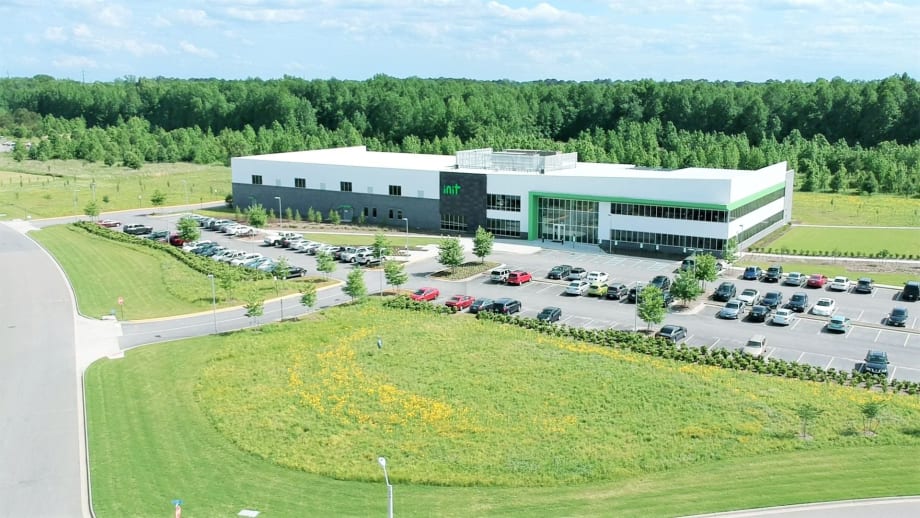
INIT evolved from a university spin-off in 1983 to become a world market leader for Intelligent Transportation Systems (ITS) in public transit, according to the company. In 1999, a North American subsidiary, INIT Innovations in Transportation Inc., was established in Chesapeake, Va., with a small staff of five. Since then, the company’s evolution has swiftly advanced. Today, with over 55 North American customers, and more than 100 employees, INIT has thrived in building close customer relations as a firm foundation for its continued business success.
“Our accomplishments are due to the trust of our numerous long-term partnerships and a committed team of employees operating across North America,” says INIT Inc. CEO, Roland Staib.
In 2017, INIT built a new headquarters to accommodate the company’s growing staff, expanded warehouses, and their two manufacturing subsidiaries which produce cable harnesses and electronics. Further growth at INIT’s West Coast office in Seattle is also notable.
INIT’s presence expanded in 2011 with the establishment of a satellite office in Seattle to serve customers up and down the West Coast. Since then, an influx of project awards, including the recent deliveries of a next-generation fare system for the Central Puget Sound Regional Transit Authority (Sound Transit) and an advanced fare payment system for the Metropolitan Transit System in San Diego, has been a catalyst for the company’s growth momentum.
INIT’s reputation as a technology innovator has been recognized over the years with many awards. Most recently, the Canadian Urban Transportation Association awarded INIT with a Corporate Safety and Security Award for their driver performance software implemented at York Region Transit. In May 2019, CoVa Biz Magazine bestowed their 2019 Best Place to Work award to INIT for the third consecutive year.
INIT marked its anniversary by hosting family-friendly events for their employees at INIT’s headquarters in Chesapeake, Va., and in Seattle. In November, INIT will continue celebrations at its biennial User Group Meeting in Albany, N.Y. where one of their first North American customers, Capital District Transportation Authority, is located. Customers from across the continent are expected to participate at the event.
More Technology

From Hardware to Digital Partner: Luminator Charts Its Next Chapter
CEO Magnus Friberg discusses Luminator’s shift toward becoming a digital partner, the growing importance of software and interoperability, and how AI can help agencies improve operations and passenger experience.
Read More →
Beyond the Checklist: A Structured Approach to Transit Maintenance
Reliability-Centered Maintenance helps transit agencies move beyond routine checklists to focus limited resources on the assets and failures that have the greatest impact on safety, reliability, and service.
Read More →
NJ TRANSIT Advances Bus Technology Upgrades Across Statewide Fleet
More than 1,500 buses now feature upgraded technology designed to improve arrival predictions and provide free Wi-Fi, with deployment expected to reach nearly 2,000 buses by the end of 2026.
Read More →

Building a Flexible Path to Transit Electrification
John Hroncich discusses BAE Systems’ modular and scalable approach, lessons learned from decades of real-world operations, and how agencies can identify electrification strategies that fit their fleets.
Read More →
Biz Briefs: Alstom Lands Canadian Contract, LYT to Supply California TSP, and More
In METRO's latest installment, we take a look at recent news from Complete Coach Works, Beep, FlixBus, and more partnerships making headlines across the transportation sector.
Read More →
From Legacy Silos to Conversational Intelligence
What if transit leaders could ask any operational question and get a trusted answer in seconds? Conversational AI is transforming how agencies use their data.
Read More →
USDOT Announces Rail Vehicle Replacement Grants, Chattanooga AV Shuttle Funding
More than $191 million in federal funding will help three transit agencies replace aging rail vehicles and support a new autonomous shuttle service in Chattanooga.
Read More →
Bus Tech Talk: Keeping Transit Technicians Ahead of the Technology Curve
LA Metro’s Obed Mejia discusses technician training, evolving maintenance technology, fleet replacement, and strategies for getting the most out of today’s transit fleets.
Read More →
Biz Briefs: RIPTA Unveils New Frontrunners, Clevland RTA Adds New Siemens, and More
In METRO's latest installment, we take a look at recent news from Siemens, Prevost, Dodge, and more partnerships making headlines across the transportation sector.
Read More →
Why Simulating Pedestrian Movement Has Become Essential for Modern Rail Stations
Pedestrian microsimulation is helping rail planners identify bottlenecks, test station designs, and prepare complex transit hubs for growing passenger volumes.
Read More →