



Biz Briefs: OCTA Taps Clean Energy for Hydrogen Station, Stadler to Supply Via Rail Vehicles, and More
From manufacturers and suppliers to transit agencies and motorcoach operators, these updates offer a snapshot of the projects, partnerships and business moves driving the industry forward.

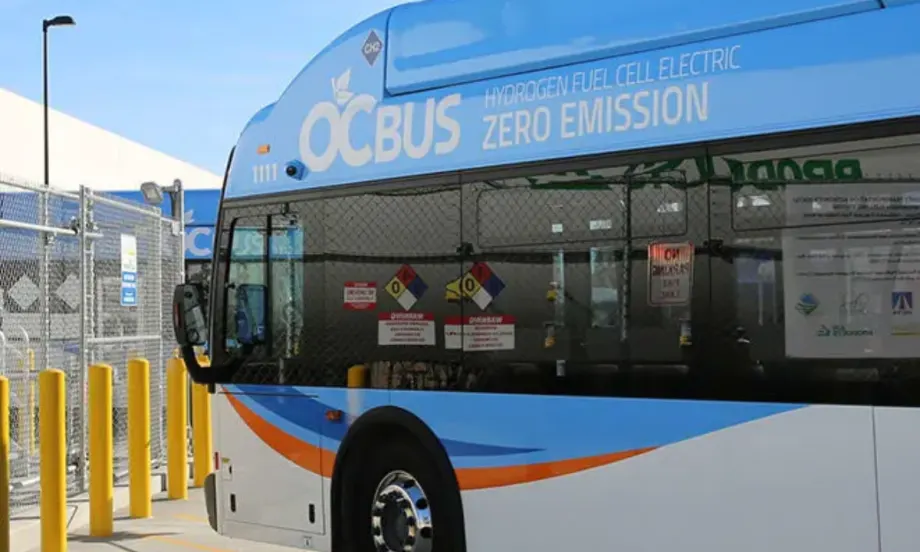
OCTA currently operates a fleet of hydrogen fuel cell, battery-electric, and compressed natural gas buses with plans to transition to a 100% zero-emission bus fleet by 2040, aligning with California’s Innovative Clean Transit regulations.
OCTA
- The transportation industry is rapidly evolving with strategic partnerships, acquisitions, service expansions, and technology investments driving new developments.
- Notable updates include recent news from companies like ENC and Moova Mobility, highlighting growing collaborations within the sector.
- Clean Energy Fuels Corp has been contracted to build a $27.5 million hydrogen fueling station for OCTA to support their fleet of zero-emission buses.
*Summarized by AI
From strategic partnerships and acquisitions to service expansions and technology investments, the transportation industry continues to evolve at a rapid pace.
In this edition of Biz Briefs, we spotlight the latest developments shaping the future of mobility. From manufacturers and suppliers to transit agencies and motorcoach operators, these updates offer a snapshot of the projects, partnerships and business moves driving the industry forward.
In METRO's latest installment, we take a look at recent news from ENC, Moova Mobility, and more partnerships making headlines across the transportation sector.
Clean Energy Building Hydrogen Station for OCTA’s Expanding ZEB Fleet
Clean Energy Fuels Corp. was awarded a $27.5 million contract by California’s Orange County Transportation Authority (OCTA) to design and build a new private hydrogen fueling station at OCTA’s Garden Grove bus base.
The new station will support the agency’s growing fleet of zero-emission hydrogen fuel cell buses. Under the contract, Clean Energy will provide design-build services for the hydrogen station and facility upgrades, as well as operations and maintenance services and liquid hydrogen fuel supply. The project is expected to be completed in 2028.
OCTA currently operates a fleet of hydrogen fuel cell, battery-electric, and compressed natural gas buses with plans to transition to a 100% zero-emission bus fleet by 2040, aligning with California’s Innovative Clean Transit regulations.
OCTA currently has 10 hydrogen fuel cell buses in service and expects to add 40 more by the time this fuel station is built.
Stadler to Supply 45 hybrid locomotives to Via Rail
Stadler signed a contract with VIA Rail Canada to supply 45 hybrid locomotives, marking the company's first locomotive order in Canada.
The contract includes a 20-year Technical Support and Spare Supply Agreement (TSSSA). The new fleet will support VIA Rail’s Long-Distance, Regional, and Remote Rail (LDRR) program and contribute to the modernization and decarbonization of passenger rail services across the country.
Designed to operate reliably in Canada's demanding climate, including temperatures as low as -50°C, the new locomotives combine proven diesel-electric technology with an innovative battery-assisted traction system. The hybrid concept will improve operational performance, reduce fuel consumption and emissions, and deliver a more sustainable travel experience for passengers and communities along VIA Rail's network.
The locomotives will be equipped with traction battery modules that supply energy for onboard auxiliary systems, head-end power requirements, and traction. By combining battery power with the diesel engine, the vehicles can deliver up to 4 MW of power at the wheel, a starting tractive effort of 350 kN, and a maximum operating speed of 100 mph, ensuring excellent acceleration, high performance on steep gradients, and reliable operation across VIA Rail’s long-distance network including routes serving remote communities throughout the country.
The contract represents a major milestone for Stadler and further strengthens the company's presence in the North American market.
Croswell Adding 6 ENC AXESS Clean Diesel Buses
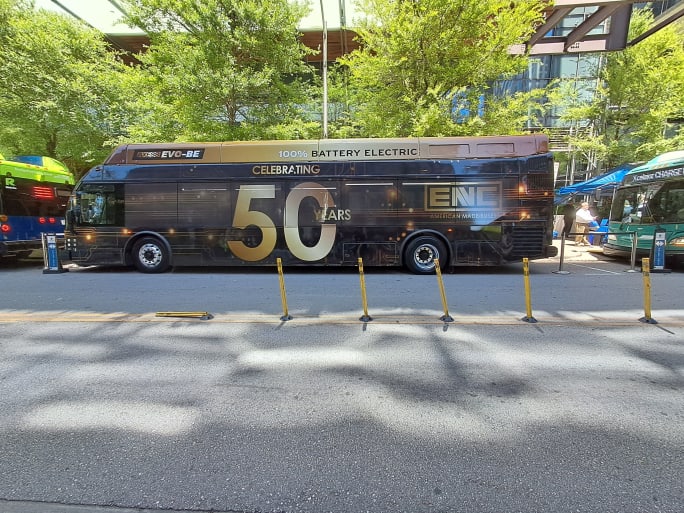
The order pairs Croswell’s growing passenger operation with the ENC AXESS, a heavy-duty, low-floor transit bus built for durability, accessibility, and rider comfort, said officials.
METRO
ENC announced a new contract to supply Croswell VIP Motorcoach Services with six 40-foot clean diesel ENC AXESS buses.
The buses will be operated by Croswell, based in Williamsburg, Ohio, in its role as an official transportation provider for the Ark Encounter, a life-size replica of Noah’s Ark located in Williamstown, Kentucky.
The order pairs Croswell’s growing passenger operation with the ENC AXESS, a heavy-duty, low-floor transit bus built for durability, accessibility, and rider comfort, said officials.
Croswell has provided charter bus and tour services since 1921, operating a fleet spanning executive SUVs and Sprinters to full-size premium motorcoaches, serving corporate events, group trips, weddings, student tours, and leisure travel.
The operation holds the highest safety rating issued by the US Department of Transportation. It is an exclusive member of the International Motorcoach Group, an invitation-only network limited to operators that maintain the industry's highest standards of service and safety.
Moova Mobility Platform Enters North America
Iteris - Almaviva Group announced the introduction of Moova, making its integrated, modular mobility platform available to transit agencies across North America.
Proven at scale in Europe, Moova will be delivered locally through Iteris, part of Almaviva Group, with North American-based development, implementation, and customer success teams, said officials.
Moova is Almaviva Group’s integrated, modular, and seamless mobility platform, connecting multiple modes of transportation in a single technological framework that supports shared, sustainable, multimodal, and Mobility-as-a-Service (MaaS) operating models. It brings together multiple transit technology solutions into a single platform that simplifies operations management and supports a system-wide approach to event response, said officials.
In North America, the platform comprises four solutions: Service Planning and Dispatching, Operations Management, Real-Time Passenger Information, and Smart Mobility. All solutions are built on open standards (including ITxPT), so agencies can retain ownership of their data and the flexibility to integrate with their preferred vendors. Moova’s open architecture technology unifies data from any source into a single, configurable control center, giving agencies complete operational visibility across modes, operators, and systems.
For the North American market, Moova is being localized for regional requirements, including ADA, GTFS-RT publishing, and NTD reporting, to name a few. Through Iteris, Almaviva Group will support agencies with North American-based engineering, deployment, customer success, sales, and marketing resources while developing a regional ecosystem of systems integrators, hardware suppliers, and channel partners.
Quick Answers
The latest edition of Biz Briefs focuses on strategic partnerships, acquisitions, service expansions, and technology investments shaping the future of mobility in the transportation industry.
*Summarized by AI
More Technology

From Hardware to Digital Partner: Luminator Charts Its Next Chapter
CEO Magnus Freiberg discusses Luminator’s shift toward becoming a digital partner, the growing importance of software and interoperability, and how AI can help agencies improve operations and passenger experience.
Read More →
Beyond the Checklist: A Structured Approach to Transit Maintenance
Reliability-Centered Maintenance helps transit agencies move beyond routine checklists to focus limited resources on the assets and failures that have the greatest impact on safety, reliability, and service.
Read More →
NJ TRANSIT Advances Bus Technology Upgrades Across Statewide Fleet
More than 1,500 buses now feature upgraded technology designed to improve arrival predictions and provide free Wi-Fi, with deployment expected to reach nearly 2,000 buses by the end of 2026.
Read More →

Building a Flexible Path to Transit Electrification
John Hroncich discusses BAE Systems’ modular and scalable approach, lessons learned from decades of real-world operations, and how agencies can identify electrification strategies that fit their fleets.
Read More →
Biz Briefs: Alstom Lands Canadian Contract, LYT to Supply California TSP, and More
In METRO's latest installment, we take a look at recent news from Complete Coach Works, Beep, FlixBus, and more partnerships making headlines across the transportation sector.
Read More →
From Legacy Silos to Conversational Intelligence
What if transit leaders could ask any operational question and get a trusted answer in seconds? Conversational AI is transforming how agencies use their data.
Read More →
USDOT Announces Rail Vehicle Replacement Grants, Chattanooga AV Shuttle Funding
More than $191 million in federal funding will help three transit agencies replace aging rail vehicles and support a new autonomous shuttle service in Chattanooga.
Read More →
Bus Tech Talk: Keeping Transit Technicians Ahead of the Technology Curve
LA Metro’s Obed Mejia discusses technician training, evolving maintenance technology, fleet replacement, and strategies for getting the most out of today’s transit fleets.
Read More →
Biz Briefs: RIPTA Unveils New Frontrunners, Clevland RTA Adds New Siemens, and More
In METRO's latest installment, we take a look at recent news from Siemens, Prevost, Dodge, and more partnerships making headlines across the transportation sector.
Read More →
Why Simulating Pedestrian Movement Has Become Essential for Modern Rail Stations
Pedestrian microsimulation is helping rail planners identify bottlenecks, test station designs, and prepare complex transit hubs for growing passenger volumes.
Read More →