



AC Transit’s Cecil Blandon on Building the Next Generation of Transit Maintenance Leaders
The agency’s maintenance chief discusses leadership, workforce development, zero-emission technology, and preparing technicians for the future of public transportation.

AC Transit Director of Maintenance Cecil Blandon says investing in mentorship, training, and employee development is essential to preparing technicians for an increasingly complex transit industry.
AC Transit/METRO
- Cecil Blandon emphasizes the importance of leadership and workforce development in the transit maintenance sector.
- The discussion includes insights into integrating zero-emission technology into public transportation systems.
- Preparing technicians for future challenges is highlighted as a crucial strategy for sustainable transit maintenance.
*Summarized by AI
Transit maintenance is evolving faster than ever. Agencies are balancing aging fleets, new propulsion technologies, workforce shortages, and rising service expectations — all while preparing technicians for an industry that looks dramatically different from what it did just a decade ago.
Those challenges — and the opportunities they create — were the focus of a special two-episode edition of Bus Tech Talk, where hosts Alex Roman, executive editor of METRO Magazine, and Mark Hollenbeck, business development manager at Complete Coach Works, sat down with Cecil Blandon, director of maintenance at Oakland, California’s AC Transit.
The conversation covered everything from military leadership and apprenticeship programs to zero-emission buses, artificial intelligence, and the importance of creating a workplace where technicians want to build long careers.
Throughout the discussion, one theme remained constant: successful transit maintenance depends as much on people as it does on technology.
Poised for the Transit Industry
For Blandon, maintenance has always been part of life. When he was growing up, his parents owned an automotive repair shop, where he spent weekends helping his father and learning the value of hard work.
"I grew up wrenching," Blandon said.
After high school, he joined the U.S. Marine Corps, where he served as a maintenance management specialist and maintenance chief. The military provided more than technical experience — it taught leadership, logistics, discipline, and how to perform under pressure.
Following four years of military service, Blandon attended Arizona State University while searching for a job flexible enough to fit his class schedule. Transit proved to be the perfect fit.
He joined what was then Laidlaw Transit, later First Transit, in 2006. His military leadership experience helped him quickly advance through the ranks, from maintenance supervisor to maintenance manager, before becoming director of maintenance in 2009.
Today, he leads one of the nation's largest and most progressive transit maintenance operations at AC Transit. Blandon credits much of his success to lessons learned in the Marines.
Transit maintenance, he explained, rarely follows a predictable schedule. A day may begin with carefully planned work assignments, only to be disrupted by vehicle breakdowns, staffing shortages, or unexpected operational issues.
"No day is going to be like the other," he said.
The military taught him how to stay calm under pressure, prioritize competing demands, and lead teams through stressful situations. Just as importantly, it reinforced the value of integrity. Blandon encourages employees to admit mistakes rather than hide them.
"If something is wrong and you did something wrong, just own up to it," he said. "Let's figure out what went wrong and fix it."
Those principles now guide how he manages nearly 450 employees across AC Transit’s maintenance and facilities organization.
Mentorship Matters, Growing from Within
Throughout the conversation, Blandon repeatedly returned to the importance of mentorship. Rather than viewing mentors as lifelong relationships, he described them as trusted advisors who can help navigate specific challenges throughout a career.
Sometimes that advice involves career decisions. Other times, it's seeking expertise in an unfamiliar area. His advice for young professionals is straightforward: don't wait for opportunities to come to you.
"You have to go out there and want it," Blandon said. "You have to seek the tools and the training."
That mindset continues today as he mentors future leaders within AC Transit while encouraging employees to pursue their own professional growth. One of AC Transit’s greatest strengths is its commitment to workforce development.
Blandon oversees approximately 450 employees across 13 facilities, including four operating divisions and a central maintenance facility capable of performing nearly every repair in-house — from complete bus rebuilds and fabrication work to painting and component overhauls.
The agency's apprenticeship program, which dates back to the 1980s, serves as the foundation for developing technicians. Each year, several employees advance into the state-certified apprenticeship program, where experienced mentors help guide them both professionally and personally.
That mentor serves as someone apprentices can trust outside their immediate chain of command — a resource for technical questions, workplace concerns, or even personal challenges that might affect job performance.
"Their success is our success," Blandon explained.
By investing heavily in training, AC Transit develops technicians who understand the agency's specific fleet, culture, and expectations, thereby improving long-term employee retention.
Technology Evolving the Shop
As California continues transitioning toward zero-emission transportation, AC Transit has positioned itself as one of the industry's leaders.
The agency currently operates approximately 625 buses, including hydrogen fuel cell buses, battery-electric buses, diesel hybrids, and conventional diesel vehicles. Additional hydrogen buses are already on order as the fleet continues expanding.
Supporting those technologies requires far more than purchasing new buses. It requires preparing technicians to maintain entirely new propulsion systems safely. To accomplish that, AC Transit created Zero Emission Bus University, or ZEBU.
The program builds upon the agency's existing apprenticeship curriculum by adding advanced training in high-voltage systems, fuel cells, energy storage, and zero-emission technologies.
Blandon described ZEBU as the equivalent of a ninth apprenticeship level, designed specifically to prepare diesel mechanics for the next generation of transit vehicles.
The agency is also modernizing its training center to incorporate augmented reality, virtual reality, and other immersive learning technologies. Perhaps the most fascinating discussion centered on how emerging technologies could transform maintenance over the next several years.
Blandon believes augmented reality has enormous potential for technicians.
Rather than searching through wiring diagrams and opening multiple access panels to locate electrical components, technicians could use tablets or smartphones to overlay digital schematics directly onto the bus.
"It's almost like having X-ray vision," he explained.
The technology could dramatically reduce troubleshooting time by allowing technicians to visualize wiring harnesses, coolant lines, and connection points before removing a single panel.
Artificial intelligence represents another major opportunity. Rather than replacing maintenance professionals, Blandon sees AI helping managers quickly analyze enormous amounts of maintenance history, work orders, and fleet performance data.
Instead of manually reviewing spreadsheets, managers could ask AI to summarize recent road calls, identify recurring failures, or analyze fleet trends. Human expertise would still drive maintenance decisions—but AI could dramatically reduce the time required to gather and organize information, Blandon explained.
Managing Complexity
Maintaining AC Transit’s fleet is no small task.
The agency operates approximately 25 bus configurations across multiple manufacturers, including New Flyer, Gillig, MCI, Van Hool, and Ford, ranging from 30-foot buses to articulated coaches and double-deckers. That diversity creates unique maintenance challenges.
Different propulsion systems, HVAC suppliers, electrical components, and operating environments all require specialized knowledge.
To manage that complexity, AC Transit carefully standardizes certain systems where possible while strategically introducing new technologies through pilot programs. The goal is to balance innovation with maintainability.
"You don't want too many different systems," Blandon explained, noting that consistency reduces inventory costs and training requirements while improving technician familiarity.
Collaboration Strengthens the Industry
Although AC Transit has become nationally recognized for its maintenance and zero-emission programs, Blandon emphasized that collaboration — not competition — defines the transit industry.
Each year, he hosts approximately 30 tours for agencies from across the US and around the world interested in learning from AC Transit’s experience.
Likewise, when AC Transit explores new technologies or procurement decisions, Blandon regularly reaches out to peers at other agencies for advice.
"I've never reached out for help and been denied," he said.
That willingness to share best practices benefits everyone, particularly smaller agencies that may not have the resources to test new technologies independently.
Leadership Means Trusting Your Team
Near the end of the conversation, Blandon shared what may be his most revealing leadership philosophy. A maintenance department, he believes, should be capable of operating successfully even when its leader is away.
He recently took a three-week vacation — his first extended trip with his wife since becoming parents — and returned to find operations running smoothly.
For Blandon, that's not luck; it’s evidence of strong leadership.
"If a leader can't be gone for a week or two and the system fails, that's a problem," he said.
He encourages supervisors to take vacations, trust their teams, and develop employees capable of making decisions independently. That culture, he believes, creates resilient organizations where employees enjoy coming to work and remain committed to the agency's mission.
As the transit industry continues evolving through electrification, workforce development, and rapidly advancing technologies, Blandon offered an optimistic outlook.
The tools may change. The buses certainly will. But the foundations of great maintenance —leadership, mentorship, continuous learning, and teamwork — remain as important as ever.
This article, generated using OpenAI, was edited for accuracy and style and based on an episode of METROspectives
Quick Answers
Cecil Blandon emphasizes the importance of workforce development programs, leadership training, and hands-on experience to prepare the next generation of transit maintenance leaders.
*Summarized by AI
More Management

LA Metro Breaks Ground on Vermont BRT Project
The 12.4-mile corridor is projected to serve 66,200 daily riders, reduce travel times by up to 24%, and create the nation's busiest bus rapid transit corridor.
Read More →
Building Stronger Leaders, More Resilient Transit Teams
Dr. Carol Parker Walsh discusses leadership development, employee retention, workplace culture, and preparing transit’s workforce for AI and automation.
Read More →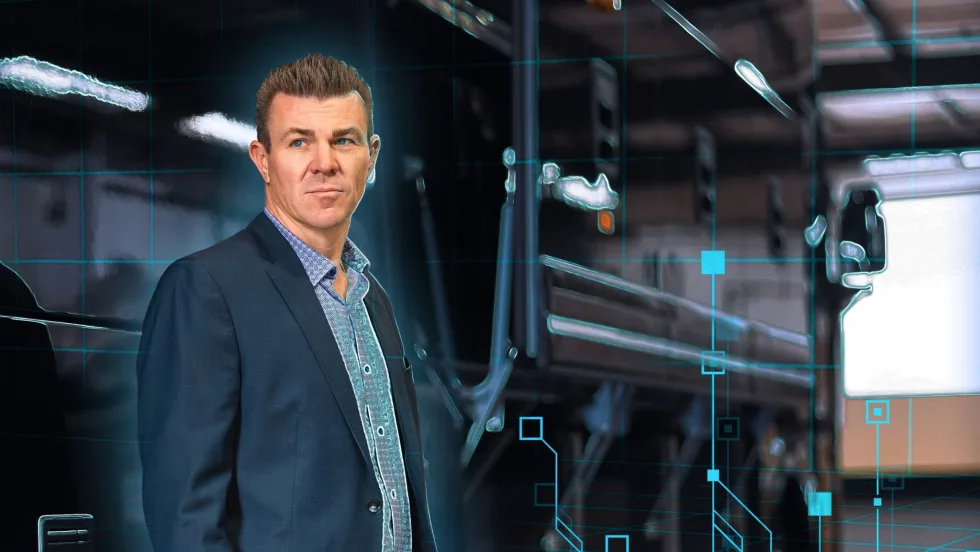
Roman Cornell on ABC Companies’ Evolution and the Future of Passenger Transportation
The company’s CEO discusses carrying forward a third-generation family legacy, ABC’s continued evolution in passenger transportation, support for increasingly complex fleets, and how technology and continued investment could help operators improve uptime.
Read More →
CATS Launches West Charlotte Microtransit Zone, Expands Transit Services
The new microtransit zone connects residents to key destinations as Charlotte Area Transit System rolls out the first phase of its 2055 Transit System Plan.
Read More →
VIA Bus Ridership Grows 10.1% Through August 2026
San Antonio's VIA Metropolitan Transit reported the highest bus ridership growth among major Texas transit systems. Federal Transit Administration data ranked it second among the nation's 50 largest transit systems.
Read More →
CSA Group Releases Climate Resilience Standard for Transit, Passenger Rail
Developed with support from the Standards Council of Canada, CSA D700 guides assessing climate-related risks and planning adaptation measures for transit and passenger rail systems.
Read More →
ETA CEO John Maglio on Transit Technology, Innovation, and Building Agency Trust
ETA founder and CEO John Maglio explores the evolution of transit technology, the importance of reliable systems, and how stronger partnerships can help agencies improve operations and the passenger experience.
Read More →
COTA Launches First Customer Experience Action Plan to Improve Transit Service
The new plan outlines improvements to service reliability, accessibility, communication, and the overall rider experience across Central Ohio's transit system.
Read More →
LA Metro September Ridership Climbs 3.9%, Led by Rail Growth
The agency recorded more than 27.2 million boardings, with rail ridership increasing 12.4% year over year and the D Line posting the largest gains.
Read More →
Utilimarc Launches SmartReplace to Optimize Fleet Replacement Decisions
AI-powered SmartReplace helps fleets prioritize vehicle replacements, model budget scenarios, and build more defensible long-term strategies.
Read More →