




RELATED: Denver RTD, Transit, Masabi launch in-app ticketing
Denver RTD moves N Line opening date to May or August of 2020
RTD had previously stated that its goal was to open the rail line during the first quarter of 2020.
September 25, 2019
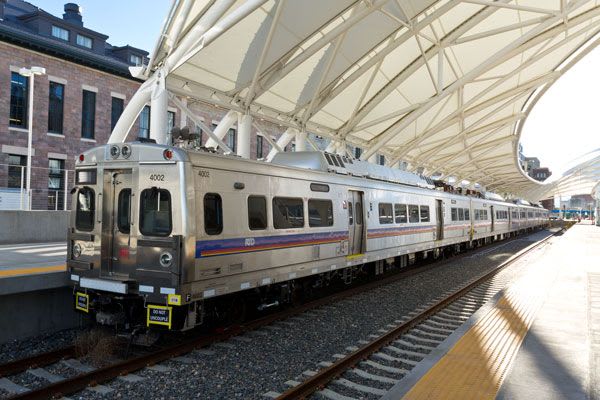
Denver RTD's commuter rail service at Union Station.
RTD
2 min to read
Denver RTD's commuter rail service at Union Station.
RTD
Remaining milestones on Regional Transportation District (RTD)’s newest commuter rail line, the N Line, will move the project’s opening date to next May or August, GM/CEO Dave Genova told the transit agency’s Board of Directors.
In an informational update about the project — which will serve riders traveling between Denver and Adams County, Commerce City, Northglenn and Thornton — Genova acknowledged that specific milestones still must be met before an opening date can be determined. These include turnover of the project from contractor Regional Rail Partners (RRP) to RTD and advanced testing elements such as grade crossings and positive train control (PTC).
RTD had previously stated that its goal was to open the rail line during the first quarter of 2020. The transit agency remains committed to doing so next year.
“The N Line is a long-awaited connection for our riders in the communities north of Denver, and the project team continues to work diligently toward meeting all regulatory requirements and ensuring public safety of the line,” Genova said. “RTD has made significant progress on this project, and we will be better able to announce the opening date as additional steps are completed.”
RTD will fully operate the N Line — known during construction as the North Metro Line — when it is open. The agency’s staff will develop a detailed list of milestones to serve as a roadmap for determining an opening date. RTD aims to open the line to coincide with May or August service changes.
RTD and contract team Regional Rail Partners (RRP) — a joint venture of Balfour Beatty Infrastructure Inc. and Graham — continue to work on civil and systems elements to complete construction of the first 13 miles of the N Line, currently funded from Denver Union Station to Eastlake-124th Station. The 18.5-mile electrified commuter rail line is part of FasTracks, RTD’s 2004 voter-approved, multibillion-dollar transit expansion plan for the metro Denver region.
Overhead catenary system (OCS) wires on the N Line went live in March, and train testing on the corridor began in April using the conventional, automatic train control (ATC) system. Once RRP reaches substantial completion of construction on the N Line, RTD will review and validate the work. RTD is now training operators on the corridor and will proceed with full testing of the line when substantial completion has been reached.
More Rail

New York MTA Advances Final Contract for Second Avenue Subway Expansion
Contract Four is the largest in the Second Avenue Subway Phase 2 project and includes construction of station infrastructure, tracks, and signals for the subway expansion, MTA officials said. Work on Contract Four will begin in 2027.
Read More →
San Diego MTS Breaks Monthly Trolley Ridership Record
Agency officials said July’s ridership indicates MTS’s continued recovery from the pandemic.
Read More →
Report Examines NJ TRANSIT Reliability, Funding Challenges
The Garden State Initiative analysis examines the roles of Amtrak infrastructure, fleet management, and agency operations while recommending a more performance-based approach to improving reliability.
Read More →
Stadler, CapMetro Sign Long-Term Rail Fleet Support Agreement
Beginning in 2027, Stadler will provide on-site technical expertise, spare parts support, training, and obsolescence management to help extend the reliability and longevity of CapMetro’s GTW fleet.
Read More →
Biz Briefs: Alstom Lands Canadian Contract, LYT to Supply California TSP, and More
In METRO's latest installment, we take a look at recent news from Complete Coach Works, Beep, FlixBus, and more partnerships making headlines across the transportation sector.
Read More →
CATS Gold Line Marks 5 Years of Service, 2.8M Passenger Trips
With a six-mile expansion planned, the Charlotte streetcar is positioned to connect more neighborhoods and major transit hubs across the region.
Read More →
Why Simulating Pedestrian Movement Has Become Essential for Modern Rail Stations
Pedestrian microsimulation is helping rail planners identify bottlenecks, test station designs, and prepare complex transit hubs for growing passenger volumes.
Read More →
Amtrak Begins Major Construction at New York’s Sunnyside Yard
The new maintenance facility will support Amtrak’s Airo trainsets while improving maintenance efficiency and turnaround times in New York.
Read More →
Chicago Leaders Unveil Plans for O’Hare Airport Express Train
The privately developed project would offer a 15-minute trip between downtown and O’Hare’s Terminal 2, with trains operating every 15 minutes on a dedicated track. The service would use battery-electric trains and three existing freight rail rights-of-way.
Read More →
OCTA Maps Out 30-Year Strategy to Protect Coastal Rail Corridor
The draft feasibility report identifies strategies to protect the coastal rail line for decades as the agency continues near-term stabilization and sand placement efforts.
Read More →