




RELATED: Visa, partners bring contactless fare payment to transit
MTA launches first new payment system in 25 years
OMNY lets riders pay their fare and enter the subway or bus by tapping contactless cards, smartphones, and wearable devices.
June 3, 2019
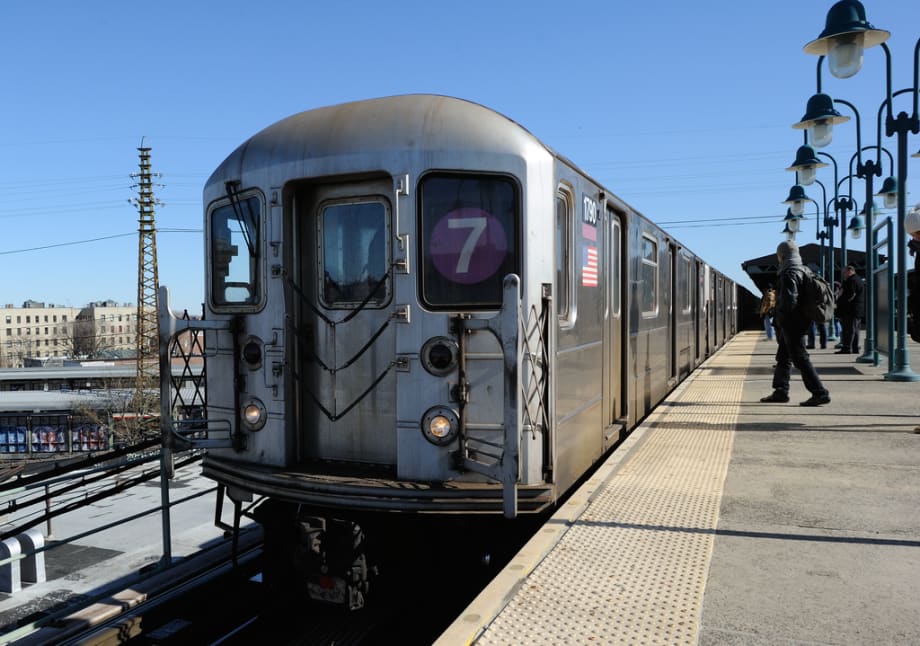
OMNY is the first transit agency that will launch with an open loop contactless payment system, meaning customers never need to wait in line to buy a fare card.
Tim Adams
2 min to read
OMNY is the first transit agency that will launch with an open loop contactless payment system, meaning customers never need to wait in line to buy a fare card.
Tim Adams
New York MTA launched its new contactless fare payment system, OMNY, allowing riders to pay their fares with digital wallets and contactless credit and debit cards.
OMNY is a first-of-its-kind system that lets riders pay their fare and enter the subway or bus by simply tapping contactless credit, debit, and reloadable prepaid cards, mobile phones, smart watches, and other wearable devices. OMNY will eventually provide a seamless payment system across the MTA’s subways, buses, and two commuter railroads.
OMNY is the first transit agency that will launch with an open loop contactless payment system, meaning customers never need to wait in line to buy a fare card. They simply use the device of their choice and seamlessly enter the system. In time, OMNY will allow customers to pay their fares on subways, buses, and the two commuter rails using the same payment method.
The public pilot phase of the OMNY rollout, which runs through the end of 2019, will allow the MTA to ensure that all systems are fully functional and that any issues are identified and improved upon prior to continuing the rollout of OMNY readers to the rest of the system.
In addition to enhanced customer service, a new OMNY app will provide seamless fare payment between the Long Island Rail Road and Metro-North services and subway and bus services. Introduction of an OMNY card will support customers who prefer to fund fares with cash.
Eventually, the system will accommodate the migration of all current unlimited ride pass and other special fare products over to the OMNY environment and the option to purchase fare products online or in stations and new machines A closed-loop OMNY card will be sold in stations at a network of retail stores beginning in 2021, so cash will always be an option.
During the MTA’s rollout of the OMNY contactless readers and continued expansion of OMNY services between 2019 and 2023, riders can still use MetroCard and eTix.
Only after the OMNY project is fully complete in 2023 will the MTA say goodbye to MetroCard for good. The MetroCard debuted in 1993.
More Technology

From Hardware to Digital Partner: Luminator Charts Its Next Chapter
CEO Magnus Friberg discusses Luminator’s shift toward becoming a digital partner, the growing importance of software and interoperability, and how AI can help agencies improve operations and passenger experience.
Read More →
Beyond the Checklist: A Structured Approach to Transit Maintenance
Reliability-Centered Maintenance helps transit agencies move beyond routine checklists to focus limited resources on the assets and failures that have the greatest impact on safety, reliability, and service.
Read More →
NJ TRANSIT Advances Bus Technology Upgrades Across Statewide Fleet
More than 1,500 buses now feature upgraded technology designed to improve arrival predictions and provide free Wi-Fi, with deployment expected to reach nearly 2,000 buses by the end of 2026.
Read More →

Building a Flexible Path to Transit Electrification
John Hroncich discusses BAE Systems’ modular and scalable approach, lessons learned from decades of real-world operations, and how agencies can identify electrification strategies that fit their fleets.
Read More →
Biz Briefs: Alstom Lands Canadian Contract, LYT to Supply California TSP, and More
In METRO's latest installment, we take a look at recent news from Complete Coach Works, Beep, FlixBus, and more partnerships making headlines across the transportation sector.
Read More →
Sponsored•September 8, 2026
From Legacy Silos to Conversational Intelligence
What if transit leaders could ask any operational question and get a trusted answer in seconds? Conversational AI is transforming how agencies use their data.
Read More →
USDOT Announces Rail Vehicle Replacement Grants, Chattanooga AV Shuttle Funding
More than $191 million in federal funding will help three transit agencies replace aging rail vehicles and support a new autonomous shuttle service in Chattanooga.
Read More →
Bus Tech Talk: Keeping Transit Technicians Ahead of the Technology Curve
LA Metro’s Obed Mejia discusses technician training, evolving maintenance technology, fleet replacement, and strategies for getting the most out of today’s transit fleets.
Read More →
Biz Briefs: RIPTA Unveils New Frontrunners, Clevland RTA Adds New Siemens, and More
In METRO's latest installment, we take a look at recent news from Siemens, Prevost, Dodge, and more partnerships making headlines across the transportation sector.
Read More →
Why Simulating Pedestrian Movement Has Become Essential for Modern Rail Stations
Pedestrian microsimulation is helping rail planners identify bottlenecks, test station designs, and prepare complex transit hubs for growing passenger volumes.
Read More →