Proterra announced a collaboration with Michelin to develop the MICHELIN® X® InCity Energy Z tire, a new low-rolling resistance tire designed and optimized for battery-electric buses in urban environments. The X InCity Energy Z tires help to reduce rolling resistance, increase load-carry capacity and leverage superior traction, resulting in increased vehicle range and improved performance of electric buses.
The X InCity Energy Z tire incorporates Michelin Advanced Technology™ tread compounds designed to provide industry-leading low rolling resistance technology in the tire, contributing to the maximum operational range between charges for Proterra® buses. Low-rolling resistance technology was instrumental in enabling the Proterra Catalyst® E2 max vehicle to exceed the world record for driving the longest distance ever traveled by an electric vehicle on a single charge.
In addition to enabling greater range, the X InCity Energy Z tire is designed to withstand tough urban transit conditions and has robust bead architecture to ensure durability in demanding stop/start service. The tire uses innovative 3D Matrix™ sipe technologies to provide biting edges for traction in wet and slippery conditions. With this technology, the X InCity Energy Z is optimized for all-season weather and driving conditions, and is certified 3PMSF (“three-peak mountain snowflake”) and M+S (“mud and snow”), which meets the U.S. Tire Manufacturers Association snow-traction performance requirements and the Tire and Rubber Association of Canada requirements for severe snow traction.
Throughout its history, Proterra has focused on developing innovative commercial electric vehicle technology, including designing and manufacturing a purpose-built electric transit bus that allows energy-dense battery systems to be mounted beneath the floor of the bus and outside the passenger compartment. This distinct design creates a low center of gravity and enables more energy to be safely stored on board to increase power and range. Ensuring our transit buses utilize the best tires is another essential component to further maximize the performance of the Proterra Catalyst bus. The X InCity Energy Z tire for electric bus configuration will be the standard tire offered for the Proterra Catalyst vehicles.
The Proterra Catalyst vehicle and X InCity Energy Z tire will be on display during the American Public Transportation Association Mobility Conference at the Proterra booth #338 on Tuesday, May 21, in Louisville, Ky.
Complete Parts features new branding with a new logo, a new contact telephone number, a dedicated order desk, enhanced processes and inventory, all designed to provide the parts bus operations need.
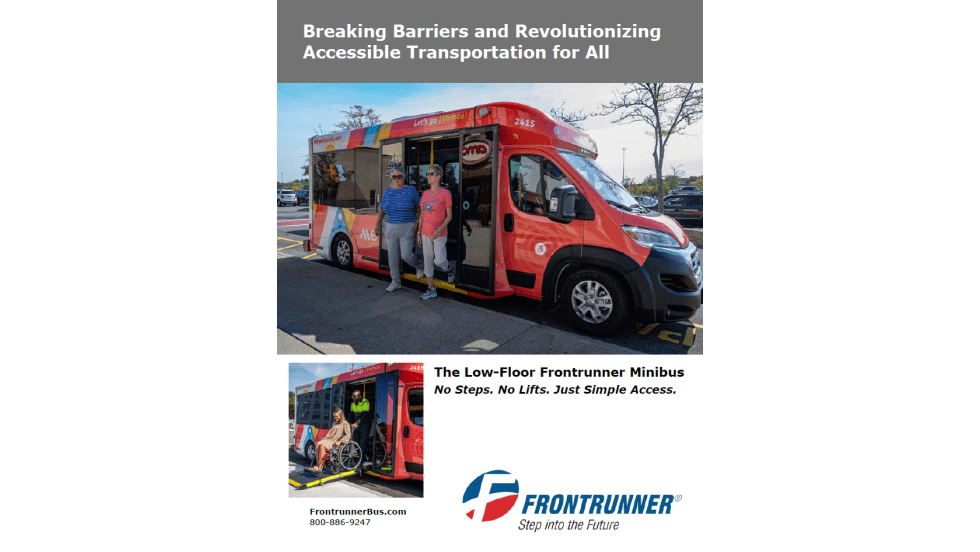
Accessible transit isn’t a feature—it’s a responsibility. This whitepaper explores how the Low-Floor Frontrunner is redefining mobility with a breakthrough design that removes barriers, empowers riders, and delivers measurable operational advantages for agencies. Discover why this next generation minibus is setting a new standard for inclusive transportation.
SEPTA was awarded $43 million in competitive grant funding from the FTA's FY25 Low and No Emission and Bus and Bus Facilities grant programs to support this procurement.
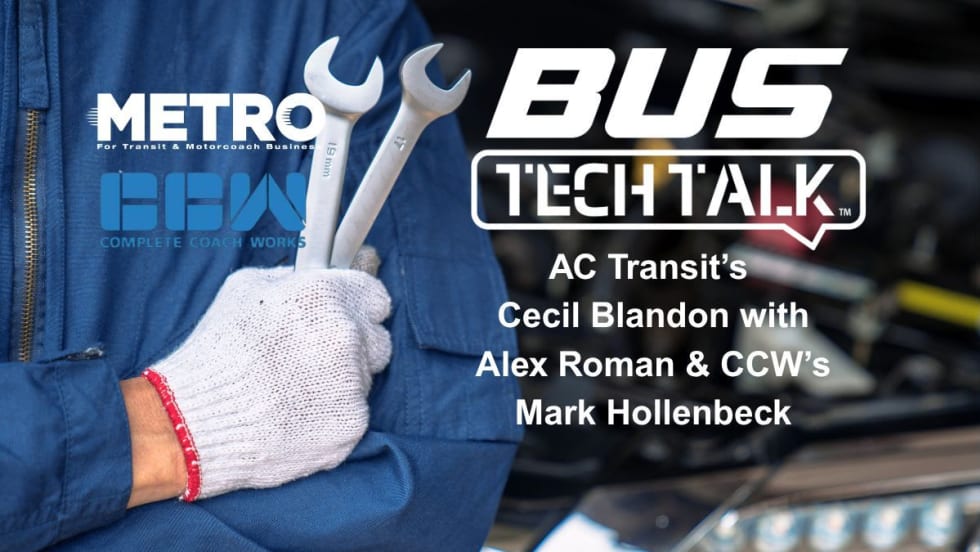
In part 1 of a two-part conversation, AC Transit’s director of maintenance joins co-hosts Alex Roman and Mark Hollenbeck to discuss his journey from the U.S. Marines to public transit and the role mentorship plays in developing the next generation of industry leaders.
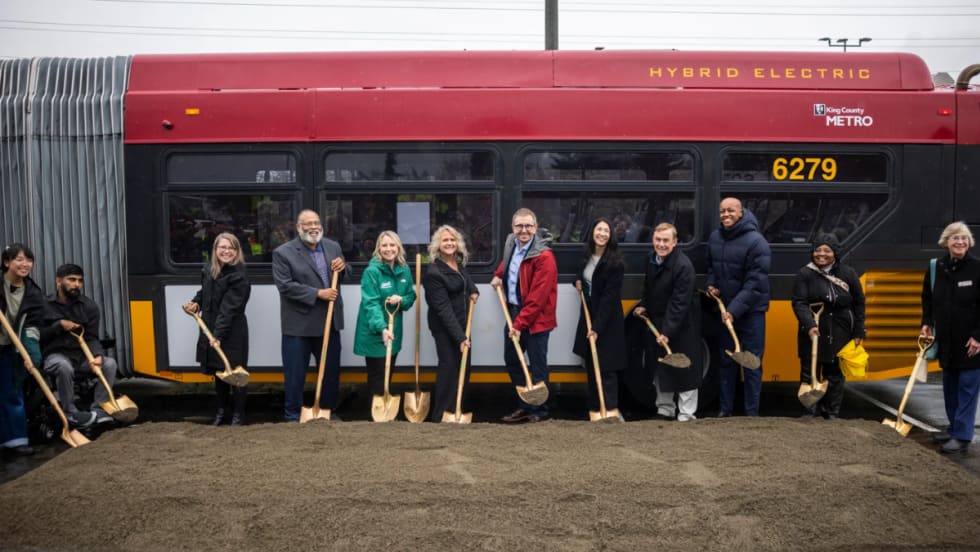
When construction is complete, battery-electric buses will operate from the Arborway facility on Day One, providing cleaner, quieter, and more reliable service for riders, the MBTA said. After completion, the old facility will be demolished, and the land will be made available for redevelopment.
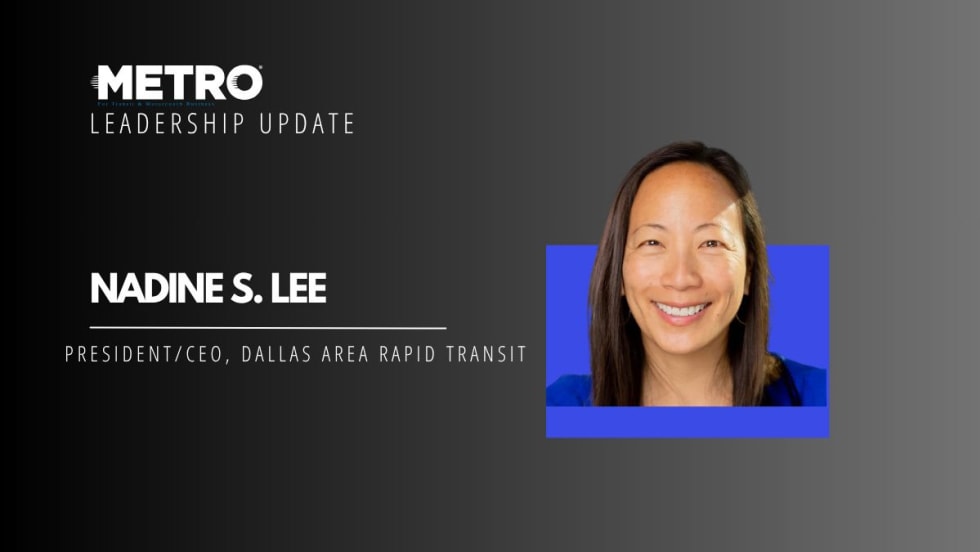
Nadine S. Lee, who has served as president/CEO since July 2021, said the decision comes after careful reflection on the agency’s progress and its path forward.
In this conversation, TBC’s Executive Director Ed Redfern, President Corey Aldridge, and Washington Representative Joel Rubin outline the coalition’s key policy priorities, the challenges facing transit agencies, and how industry stakeholders can work together to strengthen the voice of bus transit at the federal level.
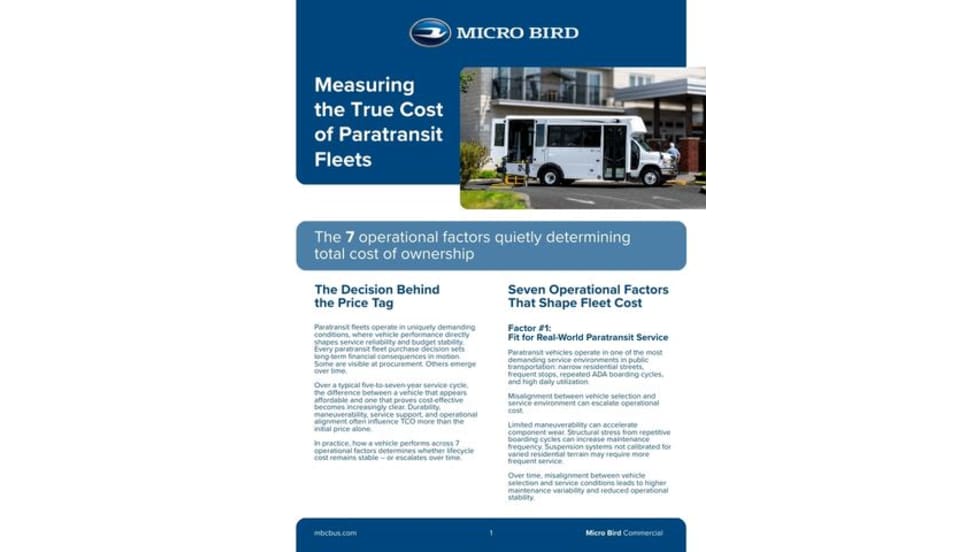
What truly drives the cost of a paratransit fleet? Beyond the purchase price, seven operational factors quietly determine maintenance frequency, downtime, and long-term service reliability. This whitepaper explores how these factors shape lifecycle cost and what agencies should evaluate when selecting paratransit vehicles.