



MARTA's GM/CEO calls for $100B investment in mobility, tech
Jeffrey Parker said we need a “moonshot for transit,” to ensure metro Atlanta’s growth as a world-class region.

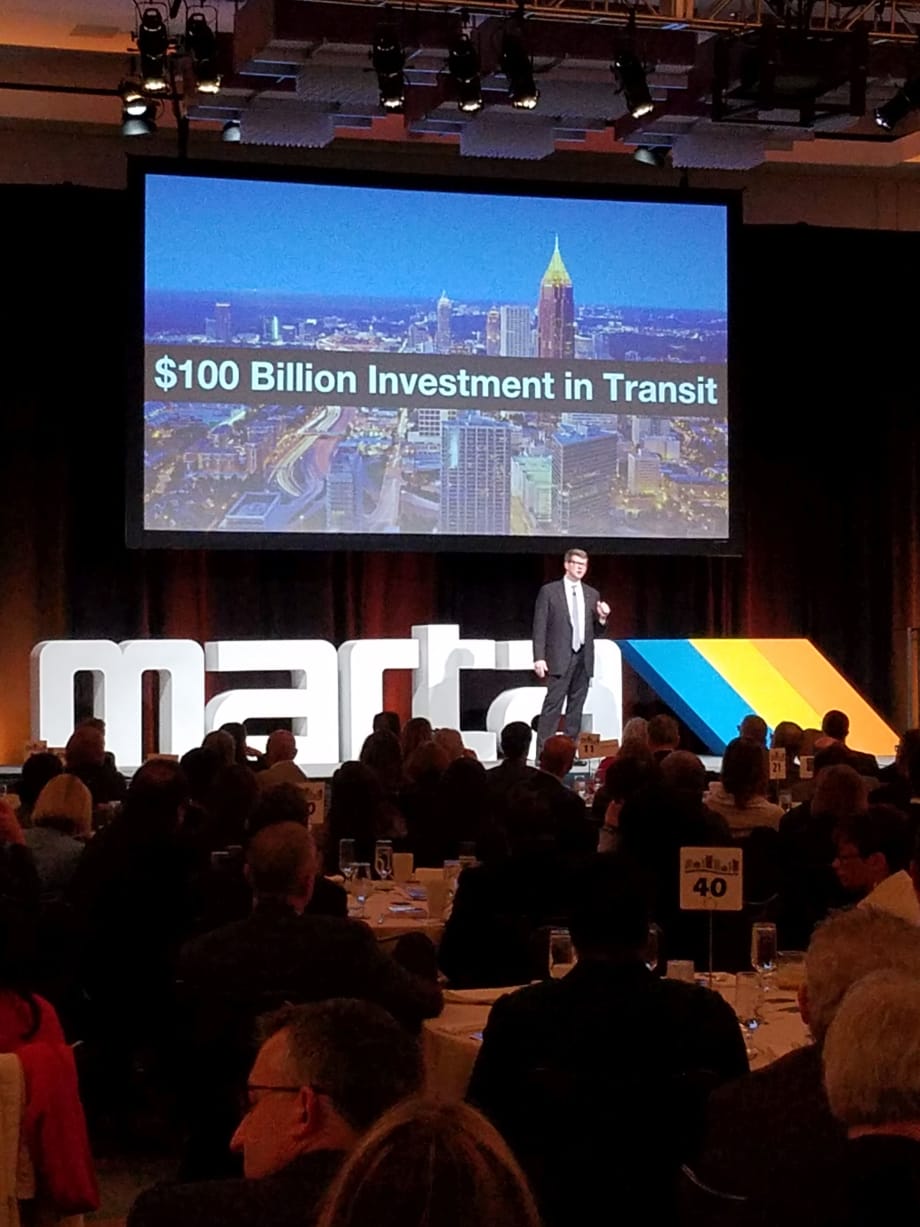
In Parker’s first State of MARTA address, he challenged the crowd to rally behind a $100 billion investment in transit and technology over the next 40 years.
MARTA
In Parker’s first State of MARTA address, he challenged the crowd to rally behind a $100 billion investment in transit and technology over the next 40 years.
MARTA
Metropolitan Atlanta Rapid Transit Authority (MARTA) GM/CEO Jeffrey Parker shared a bold vision for transit at the sixth Annual State of MARTA Breakfast before a sold-out crowd of community, business, and civic leaders.
During the event, which heralds the transit agency’s four decades of combined bus and rail service, Parker declared the state of MARTA is healthy, financially stable, and ready for expansion. Recognizing that service drives ridership, he promised a renewed commitment to world-class customer service and expanding MARTA as a catalyst for economic growth, innovative approaches to mobility, and community revitalization.
In Parker’s first State of MARTA address, he challenged the crowd to rally behind a $100 billion investment in transit and technology over the next 40 years, rivaling the long-term capital plans unfolding in peer cities such as Los Angeles, Seattle, and Washington, D.C.
Parker said we need a “moonshot for transit,” to ensure metro Atlanta’s growth as a world-class region.
“The greater Atlanta region is projected to grow in population by 50 percent over the next 30 years. That’s essentially adding Denver’s current population to the metro region,” said Parker. “We have to make bold decisions now that include a landmark investment in our transit network to fund innovative solutions for our traffic woes and renew our commitment to future generations.”
In addition, Parker announced several initiatives MARTA is undertaking, including:
Establishing a new Rider Advisory Council to provide customers with a formal voice to make meaningful improvements to the transit system.
Hiring a chief customer experience officer that represents the customer internally and influences what we do and how we do it.
Launching a multi-year initiative to enhance and overhaul all 38 MARTA stations through a comprehensive renovation and enhancement program.
Ensuring innovative and integrated transit-oriented development at stations that support jurisdictional priorities around economic development, workforce housing, and community engagement.
Implementing a comprehensive training strategy for frontline employees and management to improve customer service.
Creating a station manager career track for frontline employees who deal directly with customers.
The event was co-hosted by the Council for Quality Growth, a not-for-profit trade association that works to ensure the metro Atlanta region’s regulatory environment supports quality growth and development.
More New Mobility

From Hardware to Digital Partner: Luminator Charts Its Next Chapter
CEO Magnus Friberg discusses Luminator’s shift toward becoming a digital partner, the growing importance of software and interoperability, and how AI can help agencies improve operations and passenger experience.
Read More →
Biz Briefs: Alstom Lands Canadian Contract, LYT to Supply California TSP, and More
In METRO's latest installment, we take a look at recent news from Complete Coach Works, Beep, FlixBus, and more partnerships making headlines across the transportation sector.
Read More →
CharterUP’s Armir Harris on Technology, AI, and the Future of Group Mobility
In a recent episode of METROspectives, CharterUP Founder/CEO Armir Harris discussed the company’s evolution from an online charter bus marketplace into a technology platform supporting public- and private-sector mobility and much more.
Read More →
Jacksonville’s NAVI Project Charts a New Course for Autonomous Public Transportation
Through its NAVI program, JTA is showing how autonomous vehicles, intelligent infrastructure, and coordinated operations can work together to deliver everyday public transportation.
Read More →
Biz Briefs: Luminator Marks Milestone and More
From manufacturers and suppliers to transit agencies and motorcoach operators, these updates offer a snapshot of the projects, partnerships and business moves driving the industry forward.
Read More →
New Tricks for Old Bureaucracies: Joshua Schank on Making Transit Innovation Stick
Former LA Metro Chief Innovation Officer Joshua Schank discusses why good ideas aren't enough, how transit agencies can overcome resistance to change, and why today's challenges demand more innovation.
Read More →
How DART's GoPass Is Redefining Regional Mobility
Serving 14 transit agencies, GoPass simplifies multimodal travel by allowing riders to plan, pay for, and manage an entire trip through one app.
Read More →
Biz Briefs: OCTA Taps Clean Energy for Hydrogen Station, Stadler to Supply Via Rail Vehicles, and More
From manufacturers and suppliers to transit agencies and motorcoach operators, these updates offer a snapshot of the projects, partnerships and business moves driving the industry forward.
Read More →CharterUP Expands Into New Mobility and Autonomous Transportation
Vice President of New Mobility Stephen Joos discusses how CharterUP is leveraging its nationwide transportation network, technology platform, and autonomous vehicle partnerships to expand into workforce mobility, campus shuttles, and transit solutions.
Read More →
METRO Magazine Announces 2026 Innovative Solutions Awards Winners
Projects Recognized for Advancing Mobility Through Technology, Accessibility, Workforce Innovation, and Operational Excellence
Read More →