



Read: Richards Transportation Initiative at Penn Targets Smarter, Inclusive Mobility
6 Transit Management Lessons for Colleges and Universities Facing Seasonal Demand Swings
College transportation demand swings wildly throughout the year. Fleet strategies are starting to catch up.
by Sal Fier, Merchants Fleet
June 15, 2026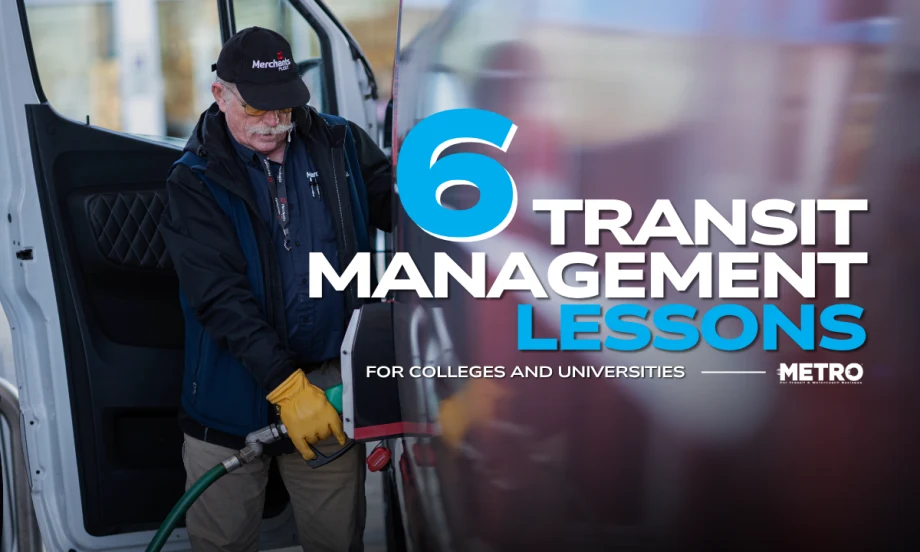
In today’s environment, fleets must be viewed not as fixed assets, but as strategic investments that can be optimized for efficiency, flexibility, and long-term value.
Credit:
Merchants Fleet/METRO
5 min to read
- Seasonal fluctuations in college transportation demand pose challenges that require strategic management.
- Institutions are implementing effective fleet strategies to address these varying demands.
- Adapting transit management practices helps colleges optimize resource use and improve service efficiency.
*Summarized by AI
Colleges and universities operate on highly cyclical schedules, with transportation needs that rise and fall throughout the academic year. From busy athletic seasons and campus activities to quieter summer months, fleet and public transit demand is anything but consistent.
In this environment, traditional approaches to fleet ownership or long-term leasing can create inefficiencies, leaving institutions paying for underutilized vehicles or scrambling to secure transportation during peak periods. Many fleets operate with 20–30% underutilization on owned vehicles, particularly in seasonal or cyclical industries, driving unnecessary fixed costs.
With these realities, many schools and athletic programs should consider more flexible, short-term fleet solutions to better manage seasonal demand, control costs, and improve overall operational efficiency.
1. Academic Calendars Create Major Utilization Gaps
Transportation demand in higher education is driven by the academic calendar, with most activity concentrated in a roughly nine-month window. Athletic programs, student activities, and campus operations require consistent access to vehicles during the school year, but demand drops off significantly during summer and academic breaks.
This creates a utilization gap where owned or long-term leased vehicles like shuttles and buses sit idle for extended periods, while peak times, such as the start of a season or major events, can strain available resources if not properly planned.
2. Short-Term Fleet Solutions Can Better Match Real Usage Patterns
To address these fluctuations, many institutions are adopting short-term and flexible leasing models that allow them to match fleet size and duration to actual needs.
Instead of committing to multi-year leases or permanent ownership, schools can secure vehicles for specific timeframes, such as a three-month peak season or a nine-month academic cycle. This flexibility also extends across departments, enabling athletic programs, facilities teams, and campus operations to access the right additional vehicles, whether vans, cargo vehicles, or pickup trucks, without overcommitting resources.
3. Rapid-Response Fleet Support Can Prevent Operational Disruptions
A recent example highlights the impact of this approach. Plymouth State University, a Merchants Fleet client in New Hampshire, encountered a critical issue when a rented cargo van supporting its Men’s and Women’s Alpine Skiing teams broke down on the way to a two-week competition in Ontario.
Within an hour, Merchants Fleet began coordinating a solution, mobilizing its Asset Management Team to secure a replacement within three hours. This rapid response ensured the athletes could continue and compete as planned, demonstrating how flexible fleet solutions and responsive support can protect operations during critical moments.
4. Moving Away From Daily Rentals Could Improve Cost Control
Historically, many athletic departments and university programs have relied on frequent daily rentals to fill transportation gaps. However, this approach often comes with high costs and limited availability, particularly during busy summer months when demand is elevated across industries.
By securing vehicles in advance through short-term solutions, institutions can lock in predictable pricing, guarantee access during peak periods, and avoid last-minute shortages that can disrupt transit operations.
5. What Budget Constraints and Planning Cycles Reveal
Most colleges and universities operate on a July 1 fiscal year, making early planning critical. Institutions that proactively secure transportation in the first half of the year are better positioned to align costs with their budgets and avoid the volatility of peak-season pricing and availability. Waiting too long can lead to limited options and higher expenses, reinforcing the importance of forward planning as part of a broader fleet strategy.
6. Flexible Models Support Efficiency, Sustainability, and Risk Reduction
Beyond cost savings, short-term fleet and transit solutions can simplify operations by reducing the need for internal management. Access to newer vehicles, regular fleet refresh cycles, and included preventive maintenance help minimize downtime and improve reliability.
In many cases, service networks handle routine maintenance, allowing universities to focus less on managing vehicles and more on supporting their core operations.
Institutions are also navigating evolving priorities, including sustainability and risk management. While electric vehicles are becoming part of fleets, practical challenges such as charging infrastructure and operational limitations make widespread adoption more complex in the near term.
At the same time, factors like vehicle availability, manufacturer recalls, and regional regulations are pushing organizations to prioritize flexibility and diversification in their fleet strategies to reduce risk and maintain continuity. Ongoing supply chain disruption and longer vehicle replacement cycles are reinforcing this shift, as some transit fleets look to avoid overreliance on any single vehicle source or strategy.
In today’s environment, fleets must be viewed not as fixed assets, but as strategic investments that can be optimized for efficiency, flexibility, and long-term value. As colleges and universities continue to navigate fluctuating demand, budget pressures, and evolving operational needs, a more flexible approach to fleet management is becoming essential.
By aligning vehicle access with real usage patterns and planning proactively around seasonal demand, institutions can improve utilization, control costs, and ensure reliable transportation throughout the year.

Source:
Merchants Fleet
About the Author: Sal Fier serves as Merchants Fleet’s regional sales manager and is responsible for building lasting business partnerships with logistics companies that have a need for flexible, customizable vehicle services and mobility solutions. Prior to joining Merchants, Fier was Director of Operations for a Dollar Rent-a-Car franchisee for nearly 10 years and oversaw all aspects of the operations of a rent-a-car location. Fier received his bachelor’s degree from Lafayette College. He is based in the greater New York City area.
This article was authored and edited according to METRO editorial standards and style. Opinions expressed do not necessarily reflect that of METRO or Bobit Business Media.
Subscribe to Our Newsletter
More New Mobility

From Hardware to Digital Partner: Luminator Charts Its Next Chapter
CEO Magnus Friberg discusses Luminator’s shift toward becoming a digital partner, the growing importance of software and interoperability, and how AI can help agencies improve operations and passenger experience.
Read More →
Biz Briefs: Alstom Lands Canadian Contract, LYT to Supply California TSP, and More
In METRO's latest installment, we take a look at recent news from Complete Coach Works, Beep, FlixBus, and more partnerships making headlines across the transportation sector.
Read More →
CharterUP’s Armir Harris on Technology, AI, and the Future of Group Mobility
In a recent episode of METROspectives, CharterUP Founder/CEO Armir Harris discussed the company’s evolution from an online charter bus marketplace into a technology platform supporting public- and private-sector mobility and much more.
Read More →
Jacksonville’s NAVI Project Charts a New Course for Autonomous Public Transportation
Through its NAVI program, JTA is showing how autonomous vehicles, intelligent infrastructure, and coordinated operations can work together to deliver everyday public transportation.
Read More →
Biz Briefs: Luminator Marks Milestone and More
From manufacturers and suppliers to transit agencies and motorcoach operators, these updates offer a snapshot of the projects, partnerships and business moves driving the industry forward.
Read More →
New Tricks for Old Bureaucracies: Joshua Schank on Making Transit Innovation Stick
Former LA Metro Chief Innovation Officer Joshua Schank discusses why good ideas aren't enough, how transit agencies can overcome resistance to change, and why today's challenges demand more innovation.
Read More →
How DART's GoPass Is Redefining Regional Mobility
Serving 14 transit agencies, GoPass simplifies multimodal travel by allowing riders to plan, pay for, and manage an entire trip through one app.
Read More →
Biz Briefs: OCTA Taps Clean Energy for Hydrogen Station, Stadler to Supply Via Rail Vehicles, and More
From manufacturers and suppliers to transit agencies and motorcoach operators, these updates offer a snapshot of the projects, partnerships and business moves driving the industry forward.
Read More →CharterUP Expands Into New Mobility and Autonomous Transportation
Vice President of New Mobility Stephen Joos discusses how CharterUP is leveraging its nationwide transportation network, technology platform, and autonomous vehicle partnerships to expand into workforce mobility, campus shuttles, and transit solutions.
Read More →
METRO Magazine Announces 2026 Innovative Solutions Awards Winners
Projects Recognized for Advancing Mobility Through Technology, Accessibility, Workforce Innovation, and Operational Excellence
Read More →