The Hadley mirror business will remain in Elkhart, Ind., but will relocate from the Hadley site to its own production facility over the next few months. The management, engineering, customer service, administrative and production personnel of the Hadley mirror business will remain with the business and transition to Safe Fleet.
Safe Fleet acquired the mirror product line for buses, shuttles and coaches from Hadley, a market leader for transit bus mirrors based in Elkhart, Ind.
“The combination of Hadley with Specialty Manufacturing, Transpec, Pretoria and Seon, establishes Safe Fleet as the leading supplier of specialty safety components for transit buses,” said Safe Fleet President/CEO John R. Knox. “Additionally, Safe Fleet is well positioned to offer our full product line of mirrors, hatches, lighting, interiors and video to the school bus, motorcoach, RV, shuttle bus, emergency and military vehicle markets.”
Ad Loading...
The Hadley acquisition is the fifth for Safe Fleet which was formed in September 2013 when ROM Corporation and SMI Corporation merged.
The Hadley mirror business will remain in Elkhart, but will relocate from the Hadley site to its own production facility over the next few months. The management, engineering, customer service, administrative and production personnel of the Hadley mirror business will remain with the business and transition to Safe Fleet.
Chris Dutton and Michaele Dutton will continue to lead the Hadley mirror business and will report to Mike Hagan, VP, Safe Fleet bus and rail.
The growing Safe Fleet family of brands includes 11 brands, five of which are respected leaders within the bus / transit market, including Hadley, Seon, Specialty Manufacturing, Transpec and Pretoria.
Financial terms of the purchase were not disclosed.
Complete Parts features new branding with a new logo, a new contact telephone number, a dedicated order desk, enhanced processes and inventory, all designed to provide the parts bus operations need.
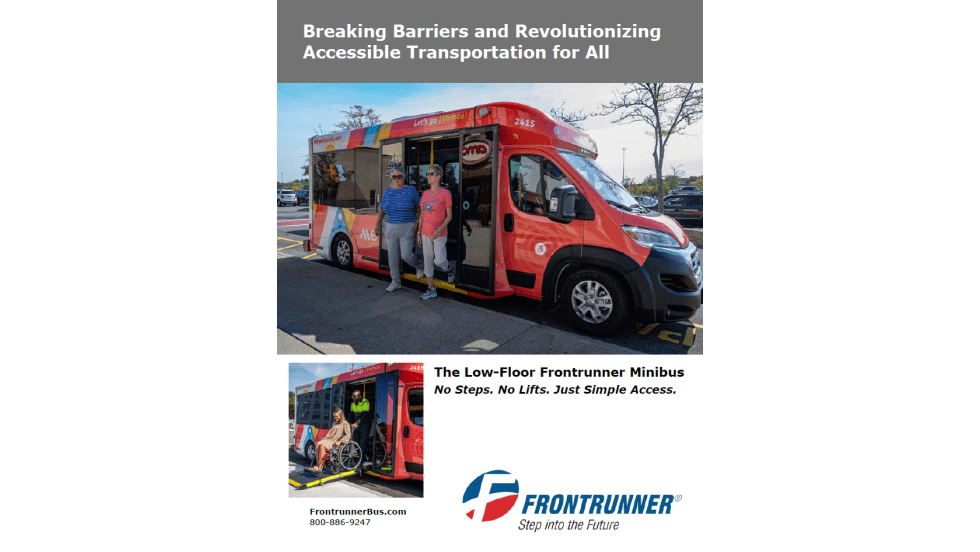
Accessible transit isn’t a feature—it’s a responsibility. This whitepaper explores how the Low-Floor Frontrunner is redefining mobility with a breakthrough design that removes barriers, empowers riders, and delivers measurable operational advantages for agencies. Discover why this next generation minibus is setting a new standard for inclusive transportation.
SEPTA was awarded $43 million in competitive grant funding from the FTA's FY25 Low and No Emission and Bus and Bus Facilities grant programs to support this procurement.
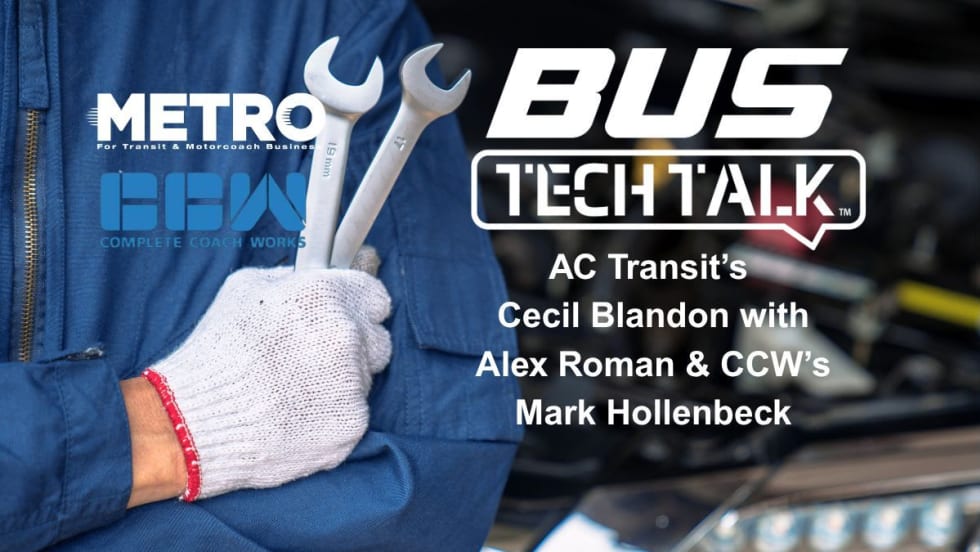
In part 1 of a two-part conversation, AC Transit’s director of maintenance joins co-hosts Alex Roman and Mark Hollenbeck to discuss his journey from the U.S. Marines to public transit and the role mentorship plays in developing the next generation of industry leaders.
When construction is complete, battery-electric buses will operate from the Arborway facility on Day One, providing cleaner, quieter, and more reliable service for riders, the MBTA said. After completion, the old facility will be demolished, and the land will be made available for redevelopment.
Nadine S. Lee, who has served as president/CEO since July 2021, said the decision comes after careful reflection on the agency’s progress and its path forward.
In this conversation, TBC’s Executive Director Ed Redfern, President Corey Aldridge, and Washington Representative Joel Rubin outline the coalition’s key policy priorities, the challenges facing transit agencies, and how industry stakeholders can work together to strengthen the voice of bus transit at the federal level.
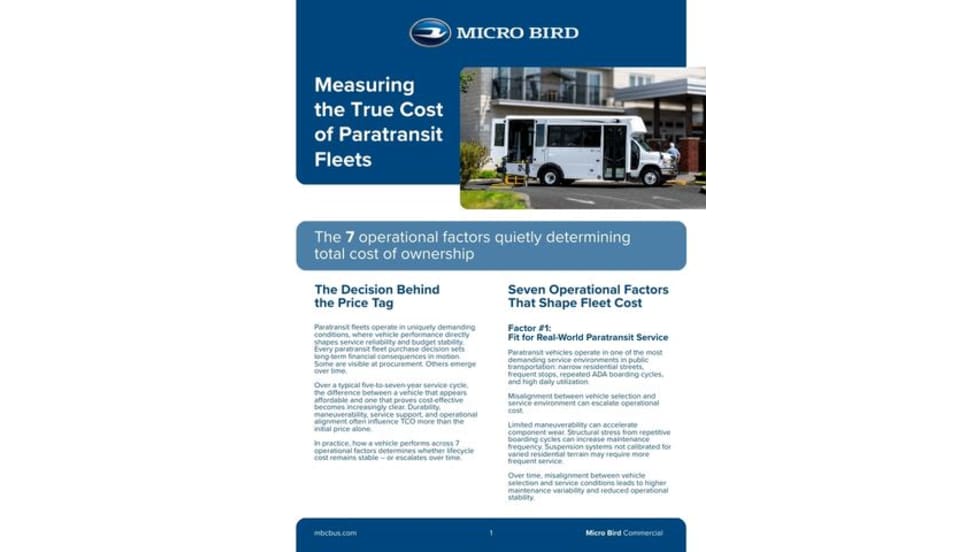
What truly drives the cost of a paratransit fleet? Beyond the purchase price, seven operational factors quietly determine maintenance frequency, downtime, and long-term service reliability. This whitepaper explores how these factors shape lifecycle cost and what agencies should evaluate when selecting paratransit vehicles.