



NJ TRANSIT releases strategic, capital plans to guide agency through 2030
Together, the plans provide the vision for the agency to build the future of transportation in New Jersey.
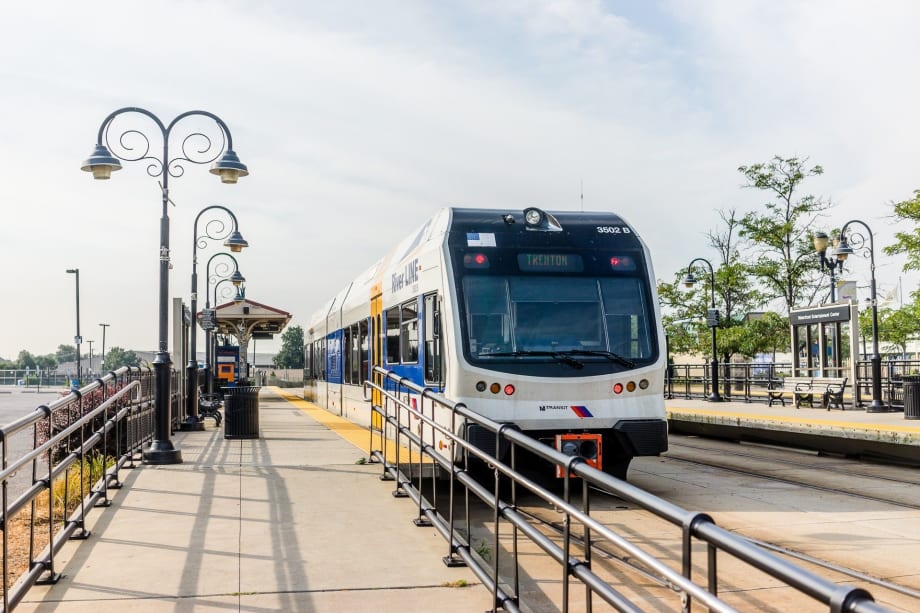
The Five-Year Capital Plan establishes five performance indicators called “project values” that help translate NJT2030's goals into metrics applicable to capital projects.
NJ TRANSIT
Gov. Phil Murphy and NJ TRANSIT President/CEO Kevin Corbett unveiled NJ TRANSIT’s 10-year strategic plan entitled “NJT2030: A 10-Year Strategic Plan” and a complementary five-Year Capital Plan. Together, the plans provide the vision for the agency to build the future of transportation in New Jersey.
“Before our current public health emergency, we made critical investments and undertook long-overdue reforms to NJ TRANSIT’s operations which have unquestionably improved reliability and performance,” said Gov. Murphy. “To safeguard that progress, NJT2030 and the Five-Year Capital Plan put forward the vision for how NJ TRANSIT will address a decade-long period of disinvestment, and further transform the agency’s core business functions to regain the confidence of customers, stakeholders, and the communities it serves.”
NJT2030: A 10-Year Strategic Plan
As the first strategic plan of its kind for NJ TRANSIT, NJT2030 begins with a vision to transform the agency into an innovative, world-class public transportation provider that meets the travel needs of every customer.
To achieve that vision, NJT2030 establishes five overarching goals:
Ensure the reliability and continued safety of the transit system.
Deliver a high-quality experience for all our customers, with their entire journey in mind.
Power a stronger and fairer economy for all communities in the region.
Promote a more sustainable future for our planet.
Build an accountable, innovative, and inclusive organization that delivers for New Jersey.
To realize these goals, NJT2030 includes deliverables within the first two years, in years three through five, and years six through 10 of the plan. Highlights include:
Improving on-time-performance.
Increasing service on the most congested bus routes.
Rail and Bus fleet replacement, including the advancement of our net-zero emissions bus program.
Upgrading Information Technology systems.
Station rehabilitations.
Improving accessibility to the system.
The primary focus of this plan is putting customers at the center of the agency’s decision-making. Based on feedback from customers, elected officials, transit advocates, and other external stakeholders, more than 100 specific strategic initiatives have been laid out for NJ TRANSIT to achieve and implement between now and 2030.
NJ TRANSIT has addressed the impacts of COVID-19 in the Strategic Plan with actions to give customers and transit operators confidence as the State begins its restart and recovery, including enhanced cleaning, social distancing, and the use of personal protective equipment among both customers and employees, enhanced communications, and greater cooperation with regional transit partners to defend against spread of the virus and share best practices.
NJ TRANSIT: A Five-Year Capital Plan
In addition to NJT2030, the agency is issuing a rolling, unconstrained five-year capital plan, which is a comprehensive capital investment strategy that describes what NJ TRANSIT can achieve with sustained and dependable funding over an extended period. The Capital Plan includes more than 100 projects touching every aspect of NJ TRANSIT service, including Access Link, Bus, Light Rail and Rail designed to establish NJ TRANSIT as a world-class transit system.
The Five-Year Capital Plan establishes five performance indicators called “project values” that help translate NJT2030's goals into metrics applicable to capital projects. The five project values are:
State of Good Repair
Customer Experience
Safety
Resiliency
Business Performance
The Capital Plan provides a path forward to a vastly improved customer experience and a future of healthy, inclusive, and sustainable communities throughout New Jersey.
More Management

METRO Opens Submissions for 2026 Motorcoach Awards
Nominations are now being accepted for METRO Magazine’s Operator of the Year and Innovative Operator of the Year awards.
Read More →
New York MTA Advances Final Contract for Second Avenue Subway Expansion
Contract Four is the largest in the Second Avenue Subway Phase 2 project and includes construction of station infrastructure, tracks, and signals for the subway expansion, MTA officials said. Work on Contract Four will begin in 2027.
Read More →
Transit Agencies Highlight Safety Gains at National Summit
Leaders from 15 major transit systems shared crime-reduction results and safety initiatives while discussing the role of continued federal support.
Read More →

NITA Names New Leadership, Expands Reduced-Fare Program at First Board Meeting
The new regional transit authority appointed its first board chair and interim executive director while extending reduced fares across CTA, Metra, and Pace for eligible riders.
Read More →
Beyond the Checklist: A Structured Approach to Transit Maintenance
Reliability-Centered Maintenance helps transit agencies move beyond routine checklists to focus limited resources on the assets and failures that have the greatest impact on safety, reliability, and service.
Read More →
APTA 2026 Nominating Committee Selects Leadership Slate, Names Chair and Vice Chair Nominees
Leadership changes will help shape the association’s priorities and its representation of the transportation industry during the 2026–2027 term.
Read More →
DART Launches Major Security, Fare Enforcement Initiative
The 90-day demonstration will deploy coordinated security teams at five light rail stations while testing controlled access and gathering data to guide future investments.
Read More →
Advancing Fare Collection Through Technology and Innovation
Learn about delivering 1300 gates at 91 stations while managing fare evasion. Explore the large scale deployment, solution customization and real-world results that affect the region. Prepare for deployment in your region now.
Read More →
Game Day in Motion: Moving Millions During the 2026 World Cup
Between packed transit stations and team motorcoaches, see how agencies and operators across North America tackled the transportation demands of the 2026 FIFA World Cup.
Read More →
Surface Transportation Extension Averts Shutdown, Leaves Transit Funding Gap
The stopgap keeps federal transportation programs moving, but missing advance funding could complicate the transit and rail projects agencies are planning next.
Read More →