



Stantec-Designed NYC Transit Improvements Open for Public Use
The East Side Access project, which extends the LIRR from Queens to Grand Central, is scheduled for completion in 2022 and is expected to bring up to 160,000 additional commuters to this bustling transit area each day.
As part of a unique public-private partnership, these transit improvements will ease the commute and improve the experience for the estimated 750,000 people that passed through the adjacent Grand Central Terminal daily before the pandemic.
Stantec
The completion of One Vanderbilt Avenue, which joins the world’s most recognizable skyline as the second tallest office tower in New York City at 1,401 feet, also marks a significant milestone for the Midtown transit system. All components of One Vanderbilt’s $220 million transit improvement project, designed by Stantec and funded by SL Green, are now complete and open to the public.
As part of a unique public-private partnership, these transit improvements will ease the commute and improve the experience for the estimated 750,000 people that passed through the adjacent Grand Central Terminal daily before the pandemic. Furthermore, the East Side Access project, which extends the Long Island Rail Road (LIRR) from Queens to Grand Central, is scheduled for completion in 2022 and is expected to bring up to 160,000 additional commuters to this bustling transit area each day.
Infrastructure improvements include a 14,000 square foot pedestrian plaza on Vanderbilt Avenue between Grand Central and One Vanderbilt. Inside the tower, a 4,000 square foot public transit hall and series of below-grade ADA-accessible concourses and corridors provide new and enhanced connections to the Metro-North Railroad, the shuttle to Times Square, and future access to the LIRR station as part of the East Side Access project. The new transit hall’s flow and high-end finishes of stone, tile, glass, and metals echo the distinctive interiors of Grand Central and its clearly organized, airy open spaces.
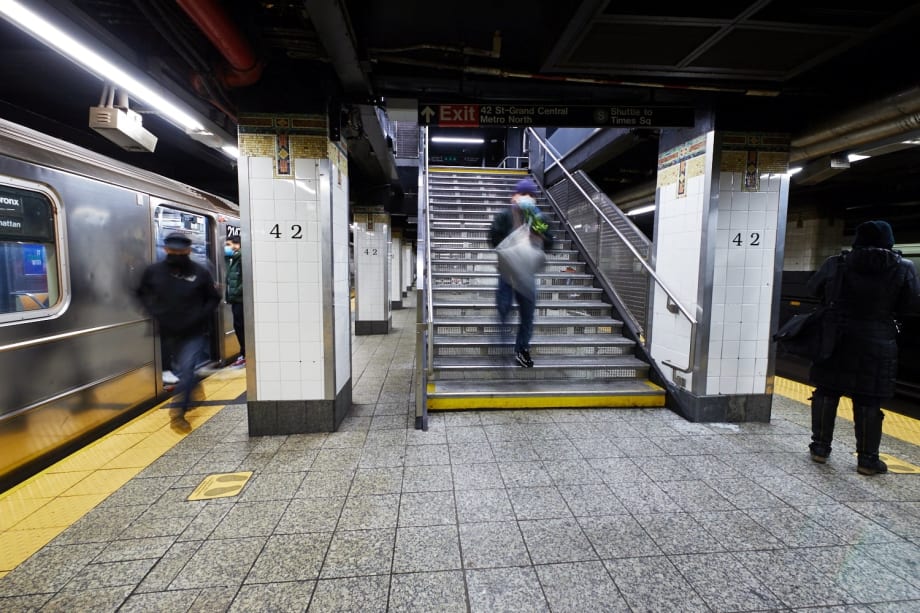
The long-shuttered passageway between Grand Central and the Socony-Mobil Building has also re-opened with the addition of two street-level subway entrances and a new entrance to the 42nd Street subway station on the southeast corner of 42nd Street and Lexington Avenue. Circulation space on the subway platforms and mezzanine has been increased by 37%, providing commuters more room to socially distance and allowing for increased capacity once transit use rebounds to pre-pandemic levels. Enhanced finishes, additional turnstiles and gates, new stairways, escalators, and an ADA-accessible elevator have been added to ease congestion and improve transfers and the overall transit experience in the third busiest station in the New York City subway system.
Stantec’s scope of work included: preparation of all transit-related designs (including those for meeting ADA compliance), coordination of approvals between multiple MTA agencies, coordination with city code enforcement on fire and life safety measures, and collaboration with stakeholders to ensure full integration between the new tower, Grand Central Terminal, the 42nd Street subway station, and the Grand Hyatt New York Hotel.
More Management

METRO Opens Submissions for 2026 Motorcoach Awards
Nominations are now being accepted for METRO Magazine’s Operator of the Year and Innovative Operator of the Year awards.
Read More →
New York MTA Advances Final Contract for Second Avenue Subway Expansion
Contract Four is the largest in the Second Avenue Subway Phase 2 project and includes construction of station infrastructure, tracks, and signals for the subway expansion, MTA officials said. Work on Contract Four will begin in 2027.
Read More →
Transit Agencies Highlight Safety Gains at National Summit
Leaders from 15 major transit systems shared crime-reduction results and safety initiatives while discussing the role of continued federal support.
Read More →

NITA Names New Leadership, Expands Reduced-Fare Program at First Board Meeting
The new regional transit authority appointed its first board chair and interim executive director while extending reduced fares across CTA, Metra, and Pace for eligible riders.
Read More →
Beyond the Checklist: A Structured Approach to Transit Maintenance
Reliability-Centered Maintenance helps transit agencies move beyond routine checklists to focus limited resources on the assets and failures that have the greatest impact on safety, reliability, and service.
Read More →
APTA 2026 Nominating Committee Selects Leadership Slate, Names Chair and Vice Chair Nominees
Leadership changes will help shape the association’s priorities and its representation of the transportation industry during the 2026–2027 term.
Read More →
DART Launches Major Security, Fare Enforcement Initiative
The 90-day demonstration will deploy coordinated security teams at five light rail stations while testing controlled access and gathering data to guide future investments.
Read More →
Advancing Fare Collection Through Technology and Innovation
Learn about delivering 1300 gates at 91 stations while managing fare evasion. Explore the large scale deployment, solution customization and real-world results that affect the region. Prepare for deployment in your region now.
Read More →
Game Day in Motion: Moving Millions During the 2026 World Cup
Between packed transit stations and team motorcoaches, see how agencies and operators across North America tackled the transportation demands of the 2026 FIFA World Cup.
Read More →
Surface Transportation Extension Averts Shutdown, Leaves Transit Funding Gap
The stopgap keeps federal transportation programs moving, but missing advance funding could complicate the transit and rail projects agencies are planning next.
Read More →