



MARTA to Restore Suspended Bus Routes
Last spring, MARTA suspended 70 of its 110 bus routes due to the COVID-19 pandemic and the need for social distancing. All routes will be restored on April 24.
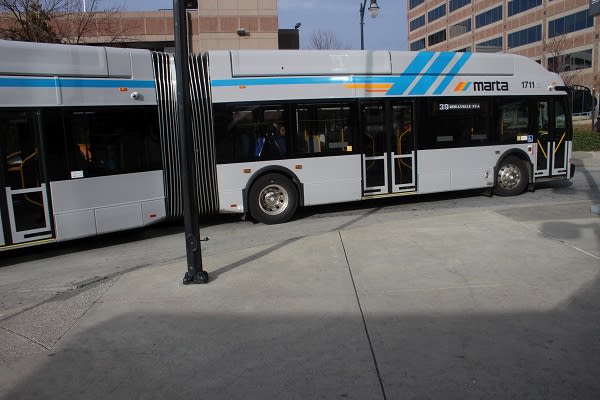
MARTA suspended 70 of its 110 bus routes last spring due to the COVID-19 pandemic and the need for social distancing.
MARTA
The Metropolitan Atlanta Rapid Transit Authority (MARTA) is restoring some of its previously suspended bus routes and implementing service frequency adjustments to match its reduced demand in ridership and address bus capacity limitations.
Last spring, MARTA suspended 70 of its 110 bus routes due to the COVID-19 pandemic and the need for social distancing. Twelve routes were reinstated as conditions allowed, and now 58 remaining routes will be restored on April 24.
“We understand the reduction in bus routes created a hardship for many of our customers, and we are appreciative of their patience as we balanced providing a service with protecting public health,” said MARTA GM/CEO Jeffrey Parker. “While returning these routes means returning a sense of normalcy for many customers, it does come with a change to service frequency to account for reduced ridership. To align with current health recommendations, we are limiting bus capacity to seated loads only, no standing or crush loads, and extra buses will be on standby to be placed into service to minimize overcrowding.”
Masks are still required on MARTA and available through a mask dispenser located near the front door, or from an operator when dispensers are running low. Additionally, all buses are equipped with bipolar ionization air filters that eliminate airborne pathogens and deliver clean air every 75 seconds. MARTA will evaluate ridership demand over the next several months, and once COVID safety restrictions are lifted, look at returning to pre-COVID service frequency later this year.
More Bus

New York MTA Plans Largest Bus Fleet Upgrade in More Than a Decade
The agency is seeking manufacturers for 650 new CNG buses to replace aging vehicles, improve reliability, and advance its broader fleet modernization strategy.
Read More →
Building a Flexible Path to Transit Electrification
John Hroncich discusses BAE Systems’ modular and scalable approach, lessons learned from decades of real-world operations, and how agencies can identify electrification strategies that fit their fleets.
Read More →
Bus Tech Talk: Keeping Transit Technicians Ahead of the Technology Curve
LA Metro’s Obed Mejia discusses technician training, evolving maintenance technology, fleet replacement, and strategies for getting the most out of today’s transit fleets.
Read More →
Biz Briefs: RIPTA Unveils New Frontrunners, Clevland RTA Adds New Siemens, and More
In METRO's latest installment, we take a look at recent news from Siemens, Prevost, Dodge, and more partnerships making headlines across the transportation sector.
Read More →
People Movement: Holly Arnold Joins Transdev and More
In this edition, we also cover recent appointments and announcements at Pace, CamTran, MCI, and more, showcasing the individuals helping to shape the future of transportation.
Read More →
The High Cost of Transit Buses: Industry Leaders Look to Procurement Reform
Transit leaders and policymakers examine how standardized bus designs, streamlined procurement, and predictable funding could help agencies stretch budgets and deliver better service.
Read More →
The Business Voice Behind Public Transportation
As chair of APTA’s Business Members Board of Governors, Ray Melleady explains how more than 850 business members are partnering with transit agencies to advance funding, innovation, and industry-wide collaboration.
Read More →
From Surviving to Thriving: Building Stronger Transportation Organizations
Bus Business Consultants founder Brian Dickson shares lessons on leadership, organizational health, and creating options for long-term success in a changing transportation industry.
Read More →
Finding the ‘Happy Medium’: Optimizing Maintenance Without Sacrificing Reliability
The key to maintenance optimization isn’t doing less work—it’s doing the right work at the right time on the right assets.
Read More →
LA Metro, City of West Hollywood, and Partners Advance Smarter Bus Lane Enforcement
The award-winning partnership combines AI-powered detection with human oversight to improve bus reliability, accessibility, and enforcement efficiency.
Read More →