



MARTA to Begin Distributing Masks at Transit Stations
The agency is also using electrostatic sprayers to clean and sanitize its entire fleet of approximately 500 buses every evening and disinfect high touch surfaces on 200 buses throughout the day.
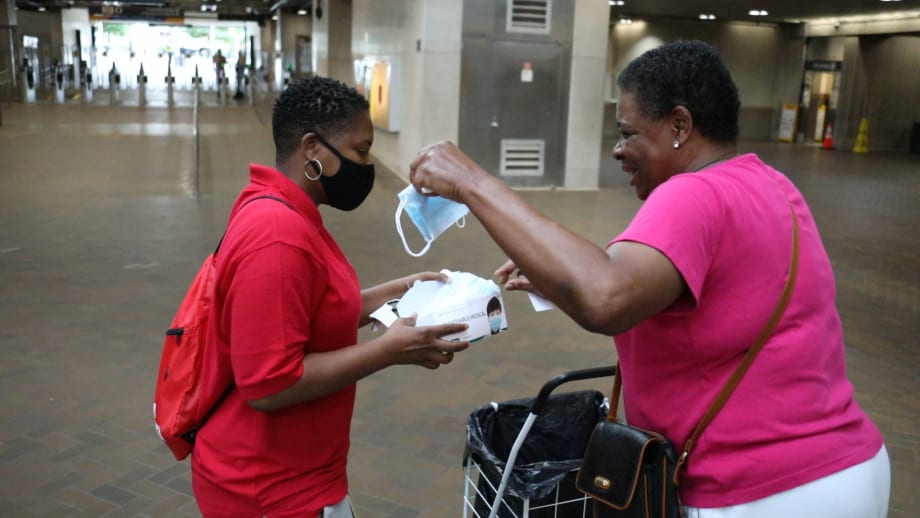
MARTA will deploy staff and volunteers to hand out as many as two million disposable masks at its rail stations and bus bays.
MARTA
The Metropolitan Atlanta Rapid Transit Authority (MARTA) is reinforcing its commitment to do everything possible to fight COVID-19 by distributing free masks to customers at transit stations beginning Monday.
MARTA will deploy staff and volunteers to hand out as many as two million disposable masks at its rail stations and bus bays. The Centers for Disease Control and Prevention (CDC) continues to recommend masks be worn to reduce the spread of coronavirus.
“Since the onset of the pandemic, we have instituted safety precautions and new cleaning protocols in order to continue providing essential transit service while protecting our customers and employees,” said MARTA GM/CEO Jeffrey Parker. “We are now asking our customers to join us in helping to stop the spread of this virus by wearing a mask while on MARTA. We appreciate those riders who are wearing masks and understand you may not have access to masks or there may be a day you forget yours. We want you to know we’ve got you covered and to please take and wear a mask before boarding a bus or train.”
MARTA’s mask giveaway for customers will kick off between 7 a.m. and 11 a.m. on weekdays. It will be expanded to weeknights and weekends, based on ridership demand. The program is expected to continue until further notice or public health recommendations change.
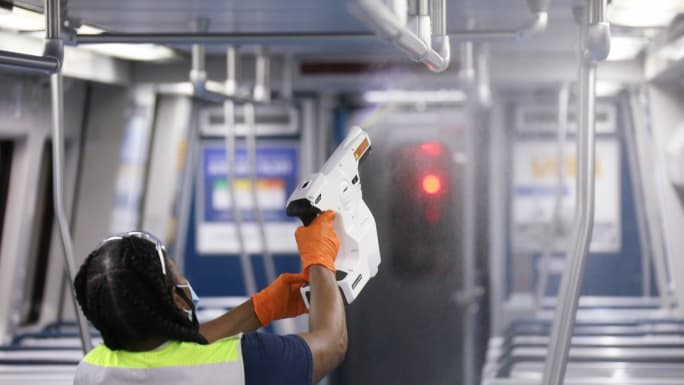
MARTA uses electrostatic sprayers to clean and sanitize its entire fleet of approximately 500 buses every evening and disinfect high touch surfaces on 200 buses throughout the day.
MARTA
The agency is constantly working to prevent the spread of the virus by requiring all employees, contractors, and visitors to wear masks while on MARTA property or in a MARTA vehicle, and by using state-of-the-art cleaning technology to thoroughly disinfect all buses, trains, and facilities.
MARTA uses electrostatic sprayers to clean and sanitize its entire fleet of approximately 500 buses every evening and disinfect high touch surfaces on 200 buses throughout the day. The agency’s railcars are lightly cleaned while in-service and disinfected each night. The sprayers make frequent daily sanitizing of high touch areas in MARTA’s 38 rail stations easier and more efficient than the standard wipe down method.
More Security and Safety

Transit Agencies Highlight Safety Gains at National Summit
Leaders from 15 major transit systems shared crime-reduction results and safety initiatives while discussing the role of continued federal support.
Read More →
DART Launches Major Security, Fare Enforcement Initiative
The 90-day demonstration will deploy coordinated security teams at five light rail stations while testing controlled access and gathering data to guide future investments.
Read More →
RTD Launches NextRide App to Consolidate Trip Planning, Fares, Security Reporting
The app expands on RTD’s existing NextRide web application and allows customers to view real-time vehicle locations and service alerts, purchase and store digital fares, and access customer support.
Read More →

TAPTCO Updates OSHA Compliance Training for Transit Maintenance Operations
The revamped program addresses 26 OSHA standards for maintenance facilities, with TAPTCO pointing to training, documentation, and everyday shop hazards as continuing challenges for transit operations.
Read More →
How VaporVision Adds Value to Transit Door Systems
Wabtec engineers explain how the system improves doorway detection, strengthens diagnostics and gives transit agencies and OEMs greater operating flexibility.
Read More →
FRA Announces $5.3B in Rail Investments, Including $2B for Amtrak
Funding will support grade-crossing improvements, infrastructure upgrades, and new Amtrak equipment in 23 states.
Read More →
Chicago, Maryland Expand Non-Law-Enforcement Safety, Rider Support
The CTA and MTA are launching new programs aimed at de-escalation, crisis response, rider assistance, and greater transparency.
Read More →
LA Metro, City of West Hollywood, and Partners Advance Smarter Bus Lane Enforcement
The award-winning partnership combines AI-powered detection with human oversight to improve bus reliability, accessibility, and enforcement efficiency.
Read More →
LA Metro Reports 57% Decline in Homelessness on Transit System Since 2024
The agency's latest homelessness count offers new data on how care-based services and cross-sector partnerships can complement traditional transit security strategies.
Read More →
FTA Launches 'Transit Moves America' Dashboard to Highlight Agency Safety and Performance
The online dashboard transforms National Transit Database information into a public-facing resource that allows users to compare transit agencies on key operational and safety metrics.
Read More →