



Talking Passenger Rail, Workforce Development With LAN’s Schmidt
Timothy Schmidt, VP of Lockwood, Andrews, & Newnam Inc., is one of several top executives METRO spoke with for a consultant roundtable in the July issue.

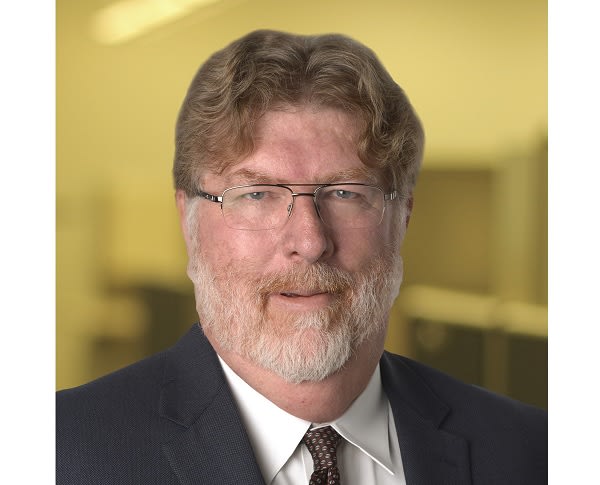
Timothy Schmidt is VP of Lockwood, Andrews, & Newnam Inc.
As cities, states, and provinces throughout the U.S. and Canada slowly begin to reopen, there is no doubt there will be a new normal not only in the way people commute, but in the way capital projects are planned and executed.
Timothy Schmidt, VP of Lockwood, Andrews, & Newnam Inc., is one of several top executives METRO spoke with for a consultant roundtable in the July issue to discuss what may lie ahead for transit service planning, capital projects, workforce development, and much more.
With the pandemic hitting passenger rail systems quite hard, how quickly do you feel those systems can recover and what will be some of the keys to that recovery?
Transit properties and agencies were certainly hit very hard by the pandemic. Transit ridership sunk to new lows. Many of them had expansions planned that were based on pre-pandemic models. As more people get vaccinated and we get closer to herd immunity, mass transit systems will start to see an increase in ridership.
Another key aspect of the recovery is the economy. Most transit agencies get their funding through sales and gas taxes, and tax collections have gone down. The infrastructure bill that our new administration is working on will be critical in replenishing these tax shortfalls. The recent COVID-19 relief bill and last year’s CARES Act provided some operating expenses relief, but the infrastructure bill will be critical for the expansion and maintenance work that transit agencies have planned.
All indicators are that we are coming back well. Jobs are growing again, and unemployment is going down. These are all key to bringing passengers back. The last piece that is needed is the infrastructure stimulus.
How is your firm continuing to work with clients as we continue to slowly emerge from the pandemic?
During the pandemic, we learned how to communicate and build relationships with our clients through Microsoft Teams calls and conference calls, and we did that successfully. With our clients slowly returning to their workplaces, we are starting to do the same. We are continually working with them to understand and address their needs. Some clients prefer design charettes and face-to-face meetings in their offices. Other clients are ok with collaborating virtually. It all depends on what the clients want.
With workforce development being such a huge aspect of the industry, how do you feel these new work norms, like work from home, will impact a company’s ability to continue the professional growth of its employees?
At our firm, we have always placed a big emphasis on professional development. One of the things that I and many of my colleagues missed over the last 15 months was mentoring young professionals one-on-one. Our own internal survey showed that collaboration was one of the top three challenges employees faced because of remote work.
Keeping this in mind, our firm just launched a new program called COACH. Through this program, employees and their supervisors can engage in regular forward-looking dialogue that focuses on strengths and areas of opportunity to help employees along their professional path. The model allows the employee and his/her supervisor to connect frequently on professional goals and expectations. I believe this leaner, more agile model will be invaluable to our employees, whether they are working from home or in the office.
On a personal level, what are the top 3 things that helped you get through the pandemic? Pick up any new hobbies?
From my perspective, the projects that I was working on were considered essential. So, I never really stopped working and that is probably one of the things that helped me get through the pandemic.
Two, I was able to stay in touch with my team and colleagues as well as communicate and build relationships with our clients through Microsoft Teams and conference calls. So, that helped as well.
As far as hobbies are concerned, I have always enjoyed cooking. I love to barbecue and smoke meats. I have a large smoker that I use quite extensively. During the pandemic, I also branched out and tried eastern European dishes and Indian cuisines.
More Management

METRO Opens Submissions for 2026 Motorcoach Awards
Nominations are now being accepted for METRO Magazine’s Operator of the Year and Innovative Operator of the Year awards.
Read More →
New York MTA Advances Final Contract for Second Avenue Subway Expansion
Contract Four is the largest in the Second Avenue Subway Phase 2 project and includes construction of station infrastructure, tracks, and signals for the subway expansion, MTA officials said. Work on Contract Four will begin in 2027.
Read More →
Transit Agencies Highlight Safety Gains at National Summit
Leaders from 15 major transit systems shared crime-reduction results and safety initiatives while discussing the role of continued federal support.
Read More →

NITA Names New Leadership, Expands Reduced-Fare Program at First Board Meeting
The new regional transit authority appointed its first board chair and interim executive director while extending reduced fares across CTA, Metra, and Pace for eligible riders.
Read More →
Beyond the Checklist: A Structured Approach to Transit Maintenance
Reliability-Centered Maintenance helps transit agencies move beyond routine checklists to focus limited resources on the assets and failures that have the greatest impact on safety, reliability, and service.
Read More →
APTA 2026 Nominating Committee Selects Leadership Slate, Names Chair and Vice Chair Nominees
Leadership changes will help shape the association’s priorities and its representation of the transportation industry during the 2026–2027 term.
Read More →
DART Launches Major Security, Fare Enforcement Initiative
The 90-day demonstration will deploy coordinated security teams at five light rail stations while testing controlled access and gathering data to guide future investments.
Read More →
Advancing Fare Collection Through Technology and Innovation
Learn about delivering 1300 gates at 91 stations while managing fare evasion. Explore the large scale deployment, solution customization and real-world results that affect the region. Prepare for deployment in your region now.
Read More →
Game Day in Motion: Moving Millions During the 2026 World Cup
Between packed transit stations and team motorcoaches, see how agencies and operators across North America tackled the transportation demands of the 2026 FIFA World Cup.
Read More →
Surface Transportation Extension Averts Shutdown, Leaves Transit Funding Gap
The stopgap keeps federal transportation programs moving, but missing advance funding could complicate the transit and rail projects agencies are planning next.
Read More →