



TTC’s 2022 Budget Returns Service to Pre-Pandemic Levels
The $2.24-billion operating budgets for both conventional and Wheel-Trans services will fund restoration of service to 100% of pre-pandemic levels on the conventional network with some room for new and enhanced TTC programs.
The TTC’s budget goes to the City of Toronto for final approval by Council early next year.
TTC
The Toronto Transit Commission’s (TTC) board approved next year’s operating and capital budgets, which will return service to pre-pandemic levels without a fare increase and fund longer-term projects aimed at modernizing the TTC and addressing the city’s future transit needs.
"This is a right and responsible budget for our TTC. We have worked hard to protect transit service throughout the pandemic and this budget will make sure that it continues to increase as we come out of the pandemic. This budget will also invest $1.7 billion in the TTC's capital infrastructure, including more streetcars and buses. These are investments we have to make to keep our transit service going so that it can be the backbone of our strong economic recovery," said Toronto Mayor John Tory. "Along with returning service to pre-pandemic levels, this budget also freezes TTC fares for the second year in a row. This will help make sure that transit remains affordable for residents and that we keep encouraging people to use transit – something we need to do as we look to keep building TTC ridership back up."
The $2.24-billion operating budgets for both conventional and Wheel-Trans services will fund restoration of service to 100% of pre-pandemic levels on the conventional network with some room for new and enhanced TTC programs.
The budget includes funding for:
The opening of Line 5, Eglinton-Crosstown in 2022 and preparing for the opening of Line 6 Finch West in 2023.
Restoration of full pre-pandemic service levels in the second quarter of 2022.
Increased Wheel-Trans service to meet demand.
A Service Plan reset and Ridership Reacquisition Strategy, critical to serve anticipated post-pandemic changes in transit demand and travel patterns.
Completion of the 10-Year Fare Collection Strategy to modernize the TTC’s fare collection system.
Innovation and Sustainability review focused on embedding innovation, environmental sustainability, and climate change resilience at the TTC.
Enhanced diversity, anti-Black racism, and mental health training, allowing the TTC to be a leader in inclusive and accessible transit service.
This year’s share of the $12 billion 2022-2031 capital budget plan is approximately $1.7 billion, comprising $1.2 billion for infrastructure projects and $525 million for vehicle projects. Consistent with the 10-year Capital Plan, approximately 60% is dedicated to state-of–good-repair with the balance allowing the TTC to begin or continue work on critical service improvement projects and complete vehicle-related procurements.
The capital budget report also updates the TTC’s 15-year, $37 billion Capital Investment Plan (CIP) and introduces the TTC’s first Real Estate Investment Plan, a 15-year strategic roadmap that supports the CIP.
Highlights of the TTC’s 2022-2031 Capital Budget and Plan include:
Funding for essential safety and state-of-good-repair capital work to ensure safety and reliability of our system.
Funding to meet legislative requirements related to full accessibility of the system by 2025.
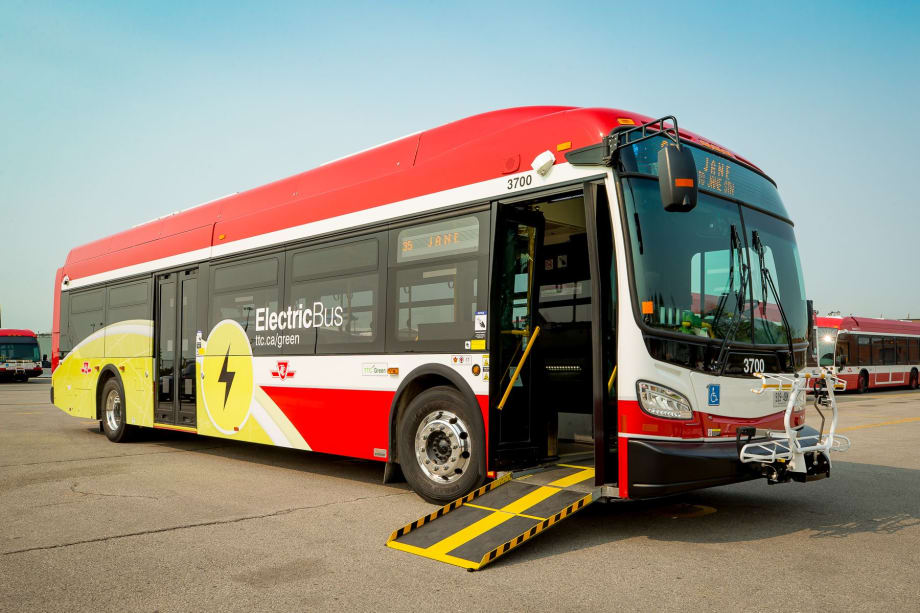
Advancing delivery of the fleet procurement strategy for the procurement of 60 streetcars, 300 hybrid buses, 300 battery-electric buses, and 70 Wheel-Trans vehicles.
Continuing work on three major capacity improvement projects (Bloor-Yonge, Line 1, and Line 2).
Facilitating business modernization such as SAP; Maximo; Vision, Wheel-Trans, and Stations Transformation.
Enhancing coordination of activities and resourcing within the major projects group where 27 projects or programs account for nearly three-quarters of the total $12.1 billion Capital Plan.
“Modernizing the TTC and transforming to meet future population and ridership growth are at the heart of our long-term capital plans,” said TTC CEO Rick Leary. “These budgets ensure we will have the vehicles and network capacity the TTC will need to support the city over the coming decades.”
The TTC’s budget goes to the City of Toronto for final approval by Council early next year.
More Management

METRO Opens Submissions for 2026 Motorcoach Awards
Nominations are now being accepted for METRO Magazine’s Operator of the Year and Innovative Operator of the Year awards.
Read More →
New York MTA Advances Final Contract for Second Avenue Subway Expansion
Contract Four is the largest in the Second Avenue Subway Phase 2 project and includes construction of station infrastructure, tracks, and signals for the subway expansion, MTA officials said. Work on Contract Four will begin in 2027.
Read More →
Transit Agencies Highlight Safety Gains at National Summit
Leaders from 15 major transit systems shared crime-reduction results and safety initiatives while discussing the role of continued federal support.
Read More →

NITA Names New Leadership, Expands Reduced-Fare Program at First Board Meeting
The new regional transit authority appointed its first board chair and interim executive director while extending reduced fares across CTA, Metra, and Pace for eligible riders.
Read More →
Beyond the Checklist: A Structured Approach to Transit Maintenance
Reliability-Centered Maintenance helps transit agencies move beyond routine checklists to focus limited resources on the assets and failures that have the greatest impact on safety, reliability, and service.
Read More →
APTA 2026 Nominating Committee Selects Leadership Slate, Names Chair and Vice Chair Nominees
Leadership changes will help shape the association’s priorities and its representation of the transportation industry during the 2026–2027 term.
Read More →
DART Launches Major Security, Fare Enforcement Initiative
The 90-day demonstration will deploy coordinated security teams at five light rail stations while testing controlled access and gathering data to guide future investments.
Read More →
Advancing Fare Collection Through Technology and Innovation
Learn about delivering 1300 gates at 91 stations while managing fare evasion. Explore the large scale deployment, solution customization and real-world results that affect the region. Prepare for deployment in your region now.
Read More →
Game Day in Motion: Moving Millions During the 2026 World Cup
Between packed transit stations and team motorcoaches, see how agencies and operators across North America tackled the transportation demands of the 2026 FIFA World Cup.
Read More →
Surface Transportation Extension Averts Shutdown, Leaves Transit Funding Gap
The stopgap keeps federal transportation programs moving, but missing advance funding could complicate the transit and rail projects agencies are planning next.
Read More →