



CTA Launches New Building Small Businesses Program
The BSB Program is the latest in a series of initiatives launched by the CTA to bring equity and inclusion to all aspects of its operations.

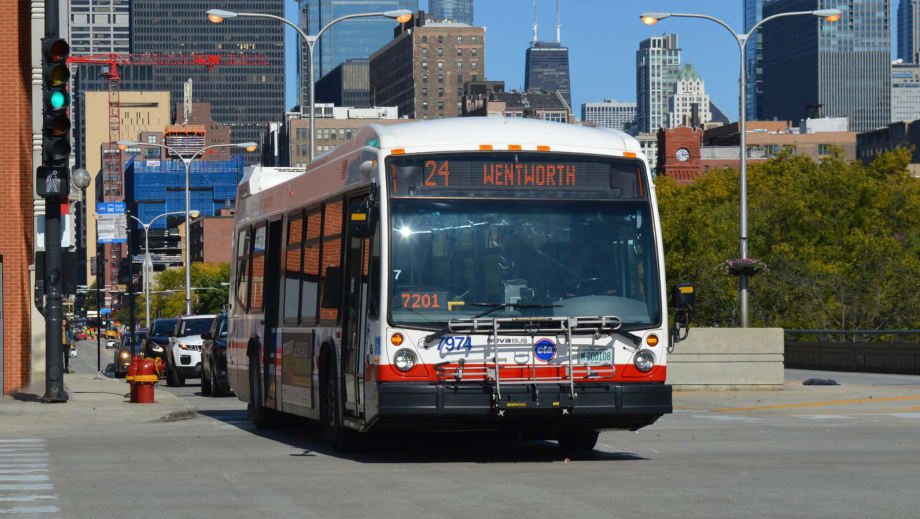
The BSB Program is the latest in a series of initiatives launched by the CTA to bring equity and inclusion to all aspects of its operations.
NOVA Bus
The Chicago Transit Authority (CTA), in partnership with Ascend HUB Interactive (HI), announced the official launch of the CTA Building Small Businesses (BSB) Program, an innovative resource model and initiative designed to increase local small business participation in large-scale, government capital improvement projects. The BSB Program is the latest in a series of initiatives launched by the CTA to bring equity and inclusion to all aspects of its operations.
“More than just buses and trains moving about the city, public transit is the equity equalizer for everyone, providing affordable access to jobs, schools, and vital resources — regardless of one’s background or circumstances,” said CTA President Dorval R. Carter Jr. “The Building Small Businesses Program allows us to further extend the benefits of public transit to the communities we serve by providing the tools and resources small, minority-owned businesses need to properly and successfully compete for CTA and other large-scale contracting opportunities that are traditionally out of their reach.”
The BSB Program was developed to provide financial guidance to small businesses and other Disadvantaged Business Enterprises (DBEs) by offering direct loan placement and other supports so they can demonstrate the up-front capital needed to compete on large-scale transportation construction and capital programs.
For some small businesses, working on a large construction project requires resources that many firms don’t have, including cash flow that can allow them to purchase materials ahead of being reimbursed, access to loans and other forms of credit, insurance for larger jobs, and access to IT and administrative supports. Without these tools, it can be impossible for many Chicago area small businesses to participate in construction projects.
The BSB Program was officially launched at a networking and informational event on Thursday, July 21, where more than 60 local firms attended to learn about the BSB Program and also hear from invited guest speakers including, Nuria Fernandez the Administrator of the Federal Transit Administration, and Shelby Scales, director, office of small and disadvantaged business utilization at the U.S. Department of Transportation.
Piloted in 2019 under the Red and Purple Modernization program Phase One, the BSB Program proved to be quite successful, with more than 100 Chicago area small businesses having participated in the program, of which 20 received $5.6 million in financing, which is vital for building the capacity to be ready to bid for sub-contract work on CTA projects, including becoming loan-ready to build their business.
The program consists of free capacity-building workshops for small businesses that are certified as Disadvantaged Business Enterprises (DBE) or that are interested in becoming DBE-certified.
The BSB program provides one-on-one financial guidance and helps with prequalifying for loan packages. Firms that do not immediately prequalify for financing will be given access to direct loan placement for financial needs like mobilization, working capital for payroll, equipment, and other cash flow needs. The program includes education on insurance and bonding. Qualifying firms can also receive back-office support, technical assistance, and other business training.
Beyond helping DBEs compete, the program also aims to grow the number of DBEs in the state, currently at about 2,800, and to encourage more of them to do business with CTA.
More Management

METRO Opens Submissions for 2026 Motorcoach Awards
Nominations are now being accepted for METRO Magazine’s Operator of the Year and Innovative Operator of the Year awards.
Read More →
New York MTA Advances Final Contract for Second Avenue Subway Expansion
Contract Four is the largest in the Second Avenue Subway Phase 2 project and includes construction of station infrastructure, tracks, and signals for the subway expansion, MTA officials said. Work on Contract Four will begin in 2027.
Read More →
Transit Agencies Highlight Safety Gains at National Summit
Leaders from 15 major transit systems shared crime-reduction results and safety initiatives while discussing the role of continued federal support.
Read More →

NITA Names New Leadership, Expands Reduced-Fare Program at First Board Meeting
The new regional transit authority appointed its first board chair and interim executive director while extending reduced fares across CTA, Metra, and Pace for eligible riders.
Read More →
Beyond the Checklist: A Structured Approach to Transit Maintenance
Reliability-Centered Maintenance helps transit agencies move beyond routine checklists to focus limited resources on the assets and failures that have the greatest impact on safety, reliability, and service.
Read More →
APTA 2026 Nominating Committee Selects Leadership Slate, Names Chair and Vice Chair Nominees
Leadership changes will help shape the association’s priorities and its representation of the transportation industry during the 2026–2027 term.
Read More →
DART Launches Major Security, Fare Enforcement Initiative
The 90-day demonstration will deploy coordinated security teams at five light rail stations while testing controlled access and gathering data to guide future investments.
Read More →
Advancing Fare Collection Through Technology and Innovation
Learn about delivering 1300 gates at 91 stations while managing fare evasion. Explore the large scale deployment, solution customization and real-world results that affect the region. Prepare for deployment in your region now.
Read More →
Game Day in Motion: Moving Millions During the 2026 World Cup
Between packed transit stations and team motorcoaches, see how agencies and operators across North America tackled the transportation demands of the 2026 FIFA World Cup.
Read More →
Surface Transportation Extension Averts Shutdown, Leaves Transit Funding Gap
The stopgap keeps federal transportation programs moving, but missing advance funding could complicate the transit and rail projects agencies are planning next.
Read More →