



In This Suburb, Microtransit is the Key to Expanding Opportunities for Residents
In Baker, Louisiana, transit leaders have unveiled a new on-demand microtransit program called LYNX by CATS to connect residents to opportunities in town and in nearby Baton Rouge.
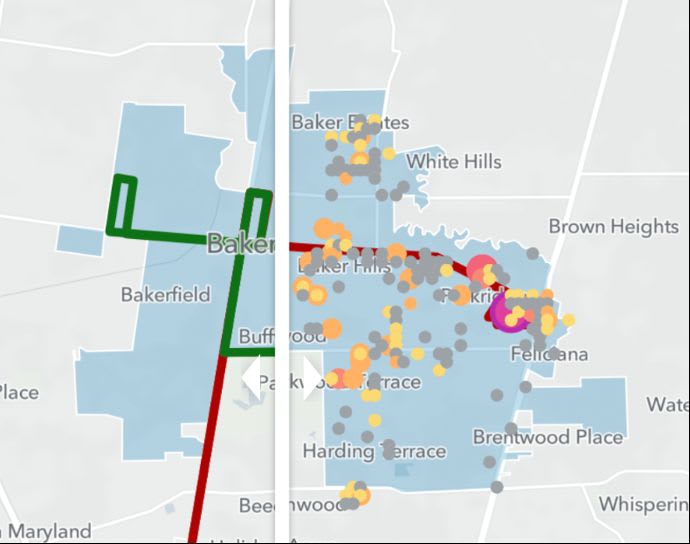
The new service, LYNX by CATS, launched in June 2022 to complement a redesigned Route 70, offers connections to Southern University and Baton Rouge while incorporating part of the old Baker Circulator.
Photo: Via
For most residents of Baker, Louisiana — a town of 13,000 in the north suburbs of Baton Rouge — owning a car has long been necessary for accessing jobs, education, healthcare, and essential services. Capital Area Transit System (CATS), the transit agency serving the Baton Rouge area, were able to offer some fixed-route bus services, but low population density led to infrequent service, few riders, and ultimately service cancellations.
Leaders at CATS were determined to offer an alternative to fixed-route service.
Cheri Soileau, the director, planning and programing, at CATS, noted that while Baker is “not an urban area or downtown area that’s dense,” the town is “part of our system and we need to give them comprehensive service.” After exploring their options, CATS leaders settled on microtransit.
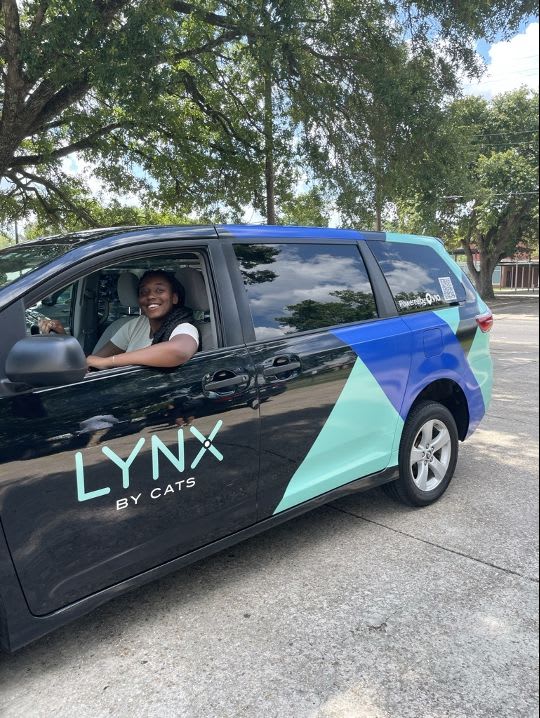
For most residents of Baker, La. — a town of 13,000 in the north suburbs of Baton Rouge — owning a car has long been necessary for accessing jobs, education, healthcare, and essential services.
Photo: Via
The new service, LYNX by CATS, launched in June 2022 to complement a redesigned Route 70, offers connections to Southern University and Baton Rouge while incorporating part of the old Baker Circulator, which was recently canceled due to low ridership.
LYNX offers on-demand service, bookable by app or phone, anywhere within Baker and to points of interest just outside of town: Southern University, the Scotlandville Transfer Center, the Exxon plant, and Lane Medical Center. CATS leaders are committed to keeping trips affordable — they are currently free — and riders wait an average of 11 minutes between request and pickup, making LYNX significantly more convenient for spontaneous trips than the fixed-route lines CATS had previously tried to run in the area.
LYNX has been an immediate success, delivering more than 10,000 rides since launch. Rides are requested from all over town — in the path of the old Circulator and beyond — but especially concentrated at the Walmart and Baker Middle School to the east of town.
And many riders take advantage of the service’s drop-off locations outside Baker’s borders, with trips concentrated at Southern University and Lane Medical Center.
The service effectively links areas of Baker with fewer available jobs to areas within and outside of town with significantly higher concentrations of workplaces, as shown in the Remix Transit map below.
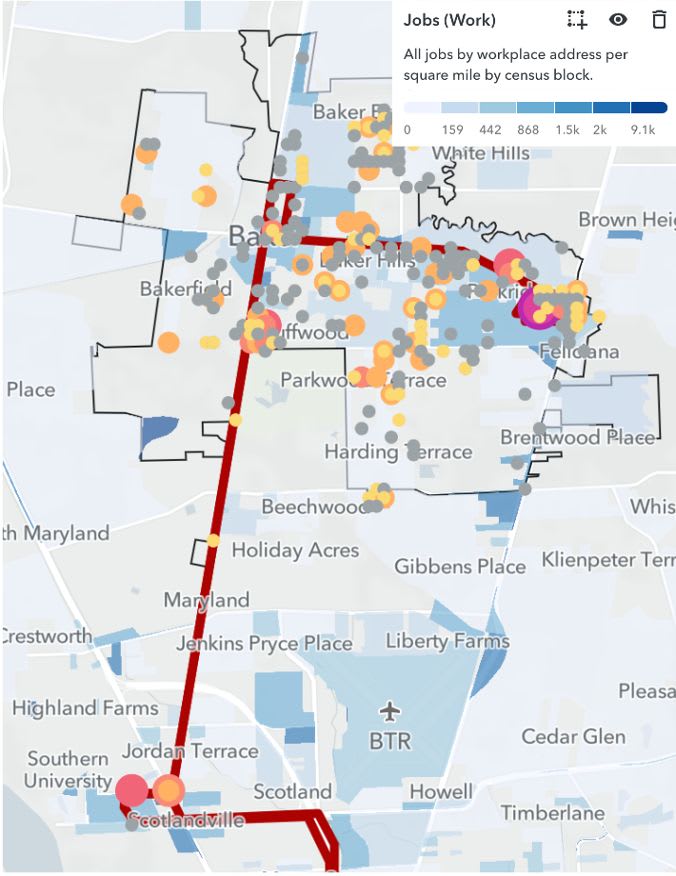
The service effectively links areas of Baker with fewer available jobs to areas within and outside of town with significantly higher concentrations of workplaces.
Photo: Via
City officials are pleased with the results so far, and excited about the potential of LYNX to draw new riders into the transportation system.
“What it will do is open the door,” Soileau observed, “and it’s that first step to independence and choices.”
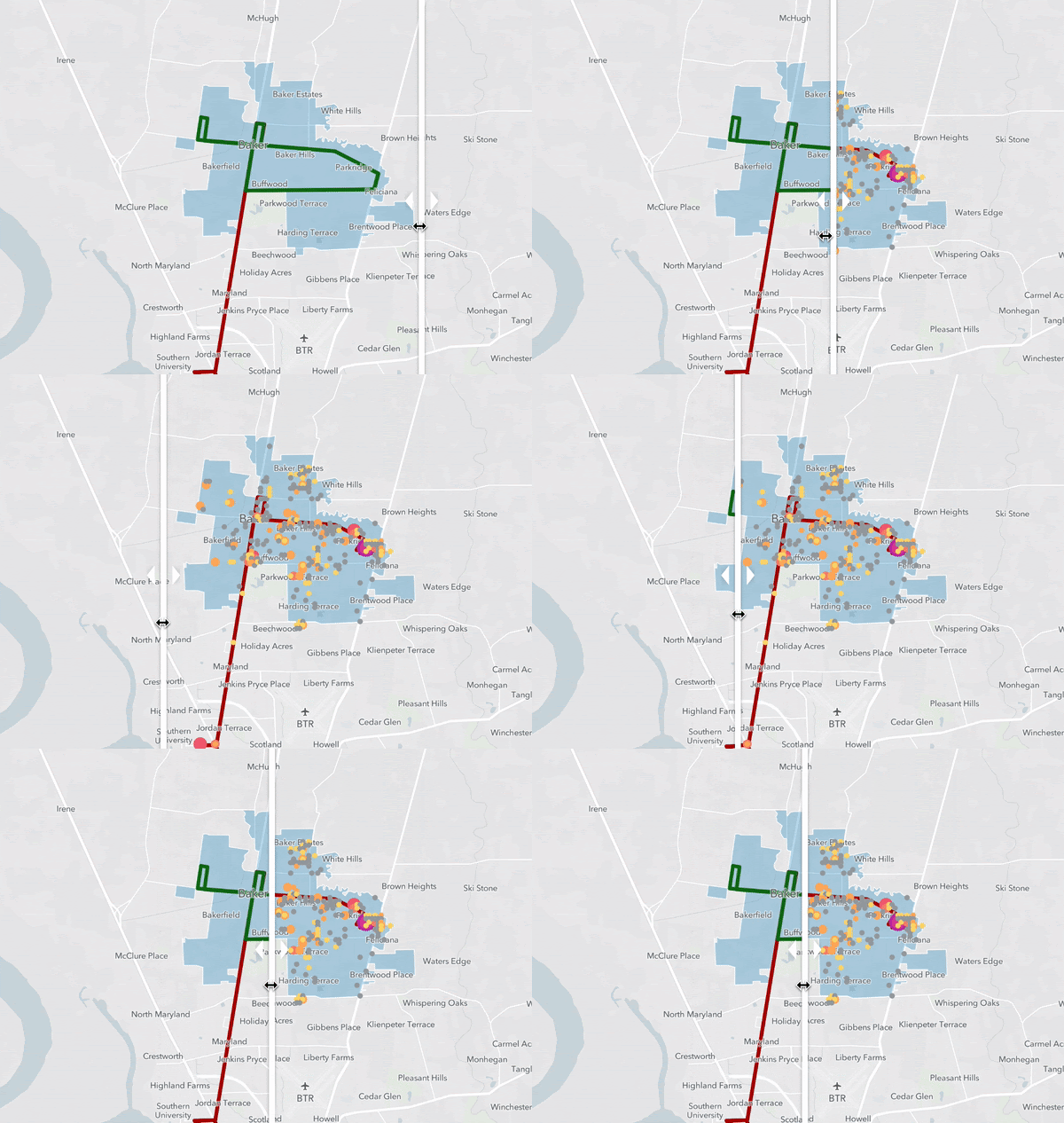
The GIF above shows transit options before and after Via. The most common pickup and drop-off locations are shown here as well, plotted in Via's Remix tool.
Via
About the Author: Laney Cloud is Via's Regional Partnerships Lead for Central North America.
More New Mobility

Public Transit Conference Returning to GFX in 2027, Call for Papers Now Open
The Call for Papers is now open, allowing transit agency professionals and industry experts to help shape the PTC educational program by submitting session ideas for consideration.
Read More →
Everett Transit, Community Transit Outline Consolidation Agreement
The proposed agreement calls for a 50% increase in bus service in Everett, a new microtransit zone, continued paratransit service, and the transfer of Everett Transit operations to Community Transit.
Read More →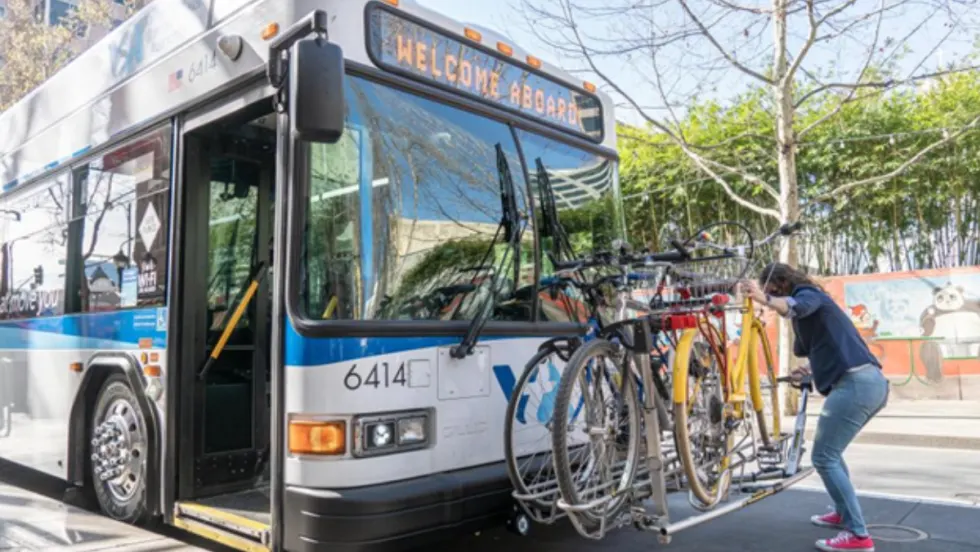
What Multimodal Data Can Tell Transit Agencies About Rider Demand
See how bike-on-bus data is giving transit agencies new insight into rider demand, capacity constraints, and gaps in first- and last-mile connections.
Read More →
From Hardware to Digital Partner: Luminator Charts Its Next Chapter
CEO Magnus Friberg discusses Luminator’s shift toward becoming a digital partner, the growing importance of software and interoperability, and how AI can help agencies improve operations and passenger experience.
Read More →
Biz Briefs: Alstom Lands Canadian Contract, LYT to Supply California TSP, and More
In METRO's latest installment, we take a look at recent news from Complete Coach Works, Beep, FlixBus, and more partnerships making headlines across the transportation sector.
Read More →
CharterUP’s Armir Harris on Technology, AI, and the Future of Group Mobility
In a recent episode of METROspectives, CharterUP Founder/CEO Armir Harris discussed the company’s evolution from an online charter bus marketplace into a technology platform supporting public- and private-sector mobility and much more.
Read More →
Jacksonville’s NAVI Project Charts a New Course for Autonomous Public Transportation
Through its NAVI program, JTA is showing how autonomous vehicles, intelligent infrastructure, and coordinated operations can work together to deliver everyday public transportation.
Read More →
Biz Briefs: Luminator Marks Milestone and More
From manufacturers and suppliers to transit agencies and motorcoach operators, these updates offer a snapshot of the projects, partnerships and business moves driving the industry forward.
Read More →
New Tricks for Old Bureaucracies: Joshua Schank on Making Transit Innovation Stick
Former LA Metro Chief Innovation Officer Joshua Schank discusses why good ideas aren't enough, how transit agencies can overcome resistance to change, and why today's challenges demand more innovation.
Read More →
How DART's GoPass Is Redefining Regional Mobility
Serving 14 transit agencies, GoPass simplifies multimodal travel by allowing riders to plan, pay for, and manage an entire trip through one app.
Read More →