




More Info: Metra Details 2023 Construction Program
Metra Breaks Ground on Rehabilitation of Homewood Station
Included is the construction of a new Pace bus facility, including three bus bays, a covered waiting area, and driver relief facilities.
May 12, 2023
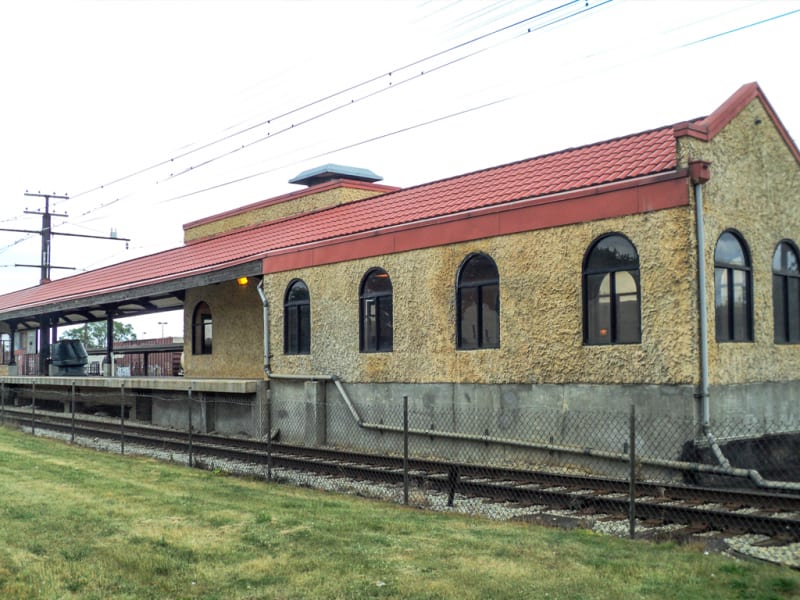
The Metra project follows an investment by Amtrak to rehab its part of the shared facility.
Photo: Metra
3 min to read
Metra, Homewood, and other officials broke ground on the $14.5 million renovation of the Homewood Station along the Metra Electric Line, according to the agency's news release.
Homewood Station Construction
The work includes the construction of a new, ADA-accessible east headhouse, including a ramp; the renovation of the platform, windbreaks, warming house, and gatehouse; installation of new drainage, ventilation, lighting, and interior finishes in the existing tunnel; and replacement of the elevator connecting the tunnel to the platform.
Also included is the construction of a new Pace bus facility, including three bus bays, a covered waiting area, and driver relief facilities.
“Accessible and beautiful mobility hubs like the Homewood Station do not just make riding transit better for everyone, they strengthen communities, grow local economies, and benefit the entire region by making it easier for employees, customers, and tourists to easily access local businesses and attractions,” said RTA Chairman Kirk Dillard. “The investments and improvements happening here are just one example of how the RTA and service boards are working together to ensure that our transit system continues to attract new riders and provide not just a viable but a preferable alternative to driving.”
Amtrak's Investment
The Metra project follows an investment by Amtrak to rehab its part of the shared facility.
That work added an enclosed ramp on the west side of the tracks, allowing all customers to access the tunnel under the tracks to both the Amtrak and the Metra train platform; other ADA improvements to the former Illinois Central Railroad station (built in 1923), including the waiting areas and restrooms; and a level path between the building, parking, and the stairway/ramp entrance to the tunnel.
“The Homewood Station project — supported by federal funding from the regional Surface Transportation Program, which CMAP administers — is an investment toward inclusive growth for communities in the south suburbs and Chicago’s South Side, for greater accessibility, and for getting people to where they need to go throughout the region,” said Erin Aleman, executive director of the Chicago Metropolitan Agency for Planning (CMAP).
Metra Electric Community Initiative
The Homewood project is part of the Metra Electric Community Initiative, a plan to renovate and make accessible 13 stations on the Metra Electric Line through the South Side and South suburbs.
The work, expected to take about 24 months, will be performed by IHC Construction of Elgin, which committed to subcontract 30% of the work to DBE firms.
Total construction costs are $20.7 million. Construction is being funded with $9.25 million in federal Surface Transportation Program (STP) funds administered by CMAP through its STP Shared Fund program; $6.5 million in Federal Transit Administration formula funding; $2.3 million in Regional Transportation Authority bonds; $2.1 million from Pace; and $300,000 from Cook County’s Invest in Cook program.
A contribution of $116,000 from Homewood was used to help cover design costs.
More Rail

New York MTA Advances Final Contract for Second Avenue Subway Expansion
Contract Four is the largest in the Second Avenue Subway Phase 2 project and includes construction of station infrastructure, tracks, and signals for the subway expansion, MTA officials said. Work on Contract Four will begin in 2027.
Read More →
San Diego MTS Breaks Monthly Trolley Ridership Record
Agency officials said July’s ridership indicates MTS’s continued recovery from the pandemic.
Read More →
Report Examines NJ TRANSIT Reliability, Funding Challenges
The Garden State Initiative analysis examines the roles of Amtrak infrastructure, fleet management, and agency operations while recommending a more performance-based approach to improving reliability.
Read More →
Stadler, CapMetro Sign Long-Term Rail Fleet Support Agreement
Beginning in 2027, Stadler will provide on-site technical expertise, spare parts support, training, and obsolescence management to help extend the reliability and longevity of CapMetro’s GTW fleet.
Read More →
Biz Briefs: Alstom Lands Canadian Contract, LYT to Supply California TSP, and More
In METRO's latest installment, we take a look at recent news from Complete Coach Works, Beep, FlixBus, and more partnerships making headlines across the transportation sector.
Read More →
CATS Gold Line Marks 5 Years of Service, 2.8M Passenger Trips
With a six-mile expansion planned, the Charlotte streetcar is positioned to connect more neighborhoods and major transit hubs across the region.
Read More →
Why Simulating Pedestrian Movement Has Become Essential for Modern Rail Stations
Pedestrian microsimulation is helping rail planners identify bottlenecks, test station designs, and prepare complex transit hubs for growing passenger volumes.
Read More →
Amtrak Begins Major Construction at New York’s Sunnyside Yard
The new maintenance facility will support Amtrak’s Airo trainsets while improving maintenance efficiency and turnaround times in New York.
Read More →
Chicago Leaders Unveil Plans for O’Hare Airport Express Train
The privately developed project would offer a 15-minute trip between downtown and O’Hare’s Terminal 2, with trains operating every 15 minutes on a dedicated track. The service would use battery-electric trains and three existing freight rail rights-of-way.
Read More →
OCTA Maps Out 30-Year Strategy to Protect Coastal Rail Corridor
The draft feasibility report identifies strategies to protect the coastal rail line for decades as the agency continues near-term stabilization and sand placement efforts.
Read More →