



COTA Introduces New Tool to Make Transit More Accessible for Neurodiverse Riders
The MagnusCards app uses visual cues, step-by-step instructions, and optional audio in either English or Spanish to guide users through the transit process.

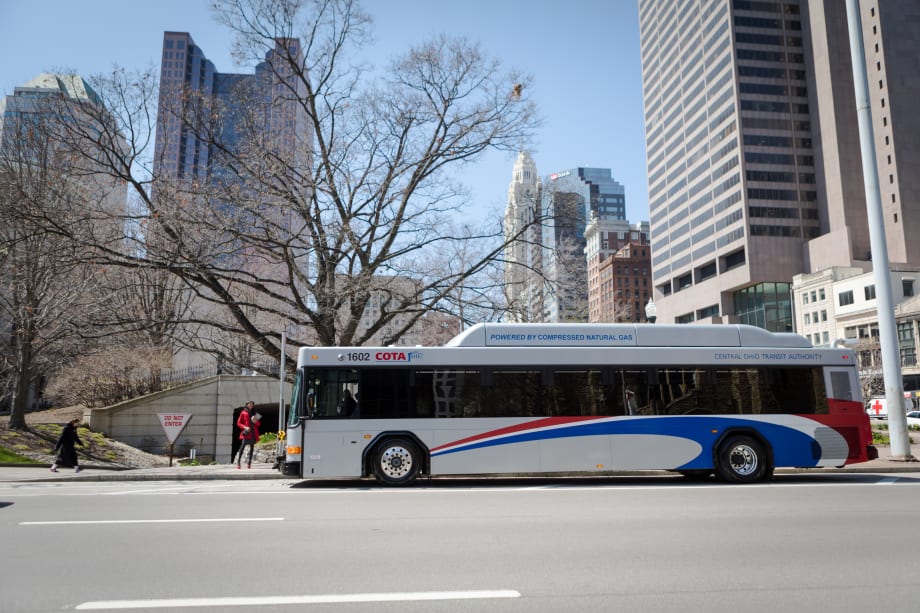
Magnusmode and COTA worked closely with Bridgeway Academy, a Columbus-based private school for children and young adults with autism and other developmental disabilities, to test and use the decks so that their students could get real-world experience boarding and using COTA buses.
Photo: COTA
The Central Ohio Transit Authority (COTA) launched a new initiative to make traveling on COTA easier and more accessible for autistic and neurodiverse customers. COTA has partnered with Magnusmode to deliver a digital app providing tips and lessons to help COTA customers plan trips, pay fares, board buses, ride, and transfer.
The five unique COTA digital decks are free to download in the MagnusCards digital life skills app.
“We are excited to introduce this digital tool to make COTA more accessible for anyone who needs to get to jobs, school, healthcare, food or entertainment across Central Ohio,” said Sophia Mohr, COTA’s chief innovation and technology officer. “MagnusCards is a new step toward bringing transit to our neurodiverse customers, but also an ideal way to enable new customers to use COTA’s service, regardless of their abilities.”
The COTA, Magnus Partnership
The MagnusCards app uses visual cues, step-by-step instructions, and optional audio in either English or Spanish to guide users through the transit process. Though the decks are targeted to neurodiverse customers, they can be helpful to anyone who hasn’t traveled with COTA, from teens to seniors to New Americans.
Magnusmode and COTA worked closely with Bridgeway Academy, a Columbus-based private school for children and young adults with autism and other developmental disabilities, to test and use the decks so that their students could get real-world experience boarding and using COTA buses. Feedback from students and teachers at Bridgeway was also utilized to fine-tune the COTA decks.
“We are happy to help COTA develop these decks that assist people like our students,” said Abigail David, co-founder and co-CEO of Bridgeway — Academy & Therapy Center. “We believe this will bring dignity through mobility access to many of our students and others in the community as they will be able to travel more independently throughout the region with COTA.”
While designed for members of the neurodiverse community, MagnusCards can also be used by neurotypical customers who are learning COTA’s system and would like a visual and audio tutorial.
More Technology

From Hardware to Digital Partner: Luminator Charts Its Next Chapter
CEO Magnus Friberg discusses Luminator’s shift toward becoming a digital partner, the growing importance of software and interoperability, and how AI can help agencies improve operations and passenger experience.
Read More →
Beyond the Checklist: A Structured Approach to Transit Maintenance
Reliability-Centered Maintenance helps transit agencies move beyond routine checklists to focus limited resources on the assets and failures that have the greatest impact on safety, reliability, and service.
Read More →
NJ TRANSIT Advances Bus Technology Upgrades Across Statewide Fleet
More than 1,500 buses now feature upgraded technology designed to improve arrival predictions and provide free Wi-Fi, with deployment expected to reach nearly 2,000 buses by the end of 2026.
Read More →

Building a Flexible Path to Transit Electrification
John Hroncich discusses BAE Systems’ modular and scalable approach, lessons learned from decades of real-world operations, and how agencies can identify electrification strategies that fit their fleets.
Read More →
Biz Briefs: Alstom Lands Canadian Contract, LYT to Supply California TSP, and More
In METRO's latest installment, we take a look at recent news from Complete Coach Works, Beep, FlixBus, and more partnerships making headlines across the transportation sector.
Read More →
From Legacy Silos to Conversational Intelligence
What if transit leaders could ask any operational question and get a trusted answer in seconds? Conversational AI is transforming how agencies use their data.
Read More →
USDOT Announces Rail Vehicle Replacement Grants, Chattanooga AV Shuttle Funding
More than $191 million in federal funding will help three transit agencies replace aging rail vehicles and support a new autonomous shuttle service in Chattanooga.
Read More →
Bus Tech Talk: Keeping Transit Technicians Ahead of the Technology Curve
LA Metro’s Obed Mejia discusses technician training, evolving maintenance technology, fleet replacement, and strategies for getting the most out of today’s transit fleets.
Read More →
Biz Briefs: RIPTA Unveils New Frontrunners, Clevland RTA Adds New Siemens, and More
In METRO's latest installment, we take a look at recent news from Siemens, Prevost, Dodge, and more partnerships making headlines across the transportation sector.
Read More →
Why Simulating Pedestrian Movement Has Become Essential for Modern Rail Stations
Pedestrian microsimulation is helping rail planners identify bottlenecks, test station designs, and prepare complex transit hubs for growing passenger volumes.
Read More →