



USDOT Announces New Rural Autonomous Vehicle Research Program
Recipients will use RAV program funding to conduct research regarding the benefits and responsible application of automated vehicles and associated mobility technologies in rural and Tribal communities.

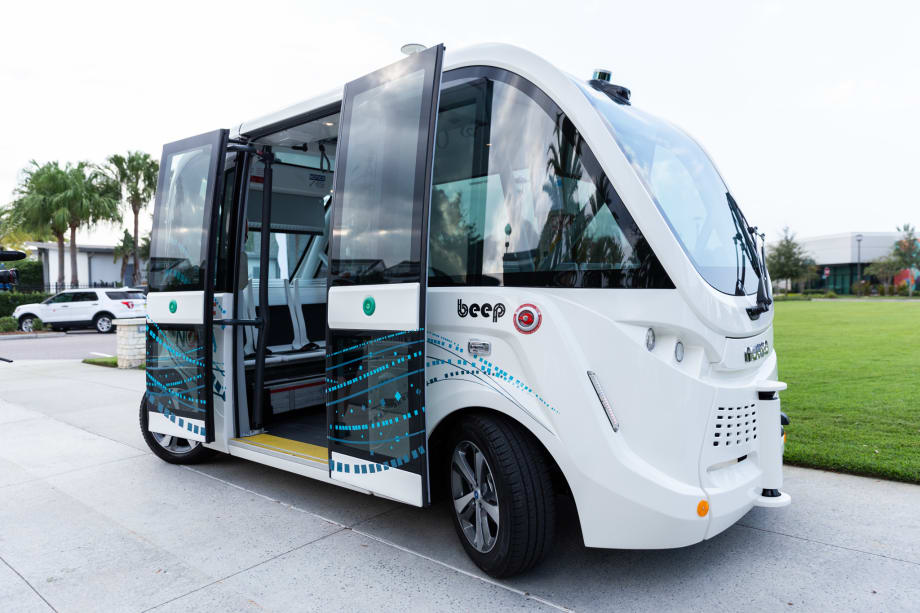
The RAV program funds collaborative research and pilot deployment activities to support a future rural transportation system that is safe, advances American competitiveness, and supports good-paying jobs.
Photo: Beep
The U.S. Department of Transportation (USDOT) announced a $25 million funding opportunity for its Rural Autonomous Vehicle research program.
Accredited universities are eligible to apply for this competitive, six-year cooperative agreement program.
Recipients will use RAV program funding to conduct research regarding the benefits and responsible application of automated vehicles and associated mobility technologies in rural and Tribal communities.
The USDOT AV Grants
One $15 million award will focus on passenger transportation, and a separate $10 million award will focus on movement of freight to support and enable automated freight and delivery vehicles serving rural areas.
“Automated vehicles have the potential to enhance roadway safety and increase mobility options for all Americans, including older Americans, low-income households, people with disabilities, and those who cannot or choose not to drive,” said Dr. Robert C. Hampshire, deputy asst. secretary, research and technology, and chief scientist. "Disparities in mobility and economic development opportunities in rural and Tribal communities leave many in those underserved communities unable to get to where they need to go to meet the needs of their daily life regularly, reliably, and safely; or to get necessary goods delivered. This research will move the needle forward.”
Benefits of AVs in Rural, Tribal Areas
Nineteen percent of the U.S. population lives in rural areas, and almost a quarter of all Americans aged 65 and older reside in rural communities.
Yet, 47% of all roadway fatalities and 34% of all public highway-rail grade crossing fatalities occur on rural roads. Emergency response times are more than twice as long in rural areas as compared to urban areas.
The RAV program funds collaborative research and pilot deployment activities to support a future rural transportation system that is safe, advances American competitiveness, and supports good-paying jobs.
The Department will empower workers and expand access to skills, training, and the choice of a union. They will have a seat at the table in shaping innovation. This funding opportunity devoted to rural and Tribal applications of automated vehicle technologies will help the USDOT advance mobility and safety solutions for the entire transportation sector, in a manner that serves the Department’s policy priorities as outlined in its Innovation Principles.
In particular, the RAV program will allow for meaningful experimentation and provide opportunities for collaboration, while encouraging better outcomes.
More New Mobility

From Hardware to Digital Partner: Luminator Charts Its Next Chapter
CEO Magnus Friberg discusses Luminator’s shift toward becoming a digital partner, the growing importance of software and interoperability, and how AI can help agencies improve operations and passenger experience.
Read More →
Biz Briefs: Alstom Lands Canadian Contract, LYT to Supply California TSP, and More
In METRO's latest installment, we take a look at recent news from Complete Coach Works, Beep, FlixBus, and more partnerships making headlines across the transportation sector.
Read More →
CharterUP’s Armir Harris on Technology, AI, and the Future of Group Mobility
In a recent episode of METROspectives, CharterUP Founder/CEO Armir Harris discussed the company’s evolution from an online charter bus marketplace into a technology platform supporting public- and private-sector mobility and much more.
Read More →
Jacksonville’s NAVI Project Charts a New Course for Autonomous Public Transportation
Through its NAVI program, JTA is showing how autonomous vehicles, intelligent infrastructure, and coordinated operations can work together to deliver everyday public transportation.
Read More →
Biz Briefs: Luminator Marks Milestone and More
From manufacturers and suppliers to transit agencies and motorcoach operators, these updates offer a snapshot of the projects, partnerships and business moves driving the industry forward.
Read More →
New Tricks for Old Bureaucracies: Joshua Schank on Making Transit Innovation Stick
Former LA Metro Chief Innovation Officer Joshua Schank discusses why good ideas aren't enough, how transit agencies can overcome resistance to change, and why today's challenges demand more innovation.
Read More →
How DART's GoPass Is Redefining Regional Mobility
Serving 14 transit agencies, GoPass simplifies multimodal travel by allowing riders to plan, pay for, and manage an entire trip through one app.
Read More →
Biz Briefs: OCTA Taps Clean Energy for Hydrogen Station, Stadler to Supply Via Rail Vehicles, and More
From manufacturers and suppliers to transit agencies and motorcoach operators, these updates offer a snapshot of the projects, partnerships and business moves driving the industry forward.
Read More →CharterUP Expands Into New Mobility and Autonomous Transportation
Vice President of New Mobility Stephen Joos discusses how CharterUP is leveraging its nationwide transportation network, technology platform, and autonomous vehicle partnerships to expand into workforce mobility, campus shuttles, and transit solutions.
Read More →
METRO Magazine Announces 2026 Innovative Solutions Awards Winners
Projects Recognized for Advancing Mobility Through Technology, Accessibility, Workforce Innovation, and Operational Excellence
Read More →