



Houston METRO Celebrates Completion of 5K Universally Accessible Bus Stops
Bus stop enhancements include wider sidewalks, wheelchair ramps, larger bus pads, and tactile paving, which assists pedestrians who are blind or visually impaired.

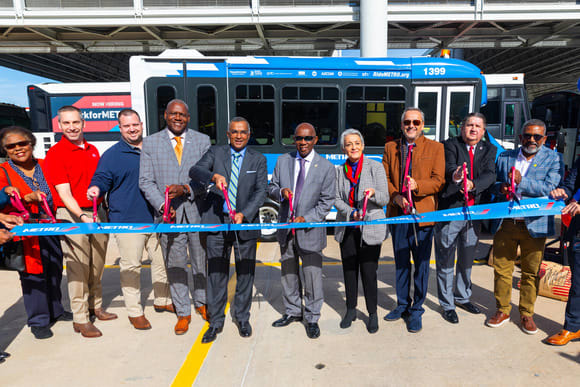
The event marks a major milestone in the authority's Universal Accessibility Initiative, which began in 2017 and led to millions of dollars in investments from METRO, the Houston-Galveston Area Council and through the METRONext Moving Forward Plan.
Photo: Houston METRO
Houston METRO board members and executive leadership joined community partners and U.S. Rep. Al Green (D-TX) to celebrate the completion of 5,000 universally accessible bus stops.
The event marks a major milestone in the authority's Universal Accessibility Initiative, which began in 2017 and led to millions of dollars in investments from METRO, the Houston-Galveston Area Council and through the METRONext Moving Forward Plan.
The METRO Accessibility Project
The program calls for updates to all 9,000 bus stops to ensure they meet or exceed the standards of the Americans with Disabilities Act, so all people can access, understand, and use METRO's facilities.
Bus stop enhancements include wider sidewalks, wheelchair ramps, larger bus pads, and tactile paving, which assists pedestrians who are blind or visually impaired.
"All of those improvements make a world of a difference, but it's about the people," said Board Chair Sanjay Ramabhadran at the event. "It's about making their ride easier, more comfortable and contributing to a culture of inclusivity."
Project Benefits
The project benefits everyone using METRO, whether the rider is in a wheelchair or is a mom with a stroller, explained METRO President/CEO Tom Lambert.
"An accessible transit system is a gateway to more opportunity as it unlocks access to a broader world—to jobs, education, healthcare and recreation," he said. "This initiative aims to ensure that everyone in this community has this access."
All METRO-owned vehicles are ADA accessible. METRO also offers discounted fares for passengers living with disabilities.
More New Mobility

From Hardware to Digital Partner: Luminator Charts Its Next Chapter
CEO Magnus Friberg discusses Luminator’s shift toward becoming a digital partner, the growing importance of software and interoperability, and how AI can help agencies improve operations and passenger experience.
Read More →
Biz Briefs: Alstom Lands Canadian Contract, LYT to Supply California TSP, and More
In METRO's latest installment, we take a look at recent news from Complete Coach Works, Beep, FlixBus, and more partnerships making headlines across the transportation sector.
Read More →
CharterUP’s Armir Harris on Technology, AI, and the Future of Group Mobility
In a recent episode of METROspectives, CharterUP Founder/CEO Armir Harris discussed the company’s evolution from an online charter bus marketplace into a technology platform supporting public- and private-sector mobility and much more.
Read More →
Jacksonville’s NAVI Project Charts a New Course for Autonomous Public Transportation
Through its NAVI program, JTA is showing how autonomous vehicles, intelligent infrastructure, and coordinated operations can work together to deliver everyday public transportation.
Read More →
Biz Briefs: Luminator Marks Milestone and More
From manufacturers and suppliers to transit agencies and motorcoach operators, these updates offer a snapshot of the projects, partnerships and business moves driving the industry forward.
Read More →
New Tricks for Old Bureaucracies: Joshua Schank on Making Transit Innovation Stick
Former LA Metro Chief Innovation Officer Joshua Schank discusses why good ideas aren't enough, how transit agencies can overcome resistance to change, and why today's challenges demand more innovation.
Read More →
How DART's GoPass Is Redefining Regional Mobility
Serving 14 transit agencies, GoPass simplifies multimodal travel by allowing riders to plan, pay for, and manage an entire trip through one app.
Read More →
Biz Briefs: OCTA Taps Clean Energy for Hydrogen Station, Stadler to Supply Via Rail Vehicles, and More
From manufacturers and suppliers to transit agencies and motorcoach operators, these updates offer a snapshot of the projects, partnerships and business moves driving the industry forward.
Read More →CharterUP Expands Into New Mobility and Autonomous Transportation
Vice President of New Mobility Stephen Joos discusses how CharterUP is leveraging its nationwide transportation network, technology platform, and autonomous vehicle partnerships to expand into workforce mobility, campus shuttles, and transit solutions.
Read More →
METRO Magazine Announces 2026 Innovative Solutions Awards Winners
Projects Recognized for Advancing Mobility Through Technology, Accessibility, Workforce Innovation, and Operational Excellence
Read More →