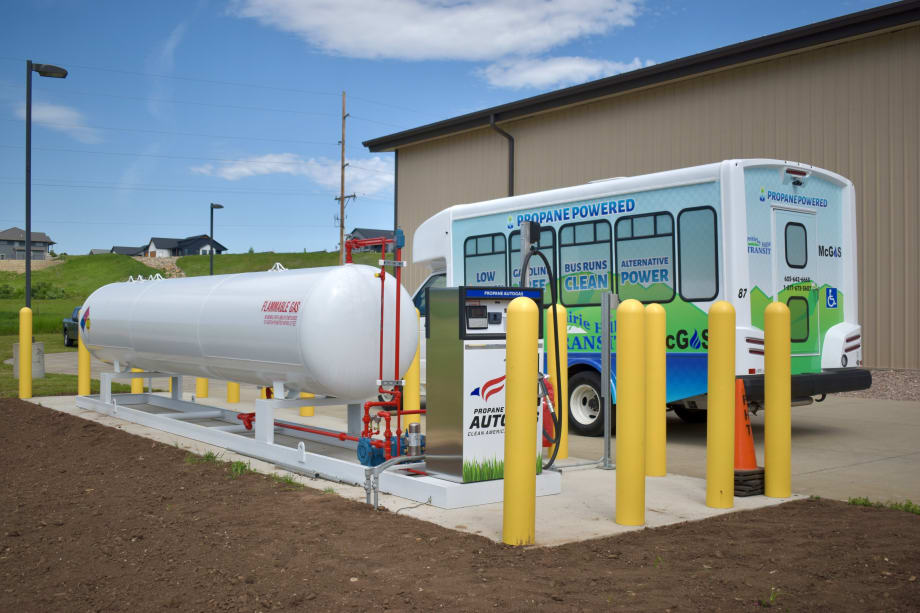
Both People’s Transit and Prairie Hills Transit have accessed readily available funding streams to help support the purchase of the new buses.
Photo: ROUSH CleanTech
2 min to read
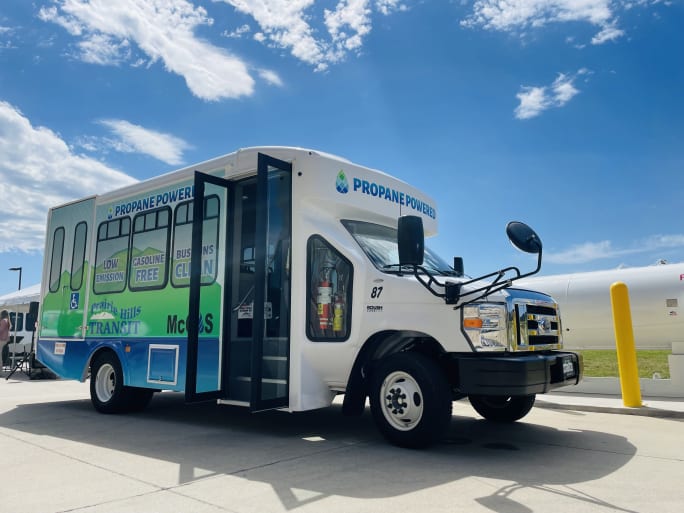
Two South Dakota transit agencies, People’s Transit in Huron and Prairie Hills Transit in Spearfish, unveiled their first orders of safe, environmentally friendly, and economical buses fueled with propane autogas.
“Prairie Hills Transit is on the cutting edge of public transit operation with these new propane buses and the first propane fueling infrastructure in the state. We’ve done extensive research and believe that the use of propane is an excellent way to reduce emissions,” said Barbara Cline, executive director of Prairie Hills Transit.
Ad Loading...
Prairie Hills Transit will operate six propane buses, which is 10% of its fleet.
“The new propane buses will have a positive impact on the environment because they reduce harmful emissions, especially when compared to our gasoline and diesel buses,” said Gayle Kludt, executive director of People’s Transit.
People’s Transit will operate six propane buses, transitioning 80% of its in-town fleet to propane this calendar year.
The ROUSH CleanTech Ford E-450 cutaway chassis is the only propane vehicle that has completed the Federal Transit Administration’s New Model Bus Testing Program (Altoona Testing), which allows transit fleet operators to access federal funds.
Photo: ROUSH CleanTech
New Propane Buses in South Dakota
Buses for both agencies are equipped with advanced propane engine systems designed and built by ROUSH CleanTech.
The ROUSH CleanTech Ford E-450 cutaway chassis is the only propane vehicle that has completed the Federal Transit Administration’s New Model Bus Testing Program (Altoona Testing), which allows transit fleet operators to access federal funds.
Ad Loading...
Both People’s Transit and Prairie Hills Transit have accessed readily available funding streams to help support the purchase of the new buses. “Funding for the buses will be primarily with Section 5339 federal funding,” said Kludt.
The propane buses also will reduce daily operating costs due to reduced fuel and maintenance expenses. On average, propane autogas costs about 40% less than gasoline and 50% less than diesel, according to ROUSH.
All of the new propane buses are certified to 0.02 grams per brake horsepower-hour and emit 90% less nitrogen oxide emissions than the EPA’s strictest standard. EPA and the California Air Resources Board measure NOx, particulate matter, non-methane hydrocarbons, carbon monoxide, carbon dioxide, methane, formaldehyde, and nitrous oxide. Propane vehicles equipped with a ROUSH CleanTech fuel system are lower in all eight measured outputs by an average of 64%.
Bus Business Consultants Founder Brian Dickson discusses the leadership principles, operational discipline, and strategic planning that separate transportation companies positioned for long-term success from those stuck in survival mode.
The 12.4-mile corridor is projected to serve 66,200 daily riders, reduce travel times by up to 24%, and create the nation's busiest bus rapid transit corridor.
The company’s CEO discusses carrying forward a third-generation family legacy, ABC’s continued evolution in passenger transportation, support for increasingly complex fleets, and how technology and continued investment could help operators improve uptime.
San Antonio's VIA Metropolitan Transit reported the highest bus ridership growth among major Texas transit systems. Federal Transit Administration data ranked it second among the nation's 50 largest transit systems.
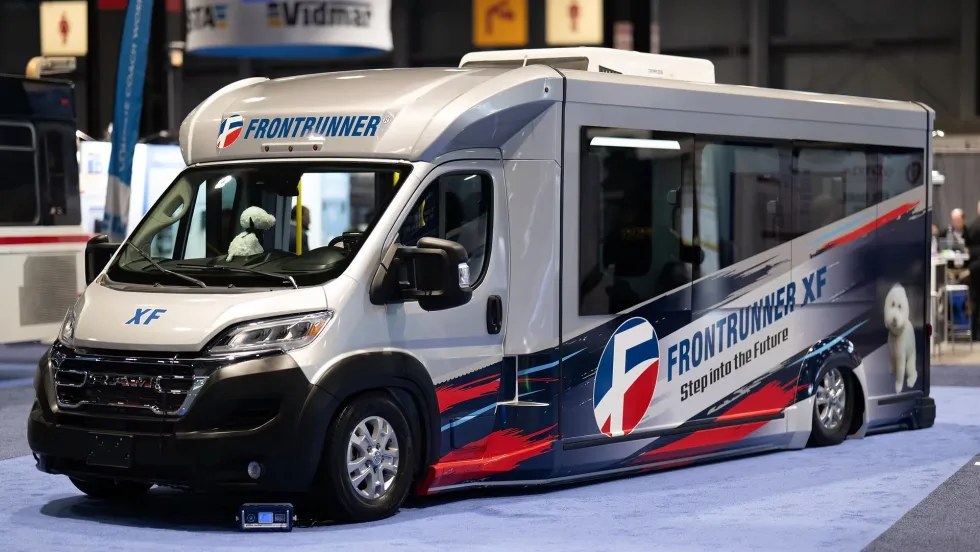
The new mid-sized bus features a full flat-floor design, eight-inch curbside step-in height, and zero-entry rear ramp to improve passenger access and operational flexibility.
Transit leaders, manufacturers, and industry professionals gathered in Chicago to explore new technologies, share ideas, and discuss the future of public transportation.
The Delaware River Port Authority and PATCO have transformed their internship program into a hands-on professional development experience that introduces students to the breadth of transportation careers — and creates a pipeline for future employees.
The contract, which is the largest base award of battery-electric buses by a U.S. transit agency, will be built in Southern California, sustaining good jobs as LA prepares to welcome the world in 2028
The Call for Papers is now open, allowing transit agency professionals and industry experts to help shape the PTC educational program by submitting session ideas for consideration.