



Finding the ‘Happy Medium’: Optimizing Maintenance Without Sacrificing Reliability
The key to maintenance optimization isn’t doing less work—it’s doing the right work at the right time on the right assets.
by Chris Wenz and Nilmino Roberts, WSP in the U.S
August 14, 2026
Across the industry, maintenance programs have steadily expanded as agencies added tasks, inspections, and requirements to address safety concerns, reduce downtime, and meet regulatory obligations.
Credit:
METRO
9 min to read
- Chris Wenz and Nilmino Roberts from WSP in the U.S focus on striking a balance between effective maintenance strategies and maintaining system reliability.
- The content delves into methods for optimizing maintenance schedules without compromising the reliability of infrastructure and systems.
- Innovative approaches to maintenance are suggested to ensure sustainable and cost-effective operations while preserving asset integrity.
*Summarized by AI
For decades, transit agencies have operated under a simple assumption: More maintenance leads to greater reliability.
It seems logical. More inspections, more preventive maintenance, and more time in the shop should keep assets performing at their best. But that's not always what happens.
Across the industry, maintenance programs have steadily expanded as agencies added tasks, inspections, and requirements to address safety concerns, reduce downtime, and meet regulatory obligations. While often well-intentioned, these additions can create work that consumes valuable labor, budget, and asset availability without delivering meaningful gains in reliability.
Today, transit agencies have access to better asset data than ever before. That information makes it possible to challenge long-held assumptions, identify maintenance activities that provide limited operational value, and focus resources where they have the greatest impact.
Maintenance optimization is not about doing less maintenance. It is about doing the right maintenance at the right time, on the right assets.
Optimization Matters
The need for maintenance optimization is growing.
Workforce shortages challenge agencies nationwide. Even well-funded agencies struggle to recruit and retain skilled maintenance professionals, making it difficult to complete all planned work while meeting service expectations.
At the same time, agencies face pressure to maximize asset availability and extend the value of public investments. Taking productive assets out of service for maintenance that delivers little operational value is increasingly difficult to justify. With constrained budgets and rising operating costs, agencies must also look for opportunities to reduce unnecessary maintenance expenditures without compromising safety or reliability.
Importantly, optimization is not synonymous with workforce reduction. In practice, early gains often come from reducing overtime, absorbing natural attrition, and freeing capacity so existing staff can focus on higher-value work.
The objective is not fewer maintenance professionals. It is a more effective use of the people, time, and assets already available.
A Practical Framework
Maintenance optimization does not require sophisticated analytics platforms, advanced sensors, or large-scale organizational change. While every agency's circumstances are different, successful optimization efforts tend to follow a similar process.
- Identify the agency’s optimization goal.
- Select the asset classes to evaluate.
- Analyze existing asset data.
- Evaluate applicable optimization strategies.
- Prioritize opportunities.
- Implement changes.
- Measure results and refine continuously.
The process is iterative. Agencies that begin with a focused objective and expand based on demonstrated results are typically more successful than those attempting to optimize multiple systems at once.
Determine the Problem You’re Trying to Solve
Optimization should begin with a clear understanding of the problem being solved.
These challenges may include:
- Difficulty completing planned maintenance on time.
- Insufficient asset availability to meet service needs.
- Recurring critical asset failures.
- Rising maintenance costs.
The optimization strategy should reflect the outcome the agency is trying to achieve.
Deciding Where to Focus
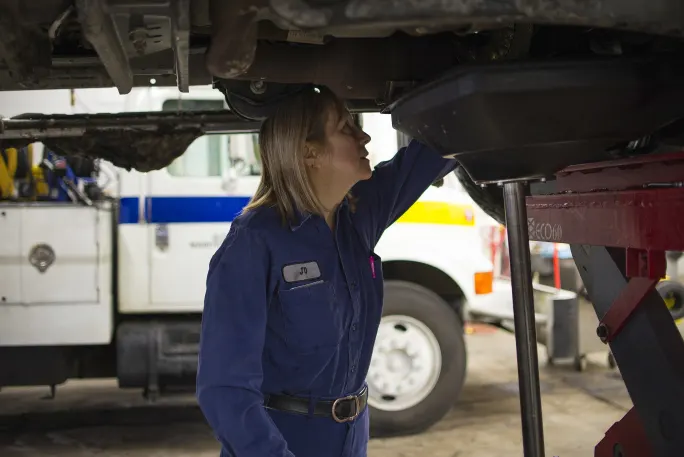
Assets with higher total maintenance costs generally offer greater optimization potential. Even a small improvement in a high-cost asset class can outweigh large improvements elsewhere.
Credit:
Metro Transit
One of the most important decisions in maintenance optimization is where not to start. Agencies that attempt to optimize every asset class often become overwhelmed by analysis and fail to produce meaningful results.
The biggest opportunities are often found in the assets that consume the most labor, cost the most to maintain, or experience the most disruption. Several simple indicators can help identify where opportunities are greatest:
- Total maintenance cost by asset class.
- Ratio of preventive to corrective maintenance.
- Concentration of failures within an asset population.
Assets with higher total maintenance costs generally offer greater optimization potential. Even a small improvement in a high-cost asset class can outweigh large improvements elsewhere.
Similarly, a high share of preventive maintenance relative to corrective work may indicate a need to revisit the task scope or frequency. By contrast, assets with frequent corrective maintenance may require more targeted preventive measures or design improvements.
The goal is not to apply the same approach to every asset, but to concentrate effort where it can have the greatest impact.
Start with Data You Already Have
Most agencies have more useful maintenance data than they realize. While no agency has perfect data, most have enough information to identify trends and opportunities.
Enterprise asset management systems typically contain asset inventories, work histories, and labor and material data. When combined with maintenance staff’s institutional knowledge, even imperfect information can reveal trends, recurring issues, and inconsistencies that point to opportunities for improvement.
Early gains usually come from improving consistency, not adding complexity. For example, agencies can simplify failure codes and component selections so technicians can record useful information more easily. Shorter drop-down lists and fewer unnecessary distinctions make accurate, consistent data entry more likely.
The goal is to capture enough information to understand what is failing, how often, and why.
Optimization Strategies: A Toolkit, Not A Checklist
Once an asset class is selected, evaluate which optimization approaches are most appropriate. There is no single right answer. Many assets lend themselves to multiple strategies, while others may offer little opportunity for meaningful change.
Optimize Maintenance Intervals
One of the most common opportunities for improvement involves reevaluating maintenance intervals. Many programs conduct inspections and preventive tasks on schedules established years ago and rarely revisited. Yet failure data often reveals that some inspections or maintenance activities can be safely performed less frequently without increasing risk.
A more effective approach is to:
- Review the failure modes a task is intended to prevent.
- Identify available warning indicators.
- Determine how much time exists between detection and service impact.
Knowing which early warning signs to monitor allows agencies to intervene before failures occur. However, if inspection intervals exceed the time available to respond to emerging issues, the likelihood of failure can increase significantly.
In many cases, components show measurable warning signs weeks or months before failure. When supported by data, agencies may be able to extend maintenance intervals while maintaining reliability and reducing labor demands.
Eliminate Low-Value Tasks
Another powerful strategy is reviewing what technicians are actually doing during preventive maintenance activities. Task-by-task assessments often uncover inspection steps that rarely result in corrective action or provide little operational value. Over time, maintenance programs can accumulate inspection steps and tasks that no longer provide meaningful operational value.
Two questions can be particularly useful:
- What failure is this task intended to prevent?
- Does the likelihood of that failure increase significantly at a specific age?
Research has shown most failures do not follow predictable, age-related patterns. Performing additional inspections does not necessarily prevent these events and may consume labor hours that could be better applied elsewhere.
Removing or deferring low-value steps can deliver outsized benefits when those steps are repeated across hundreds or thousands of work orders.
Case in point: One major transportation agency took a fresh look at its planned maintenance program five years after introducing a new asset to its fleet. Although complete digital maintenance data was unavailable, the agency combined the available information with the experience of maintenance technicians and supervisors to evaluate which tasks were still delivering value.
The review revealed opportunities to simplify the program. More than one-third of the original maintenance tasks were eliminated, and the frequency of roughly half of the remaining tasks was extended. By focusing resources on activities that directly supported asset performance and reliability, the agency reduced downtime, lowered maintenance costs, and improved operational effectiveness.
The example illustrates an important principle of maintenance optimization: agencies do not need perfect data to identify opportunities for improvement. Often, a combination of available maintenance information and frontline expertise can uncover meaningful efficiencies.
Improve Maintenance Productivity
Optimization is not only about what work is performed, but how efficiently it is performed.
Many agencies find substantial variation in how identical maintenance activities are performed across facilities, shifts, or work groups. Understanding those differences can reveal opportunities to improve productivity without increasing staffing levels or compromising quality.
Addressing variability is less about enforcement and more about visibility, training, and clear expectations.
When agencies establish reasonable performance standards and examine why deviations occur, they often find that barriers are process-related rather than individual-related. Removing those barriers enables maintenance teams to complete more work in the same amount of time without rushing or sacrificing quality.
Performance measurement is most effective when used as a continuous improvement tool rather than a disciplinary one. Used effectively, it promotes accountability, consistency, and knowledge sharing while supporting a culture of continuous improvement and stewardship.
Case in point: A leading regional utility recognized that a significant amount of institutional knowledge was at risk of being lost as experienced maintenance professionals approached retirement. Rather than waiting for the transition to occur, the organization implemented reliability-centered training across the entire maintenance function, from executive leadership to frontline technicians.
Establishing a common understanding of maintenance principles, problem-solving approaches, and work-planning practices improved consistency across the organization. The effort increased maintenance productivity, strengthened workforce readiness, and helped ensure critical assets remained available when needed most.
The outcome highlights a key lesson for agencies pursuing optimization: improving maintenance performance often starts with people, processes, and knowledge sharing rather than new technology.
Focus on the Root Cause
In some cases, the most effective optimization does not involve maintenance at all. Chronic failures may point to design shortcomings, component selection issues, or the need for targeted modifications.
Addressing the root cause through asset design changes, component upgrades, or system improvements can reduce maintenance demands while improving reliability.
Lifecycle optimization requires a broader perspective, considering how assets perform, how performance varies with time, and how design decisions influence maintenance needs. When applied selectively, it can reduce total cost of ownership while improving reliability and extending asset longevity.
Match the Strategy to the Asset
Not every asset requires the same maintenance approach. In many cases, optimization means selecting the strategy that best aligns with asset criticality, risk, and available data.
Common approaches include:
- Run-to-failure.
- Time- or schedule-based maintenance.
- Usage-based maintenance (such as mileage, cycles, or runtime).
- Condition-based maintenance.
- Predictive maintenance.
The goal is not to apply the most advanced method, but to align the strategy with asset criticality, risk, and available data. More sophisticated approaches are not inherently better if reliable inputs, appropriate methods, or operational need do not support them.
For example, shifting from calendar-based intervals to usage-based triggers, such as mileage or runtime, can significantly reduce unnecessary maintenance. In many fleets, assets experience highly variable usage, yet are maintained at the same fixed interval, resulting in early interventions for low-use assets and increased workload with limited benefit.
Aligning maintenance with actual asset needs allows agencies to target effort better, reduce labor demand, and maintain appropriate levels of protection where it matters most.
Implementing Change Without Disruption
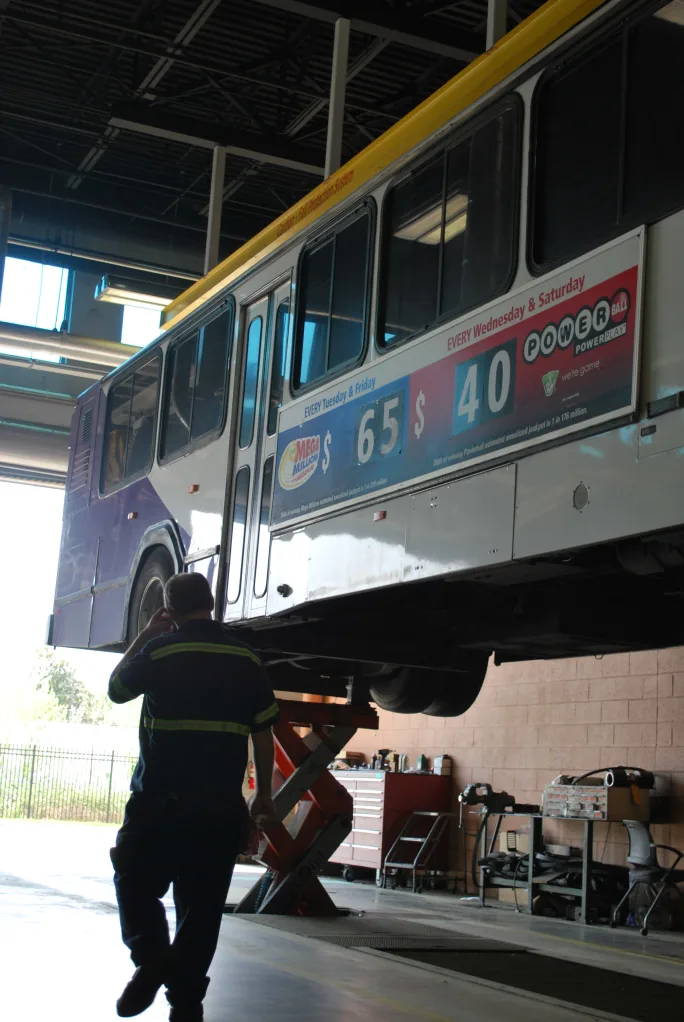
At its core, asset maintenance optimization is about stewardship of public resources, the workforce, and the assets that keep systems running safely and reliably.
Credit:
GRTC
Optimization is best understood as a process, not a project.
As assets, operating conditions, and technologies evolve, maintenance programs must evolve as well. Successful optimization efforts place equal emphasis on technical analysis, communication, and change management.
Pilot programs can validate assumptions and build organizational confidence before wider deployment. Agencies must also be prepared to adjust course if results do not meet expectations.
Early successes tend to generate organic demand within agencies. When results are visible, resistance often gives way to curiosity.
Implementation is not the end of the process. Without ongoing measurement and feedback, organizations risk naturally drifting back toward familiar practices. Embedding meaningful metrics and regular reviews helps sustain gains and identify when conditions change and adjustments are needed.
Optimization as Stewardship
At its core, asset maintenance optimization is about stewardship of public resources, the workforce, and the assets that keep systems running safely and reliably.
The objective is not perfection, but appropriate decisions in a dynamic environment.
Agencies that succeed are those willing to ask simple but powerful questions periodically:
- Is there a better way to perform this task?
- Is this task providing what we need?
- Is there a better task to support that need?
When those questions are a consistent part of an agency’s maintenance strategy and answered with data, experience, and intent, maintenance programs evolve in ways that support reliability, sustainability, and long-term value.
Transit agencies are under growing pressure to deliver reliable service with limited resources. Finding the happy medium between over-maintenance and under-maintenance may be one of the most effective ways to improve reliability, strengthen workforce productivity, and maximize the value of public investment.
Chris Wenz is senior vice president, Asset Management, and Nilmino Roberts is senior vice president and transit sector lead, Asset Management, for WSP in the U.S.
Quick Answers
Optimizing maintenance without sacrificing reliability involves finding a balance between reducing maintenance costs and ensuring that systems and equipment remain dependable and efficient.
*Summarized by AI
Subscribe to Our Newsletter
More Management
LA Metro Board Awards 220 Battery-Electric Bus Contract to ENC
The contract, which is the largest base award of battery-electric buses by a U.S. transit agency, will be built in Southern California, sustaining good jobs as LA prepares to welcome the world in 2028
Read More →
What’s Behind San Diego MTS’s Award-Winning Transit Strategy
Named one of APTA’s 2026 Outstanding Public Transportation Systems with 50 million or more annual passenger trips, California’s San Diego Metropolitan Transit System points to gains in ridership, safety, technology, and reliability as foundations of its success.
Read More →
Public Transit Conference Returning to GFX in 2027, Call for Papers Now Open
The Call for Papers is now open, allowing transit agency professionals and industry experts to help shape the PTC educational program by submitting session ideas for consideration.
Read More →
Indian River Transit’s Community-Focused Approach Earns National Recognition
Named APTA’s 2026 Outstanding Public Transportation System in its size category, Florida’s Indian River County transit system continues to grow ridership through fare-free service and a focus on evolving community needs.
Read More →
ENC Lands MATA Contract and More in Biz Briefs
In this edition of Biz Briefs, we spotlight the latest developments shaping the future of mobility.
Read More →
From Surviving to Thriving: Building Stronger Transportation Organizations
Bus Business Consultants founder Brian Dickson shares lessons on leadership, organizational health, and creating options for long-term success in a changing transportation industry.
Read More →
Everett Transit, Community Transit Outline Consolidation Agreement
The proposed agreement calls for a 50% increase in bus service in Everett, a new microtransit zone, continued paratransit service, and the transfer of Everett Transit operations to Community Transit.
Read More →
Strada360’s Steve Lassey on Turning Transit Data Into Better Decisions
From breaking down data silos to preparing for AI, Strada360 CEO Steve Lassey discusses how transit agencies can use technology to improve operations, customer information, and long-term decision-making.
Read More →
People Movement: Phil Washington Joins HNTB, Denver RTD Launches CEO Search, and More
In this edition, we also spotlight recent personnel moves at STV, the Eno Center for Transportation, and more, highlighting the people taking on new roles across the transportation industry.
Read More →
SEPTA Details Accelerate Vision for Transit System
The plan outlines investments in trolley modernization, new Metro and Regional Rail vehicles, accessible stations, and more frequent bus and rail service.
Read More →