



The Business Voice Behind Public Transportation
As chair of APTA’s Business Members Board of Governors, Ray Melleady explains how more than 850 business members are partnering with transit agencies to advance funding, innovation, and industry-wide collaboration.

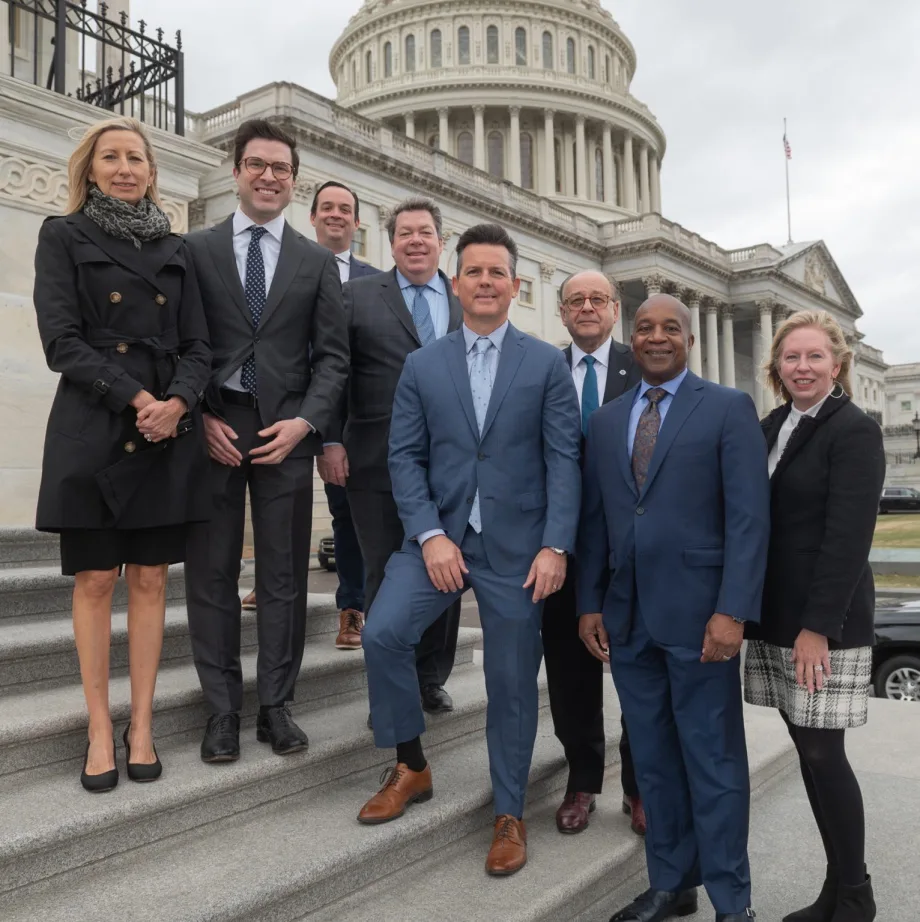
The Business Members Board of Governors partners with APTA leadership and transit agencies to build bipartisan support for public transportation by highlighting the industry’s nationwide economic impact and supply chain.
APTA/Ray Melleady
- Ray Melleady, as chair of APTA's Business Members Board of Governors, highlights the collaboration between over 850 business members and transit agencies.
- The partnership focuses on advancing funding, promoting innovation, and enhancing industry-wide collaboration in public transportation.
- Businesses and transit agencies are working together to support the development and modernization of public transit systems.
*Summarized by AI
Public transportation is built on partnership. While transit agencies deliver services to riders, hundreds of private-sector companies design, manufacture, engineer, finance, and support the vehicles, infrastructure, and technologies that make those services possible.
Representing those companies within the American Public Transportation Association (APTA) is the Business Members Board of Governors (BMBG), which serves as the voice of more than 850 business members and works to strengthen collaboration across the industry.
As Chair of the BMBG, Ray Melleady, President/CEO of Ster Seating, has made collaboration a defining theme of his leadership.
A former diesel technician who began his career at SEPTA before moving into the private sector, Melleady brings a unique perspective on the shared interests that unite transit agencies and their business partners. Under his leadership, the BMBG has focused on advancing procurement reform, strengthening advocacy, supporting innovation, and ensuring business members have a meaningful role in shaping APTA’s strategic priorities.
In this conversation with METRO’s Executive Editor Alex Roman, Melleady discusses the board’s mission, the value of stronger agency-business partnerships, and his vision for building a more resilient, collaborative public transportation industry.
The BMBG's Mission
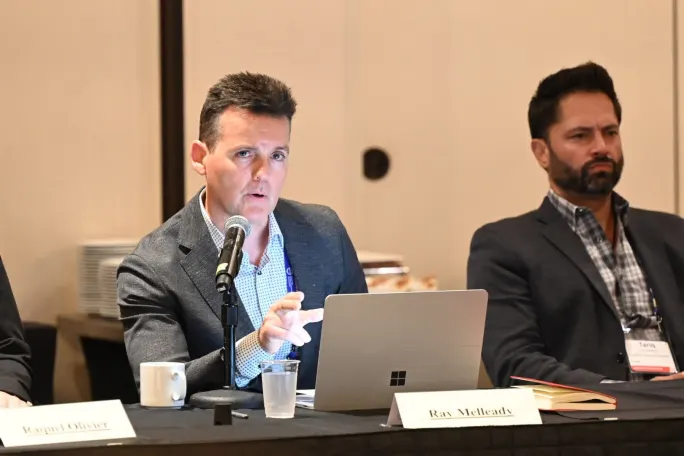
As Chair of APTA’s Business Members Board of Governors, Ray Melleady is focused on strengthening collaboration between transit agencies and private-sector partners to advance innovation, procurement reform, and long-term industry growth.
APTA/Ray Melleady
Q: Many APTA members know the BMBG by name but not necessarily its mission. What role does the Business Members Board of Governors play within APTA, and why is its work important to the public transportation industry?
Melleady: The BMBG represents APTA’s business membership — more than 850 companies that supply, advise, finance, and help deliver public transportation across the country. That includes manufacturers, engineering firms, consultants, technology providers, and financial partners, from small family businesses to global enterprises. Our mission is simple to state: creating and sustaining business opportunities.
The reason it matters is that public transportation is genuinely a shared enterprise. The vast majority of federal transit investment flows through private-sector partners — the companies that build the vehicles, engineer the projects, install the technology, and keep systems running. When a transit agency puts a new bus into service, that vehicle represents suppliers in dozens of states.
I started my career as a diesel technician at SEPTA, so I’ve had the good fortune to see this industry from both sides — the agency side and the supplier side. What I’ve learned is that the health of transit agencies and the health of the business community are one and the same. The BMBG’s job is to strengthen that connection so the whole industry benefits.
Q: The BMBG represents hundreds of private-sector companies that support public transportation. How does the board ensure those members have a meaningful voice in shaping APTA’s priorities and the industry’s future?
Melleady: We start by listening. Our new 2026-2028 Strategic Plan was developed through surveys, in-depth interviews, and working sessions with business members across all sectors and company sizes. That input shaped four priorities: securing long-term transit funding, modernizing procurement, championing responsible innovation and cybersecurity, and strengthening member value and visibility across the ecosystem.
Structurally, that voice flows through our seven committees, each chaired by a business member, and through BMBG representation on APTA’s Executive Committee and Board of Directors. But we’ve also worked to make participation more accessible in practice — clearer entry points for new members, structured feedback tools, and a genuine emphasis on elevating the voices of those historically underrepresented in our leadership, particularly small and disadvantaged businesses.
The plan is intentionally aligned with APTA’s strategic plan, so business member priorities and the association’s priorities move in tandem. When members see their input reflected in the direction of the association, engagement follows naturally.
Fostering Collaboration, Advocacy
Q: One of APTA’s strengths is bringing transit agencies and business partners together. How does the BMBG foster collaboration between those groups, and what impact does that collaboration have on agencies and the riders they serve?
Melleady: This has really been the heart of my tenure as Chair. From the beginning, my focus has been on partnering closely with transit CEOs and their teams — not just on advocacy but on the practical work of improving how capital and services flow through this industry.
A good example is the OEM Task Force and our shared effort to move bus procurement from customization toward configuration. For decades, agencies have specified vehicles in ways that often made buses custom to their unique requirements. That approach drives up cost, extends lead times, and strains a supply chain that agencies and suppliers depend on equally.
By working together — agency leaders, OEMs, and suppliers at the same table — we’re finding common ground on standardized platforms with configurable options. Agencies get better pricing, faster delivery, and more reliable vehicles; manufacturers and suppliers get the stability to invest and innovate. The rider is the ultimate beneficiary.
The same partnership spirit runs through our broader procurement work: risk-sharing contract terms, pre-procurement collaboration, price indices that protect both parties from cost volatility, and faster vendor payments. None of it works as agencies versus industry. All of it works when we treat these as issues of common interest with mutual benefits, because that’s exactly what they are.
Q: The BMBG works closely with APTA leadership and other committees. How does the board help influence the association’s strategic priorities and advocacy efforts on behalf of its members?
Melleady: Advocacy is where the partnership between agencies and business members is most powerful. Transit agencies speak compellingly about ridership and community service. Business members complement that story with the economic case — the thousands of suppliers across nearly every state, the manufacturing and engineering jobs in communities far from any bus route, and the significant economic return generated by every dollar of transit investment. Together, those two narratives resonate across the political spectrum because they’re grounded in jobs, opportunity, and community.
The BMBG contributes through business member fly-ins, Capitol Hill visits, local market tours with senators and representatives, and district-level mapping with APTA Government Affairs so members understand which lawmakers their supply chains reach. We coordinate closely with APTA leadership and peer committees, so we speak with one voice. With reauthorization ahead, that unity matters more than ever — and I've been consistently impressed by how willing agency and business leaders are to stand shoulder to shoulder when the industry’s future is on the line.
Misconceptions and The Road Ahead
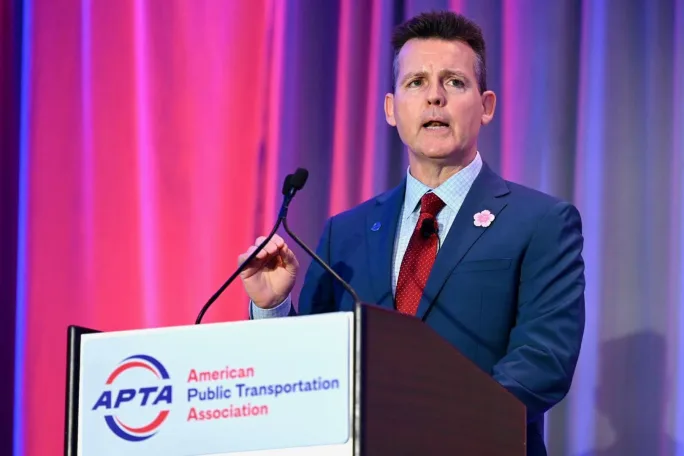
Drawing on experience from both the public and private sectors, Melleady is helping elevate the voice of more than 850 APTA business members while fostering collaboration that benefits transit agencies, suppliers, and riders alike.
APTA/Ray Melleady
Q: What is one misconception about APTA’s business members — or about the role of the BMBG — that you’d like to correct?
Melleady: Probably the notion that business members are primarily vendors — companies whose engagement begins and ends with a sales relationship. The reality is much richer than that.
Business members are the industry’s manufacturing base, its engineering expertise, and much of its innovation capacity. They invest capital years ahead of contracts, develop the technologies agencies will rely on next, and employ skilled workers in communities across the country. They also contribute enormous expertise to APTA’s committees, standards work, and policy development.
When agencies and business members treat each other as long-term partners rather than buyers and sellers, the entire industry gets stronger. That partnership mindset — on both sides — is what the BMBG works to cultivate every day.
Q: The transit industry continues to face challenges ranging from workforce development to technology adoption and funding uncertainty. How can the BMBG help business members and agencies work together to address these issues?
Melleady: By recognizing that none of these challenges gets solved by one side of the industry alone. On funding, pairing agency advocacy with the business community’s economic story makes a stronger case than either makes separately. On workforce, business members bring training capacity, apprenticeship models, and career pathways, and I can speak personally to what this industry offers, because it gave a young technician from Philadelphia a career I never could have imagined. We owe the next generation those same on-ramps, and building them is shared work.
On technology, the BMBG has committed to serving as a trusted convener on AI and cybersecurity — developing toolkits, best practices, and shared frameworks so agencies and members can adopt new tools thoughtfully rather than reactively. The pace of change challenges everyone. Navigating it together, with agencies defining the need and business members contributing practical solutions, is the model that works.
Q: Looking ahead, what would you like APTA members to say about the impact of the BMBG by the end of your term?
Melleady: I’d like them to say the BMBG helped bring agencies and business members closer together — that we built genuine partnerships around issues of common interest, from advocacy to procurement to innovation, and that those partnerships produced real results: fairer contracts, streamlined costs, stronger small business participation, and a more resilient supply chain.
More than anything, I’d like members to feel that their voice shaped the direction of this association. If the BMBG’s work during this term leaves the industry a little stronger, a little more collaborative, and better positioned for the next generation, that would be a legacy worth having — and it will have been a team effort from start to finish.
Quick Answers
Ray Melleady is the chair of APTA’s Business Members Board of Governors.
*Summarized by AI
More Management

Utilimarc Launches SmartReplace to Optimize Fleet Replacement Decisions
AI-powered SmartReplace helps fleets prioritize vehicle replacements, model budget scenarios, and build more defensible long-term strategies.
Read More →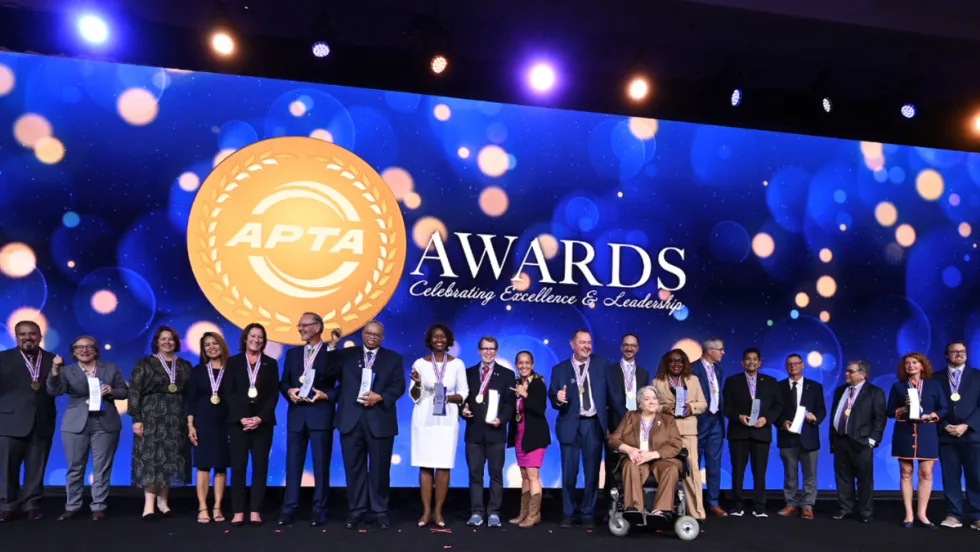
APTA Honors 2026 Award Winners, Hall of Fame Inductees at TRANSform & EXPO
Innovations in autonomous and zero-emission transportation, standout transit systems, and industry leadership took center stage among this year's honorees.
Read More →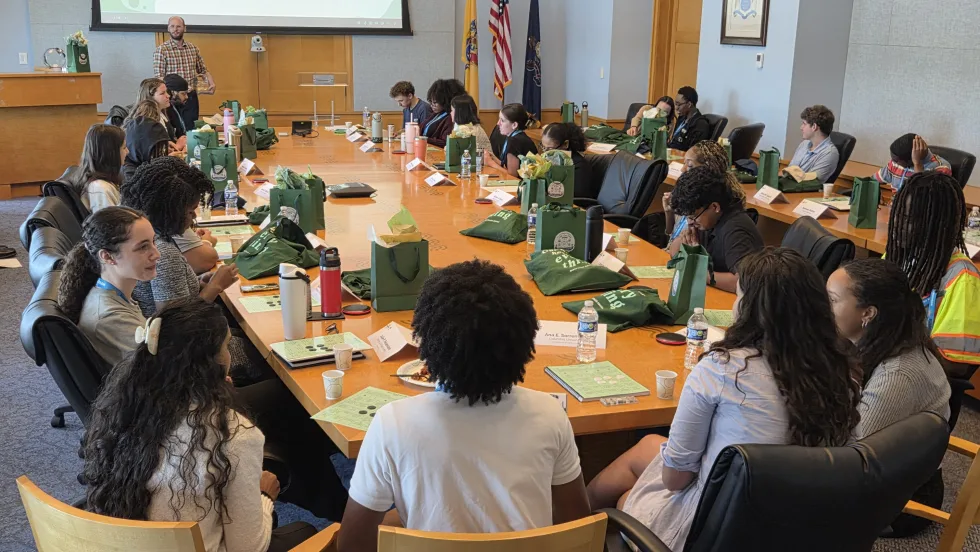
7 Ways to Build a Better Transit Internship Program
Lessons from DRPA/PATCO’s approach to creating a meaningful internship experience—and developing the next generation of transportation professionals.
Read More →
Scenes from APTA TRANSform & EXPO 2026
Transit leaders, manufacturers, and industry professionals gathered in Chicago to explore new technologies, share ideas, and discuss the future of public transportation.
Read More →
Building Stronger Leaders, More Resilient Transit Teams
Dr. Carol Parker Walsh discusses leadership development, employee retention, workplace culture, and preparing transit’s workforce for AI and automation.
Read More →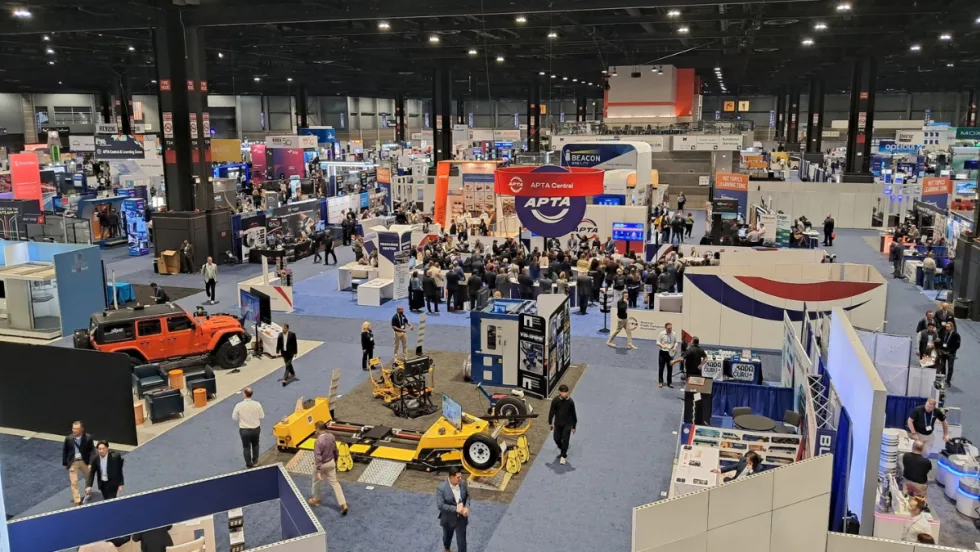
APTA 2026 TRANSform & EXPO Kicks Off in Chicago
After 45 years, APTA returns to Chicago with a focus on next-generation fleets, AI, connected transit networks, and the funding strategies shaping public transportation’s future.
Read More →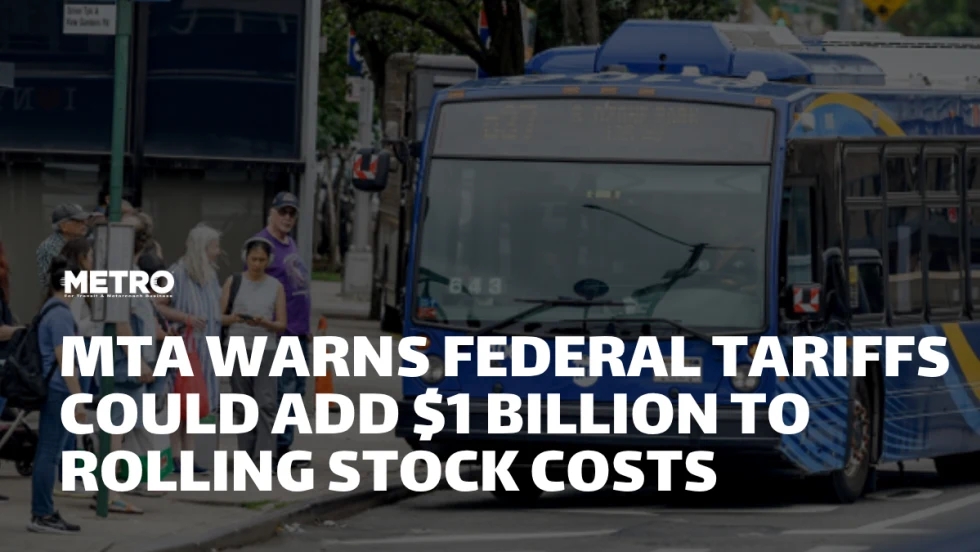
New York MTA Warns Federal Tariffs Could Add $1 Billion to Rolling Stock Costs
The agency said tariffs on specialized imported components could reduce the purchasing power of its $23 billion investment in new subway cars, railcars, and buses.
Read More →
From the Show Floor: What Happened at APTA TRANSform & EXPO 2026
See the latest product launches, partnerships, technology updates, and transit industry announcements from APTA TRANSform & EXPO in Chicago.
Read More →
How Valley Metro Is Balancing Transit Growth With the Rider Experience
The APTA award-winning agency is pairing rapid system expansion with investments in workforce, safety, technology, and the fundamentals of transit service.
Read More →
Bus Tech Talk: Keeping Transit Technicians Ahead of the Technology Curve
In this episode of Bus Tech Talk, Complete Coach Works’ Business Development Manager Mark Hollenbeck and METRO’s Executive Editor Alex Roman sit down with Obed Mejia, Senior Technical Trainer for Bus Maintenance, at LA Metro to discuss how rapidly evolving bus technology is changing the maintenance shop — and the skills technicians need to keep pace.
Read More →