




From Surviving to Thriving: Building Stronger Transportation Organizations
The High Cost of Transit Buses: Industry Leaders Look to Procurement Reform
Transit leaders and policymakers examine how standardized bus designs, streamlined procurement, and predictable funding could help agencies stretch budgets and deliver better service.
August 26, 2026
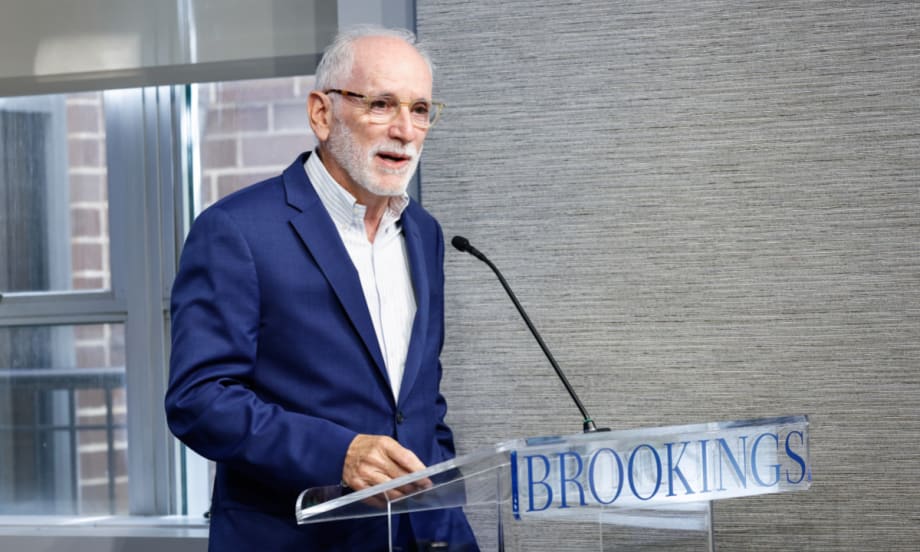
Paul Wiedefeld, former Maryland secretary of transportation, offered framing remarks during the June 25th event.
Credit:
Paul Morigi
6 min to read
- Industry leaders and policymakers are advocating for procurement reforms to make transit bus costs more manageable.
- Emphasis is placed on adopting standardized bus designs to enhance efficiency in procurement processes.
- Predictable funding and streamlined procurement methods are considered crucial for maximizing agency budgets and improving service delivery.
*Summarized by AI
As transit agencies across the country grapple with rising capital costs and aging fleets, industry leaders are pointing to procurement reform as one of the biggest opportunities to stretch limited budgets. Additional funding by itself, if an option at all, isn’t going to cut it anymore.
That was the central message during a June Brookings Institution event discussing the newly released report “Customization, Competition, and Costs: Findings and Recommendations for the U.S. Transit Bus Industry,” published by the Eno Center for Transportation and CALSTART.
While participants acknowledged additional transit funding remains important, panelists repeatedly emphasized the current procurement process has become too complex, driving up bus prices, lengthening delivery times, and discouraging competition among manufacturers. However, the competition issue is partially due to the reduction in bus manufacturers over the last few decades.
"Eno’s research has found that transit agencies are customizing nearly every aspect of a bus," said former Maryland Transportation Secretary Paul Wiedefeld, noting that manufacturers often must redesign vehicles for individual procurements, increasing engineering work, supplier complexity, costs, and production timelines.
Panelists included:
- Lisa Jerram, senior director of bus operations and new vehicle technologies at the American Public Transportation Association
- Holly Arnold, administrator at the Maryland Transit Administration
- Michael Dorgan, policy manager at the Center for Transportation and the Environment
Moderated by Philip Plotch, principal researcher and senior fellow at Eno Center for Transportation, the discussion centered on one of the report's main findings: excessive customization has become commonplace throughout the U.S. transit industry.
Panelists stressed that many agency-specific specifications were originally developed for legitimate operational reasons, but collectively have created a more fragmented marketplace. The result, they said, is a procurement environment where manufacturers build relatively small batches of highly customized vehicles rather than larger production runs of standardized designs.
Consider that the conversation is not about eliminating customization. Instead, panelists advocated distinguishing between features that directly improve safety, reliability, or rider experience and those that provide little measurable value.
Several speakers argued that agencies should adopt more standardized specifications whenever possible while preserving flexibility for legitimate regional or operational needs.
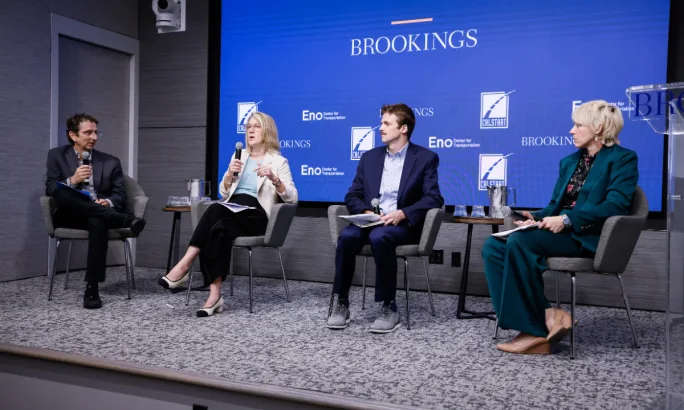
L to R: Philip Plotch, principal researcher and senior fellow at Eno Center for Transportation; Lisa Jerram, senior director of bus operations and new vehicle technologies at the American Public Transportation Association; Michael Dorgan, policy manager at the Center for Transportation and the Environment; Holly Arnold, administrator at the Maryland Transit Administration.
Credit:
Paul Morigi
Procurement Reform Seen as Immediate Opportunity
Rather than focusing solely on bus manufacturing, panelists spent considerable time discussing how agencies procure vehicles. Several recommendations focused on expanding the use of existing procurement tools, including state purchasing contracts and APTA's "White Book" standard bus specifications.
Arnold said stable, multi-year procurements allow agencies to negotiate better pricing than smaller annual purchases. "If I do a procurement for 70 buses, the pricing that I'm getting is not nearly as good as if the procurement is for 500 buses over five years," Arnold explained.
She also noted that purchasing through existing state contracts has significantly reduced procurement timelines and administrative work while helping agencies leverage standardized vehicle specifications. Panelists cautioned, however, that cooperative purchasing alone will not solve the problem if agencies continue requesting extensive customization after selecting a standard contract.
Although a lot of the discussion centered on reducing customization, speakers acknowledged that complete standardization is neither practical nor desirable. Operating environments vary widely across the country, requiring different vehicle configurations, propulsion technologies, and climate-related equipment. For example, the needs in Baltimore are very different than the needs that exist in Florida.
Arnold noted that agencies transitioning toward greater standardization also face significant operational challenges, particularly when maintaining multiple bus platforms at the same time.
Operating several vehicle types means maintaining multiple parts inventories, training operators and maintenance staff on different platforms, and managing more complex supply chains, all of which increase operating costs.
“We are only customizing where it gives us measurable value,” Arnold said. “If it doesn't give us value, we're not doing it.”
Instead of a single national specification, panelists suggested regional standardization may offer a more practical path forward.
Technology Creates Value and Cost, but Relationships Matter Just As Much
Technology emerged as another recurring theme throughout the panel discussion. More often, modern buses include advanced driver assistance systems, passenger information displays, automated vehicle location systems, security equipment, fare technologies, and connected software platforms.
Panelists generally agreed these technologies improve safety and customer experience but acknowledged they also contribute to higher purchase prices and long-term operating costs.
“There are customizations that are over the top, and then there are customizations that do improve the ridership experience,” Dorgan said. “Walking that line is going to be the challenge for the industry in the next couple of years.”
Rather than abandoning new technology, several speakers encouraged agencies to prioritize open architecture and interoperable systems that reduce long-term dependence on proprietary vendors. Arnold said MTA is moving toward open-platform technology requirements to improve integration between onboard systems while giving agencies greater flexibility when replacing software in the future.
Beyond technical standards, however, several speakers argued that stronger collaboration between agencies and manufacturers could improve procurement outcomes.
Arnold described how MTA worked directly with manufacturers to understand why certain companies chose not to bid on procurements. Those conversations led the agency to revise contract terms, adjust bonding requirements where possible, and adopt milestone payments, which ultimately attracted more competition.
Plus, reviewing agency specifications has reduced MTA’s bus cost by approximately $17,000 per vehicle, generating roughly $1.2 million in annual savings based on the agency's typical procurement volume. Arnold said those savings can be redirected toward additional buses and state-of-good-repair investments.
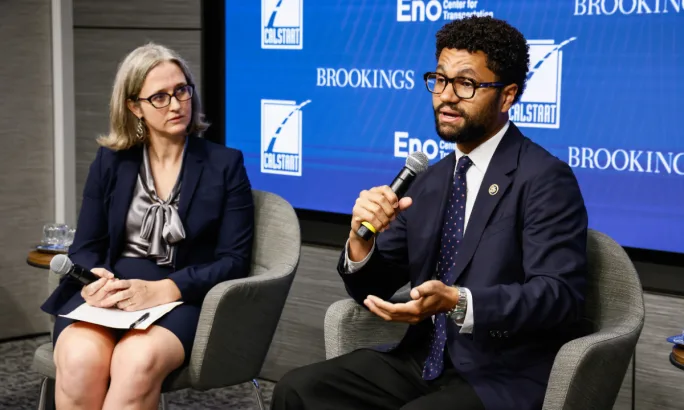
In a conversation with Eno Center for Transportation Vice President of Policy Rebecca Higgins (left), U.S. Rep. Maxwell Frost (right) highlighted bipartisan legislation directing the Government Accountability Office to study rising bus procurement costs and identify opportunities for reform.
Credit:
Paul Morigi
Transit Funding Stability and the Rider Experience Are Still Critical
While procurement reform dominated the conversation, participants consistently returned to another issue: predictable funding.
In a conversation with Rebecca Higgins, the vice president of policy at Eno Center for Transportation, and Rep. Maxwell Frost (D-FL), who introduced the bipartisan Transit Bus Affordability Act directing the Government Accountability Office to study rising bus procurement costs, agreed that the industry's challenges extend beyond customization alone.
It was a repeated reminder that agencies aren’t just buying buses anymore. They’re technically buying rolling technology platforms. Frost noted that modern buses require ongoing software subscriptions, updates, and technology support, meaning the purchase price is only the beginning of the total ownership cost.
One of Frost's and other panelists’ biggest points was that procurement problems aren't solely the fault of agencies. He argued that unpredictable federal funding forces agencies into irregular purchasing cycles, making it difficult to plan large, coordinated procurements that could lower costs. Competitive grants, he said, create uncertainty about future funding, leaving agencies unable to establish long-term replacement schedules.
Frost and Dorgan separately acknowledged that there isn’t a “magic lever” to pull or a single “silver bullet” solution that will fix this.
Frost argued that agencies shouldn't sacrifice important safety features, but they should reconsider when customization enters the procurement process. Rather than treating every desired feature as essential during initial procurement, agencies should first focus on purchasing safe, reliable buses that perform their primary mission.
Panelists also noted that lower bus costs ultimately translate into better service.
“What drives folks to use the bus is going to be a bus that shows up when it says it’s going to show up,” Jerram said. “Better amenities, not just on the bus, but also at bus shelters. The service is the more important thing. I would like us to focus on how we can provide the best service possible.”
Reducing procurement costs allows agencies to replace aging fleets more consistently, purchase additional vehicles, improve reliability, and increase service frequency. Several speakers said these factors matter more to riders than highly customized vehicle features.
As Arnold summarized during the discussion, riders are not asking for more customization. They're asking for buses that arrive more frequently and more reliably.
Subscribe to Our Newsletter
More Bus

LA Metro September Ridership Climbs 3.9%, Led by Rail Growth
The agency recorded more than 27.2 million boardings, with rail ridership increasing 12.4% year over year and the D Line posting the largest gains.
Read More →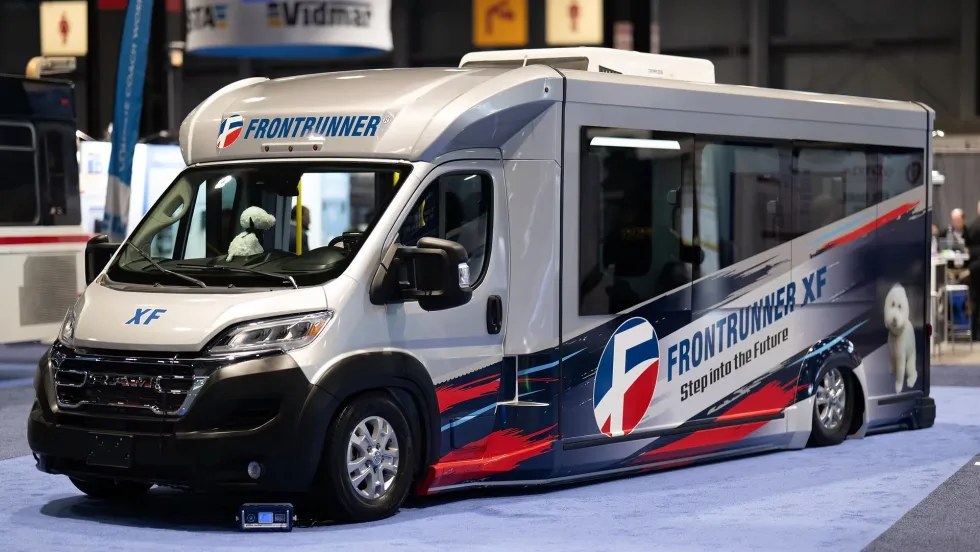
Frontrunner Bus Group Introduces XF Low-Floor Bus with Enhanced Accessibility
The new mid-sized bus features a full flat-floor design, eight-inch curbside step-in height, and zero-entry rear ramp to improve passenger access and operational flexibility.
Read More →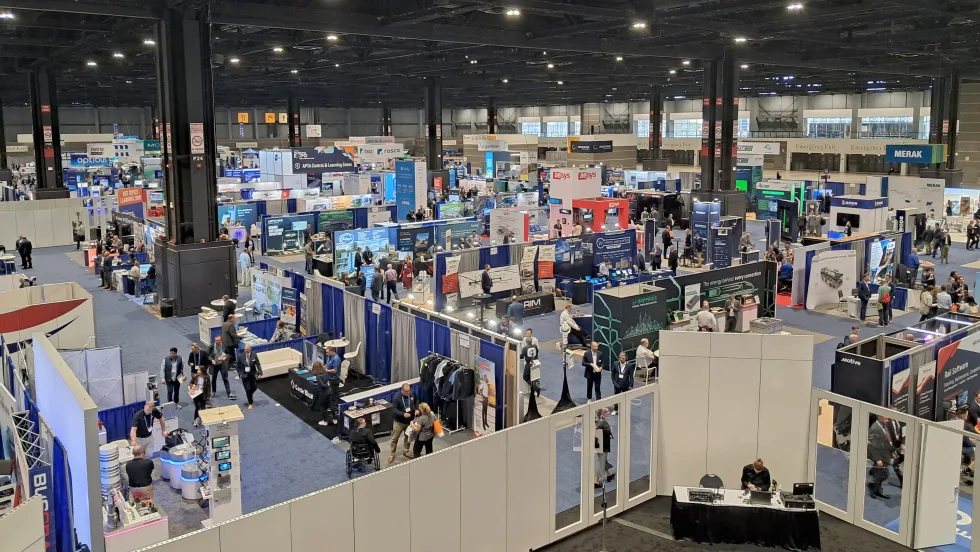
Scenes from APTA TRANSform & EXPO 2026
Transit leaders, manufacturers, and industry professionals gathered in Chicago to explore new technologies, share ideas, and discuss the future of public transportation.
Read More →
More Than a Summer Job: Building the Next Generation of Transit Talent
The Delaware River Port Authority and PATCO have transformed their internship program into a hands-on professional development experience that introduces students to the breadth of transportation careers — and creates a pipeline for future employees.
Read More →
LA Metro Board Awards 220 Battery-Electric Bus Contract to ENC
The contract, which is the largest base award of battery-electric buses by a U.S. transit agency, will be built in Southern California, sustaining good jobs as LA prepares to welcome the world in 2028
Read More →
Public Transit Conference Returning to GFX in 2027, Call for Papers Now Open
The Call for Papers is now open, allowing transit agency professionals and industry experts to help shape the PTC educational program by submitting session ideas for consideration.
Read More →
Indian River Transit’s Community-Focused Approach Earns National Recognition
Named APTA’s 2026 Outstanding Public Transportation System in its size category, Florida’s Indian River County transit system continues to grow ridership through fare-free service and a focus on evolving community needs.
Read More →
ENC Lands MATA Contract and More in Biz Briefs
In this edition of Biz Briefs, we spotlight the latest developments shaping the future of mobility.
Read More →
From Surviving to Thriving: Building Stronger Transportation Organizations
Bus Business Consultants founder Brian Dickson shares lessons on leadership, organizational health, and creating options for long-term success in a changing transportation industry.
Read More →
Everett Transit, Community Transit Outline Consolidation Agreement
The proposed agreement calls for a 50% increase in bus service in Everett, a new microtransit zone, continued paratransit service, and the transfer of Everett Transit operations to Community Transit.
Read More →