



New Mineta Report Focuses on AC Transit Bus Operator Initiative
When AC Transit implemented changes to its hiring and training process, including significant financial incentives and a holistic view of new hire needs, the agency experienced an improvement in hiring and retention.

Efforts to recruit and retain diverse, talented employees are primarily affected by issues of pay, benefits, and working conditions.
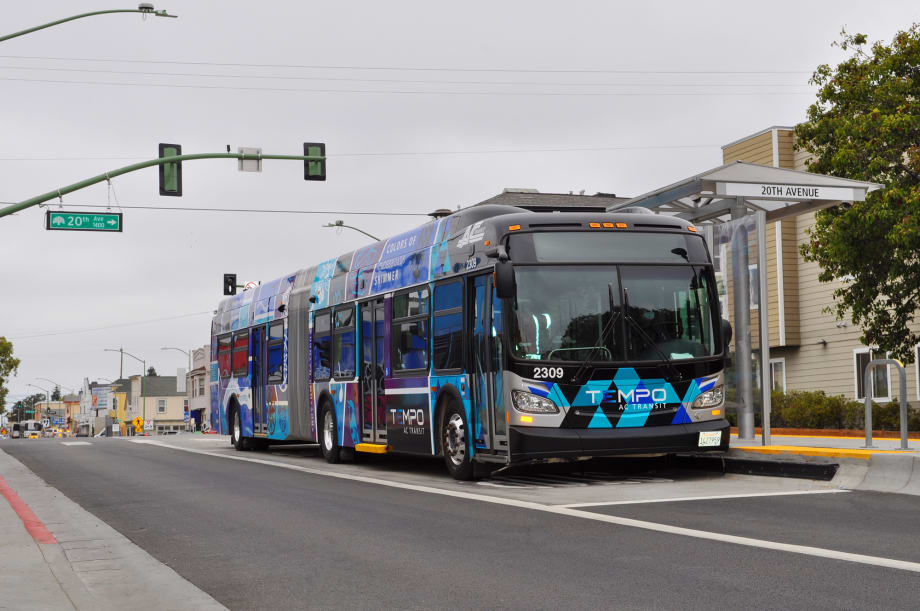
Photo: AC Transit
The latest Mineta Transportation Institute (MTI) perspective, “Steering Success: AC Transit’s Holistic Strategy for Bus Operator Shortage,” examines what one transit operator is doing differently to attract and retain qualified frontline workers.
Despite ongoing attempts to address recruitment and retention challenges, the demand for bus operators exceeds the available workforce. As a result, many transit agencies are now facing a looming human capital crisis.
This perspective involved a literature review and a series of interviews with Human Resources staff from Oakland, Calif.’s Alameda-Contra Costa Transit District (AC Transit).
Implementing A Recruitment, Retention Program
The nearly 65-year-old Oakland-based transit agency considered several factors in the implementation of its innovative recruitment practices including:
In a 2022 American Public Transportation Association survey of 117 transit agencies of all sizes, 71% reported that they have either had to cut service or delay service increases because of worker shortfalls. The shortage is only expected to worsen as the current workforce retires, and 43% percent of transit workers are over age 55.
Efforts to recruit and retain diverse, talented employees are primarily affected by issues of pay, benefits, and working conditions.
When AC Transit implemented changes to its hiring and training process, including significant financial incentives and a holistic view of new hire needs, the agency experienced an improvement in hiring and retention.
“AC Transit served 39.3 million riders last fiscal year, covering 364 square miles of the East Bay, and 625 buses — including the region’s largest zero emission bus fleet — which underscores that this is not a small operation,” says the perspective’s author, Lisa Rose. “Facing a similar staffing crisis as many other agencies, AC Transit overhauled its hiring and training practices, and it worked. The agency recorded an impressive decrease in turnover from 2022 to 2023, and this positive trajectory has continued into 2024.”
"Our District wanted to tangibly demonstrate to new frontline employees what AC Transit is about and welcome them into a supportive community. However, we first needed to pause and determine what new hires in our community required,” said CEO/GM Michael Hursh. “When HR began conducting informal exit interviews with resigning tenured Bus Operators, our team then identified patterns leading to turnover, and quickly, New Bus Operator recruitment began changing for the better."
AC Transit’s Approach
AC Transit’s approach — characterized by early investments in new hires, including holistic support, financial incentives, and a focus on creating community — is a viable way forward in addressing the transit workforce shortage.
The success of the program has spurred AC Transit to develop plans to implement the New Bus Operator staffing model for recruitments agencywide. These changes could prove to be a model template for recruitment and retention throughout the transit industry.
More Management

METRO Opens Submissions for 2026 Motorcoach Awards
Nominations are now being accepted for METRO Magazine’s Operator of the Year and Innovative Operator of the Year awards.
Read More →
New York MTA Advances Final Contract for Second Avenue Subway Expansion
Contract Four is the largest in the Second Avenue Subway Phase 2 project and includes construction of station infrastructure, tracks, and signals for the subway expansion, MTA officials said. Work on Contract Four will begin in 2027.
Read More →
Transit Agencies Highlight Safety Gains at National Summit
Leaders from 15 major transit systems shared crime-reduction results and safety initiatives while discussing the role of continued federal support.
Read More →

NITA Names New Leadership, Expands Reduced-Fare Program at First Board Meeting
The new regional transit authority appointed its first board chair and interim executive director while extending reduced fares across CTA, Metra, and Pace for eligible riders.
Read More →
Beyond the Checklist: A Structured Approach to Transit Maintenance
Reliability-Centered Maintenance helps transit agencies move beyond routine checklists to focus limited resources on the assets and failures that have the greatest impact on safety, reliability, and service.
Read More →
APTA 2026 Nominating Committee Selects Leadership Slate, Names Chair and Vice Chair Nominees
Leadership changes will help shape the association’s priorities and its representation of the transportation industry during the 2026–2027 term.
Read More →
DART Launches Major Security, Fare Enforcement Initiative
The 90-day demonstration will deploy coordinated security teams at five light rail stations while testing controlled access and gathering data to guide future investments.
Read More →
Advancing Fare Collection Through Technology and Innovation
Learn about delivering 1300 gates at 91 stations while managing fare evasion. Explore the large scale deployment, solution customization and real-world results that affect the region. Prepare for deployment in your region now.
Read More →
Game Day in Motion: Moving Millions During the 2026 World Cup
Between packed transit stations and team motorcoaches, see how agencies and operators across North America tackled the transportation demands of the 2026 FIFA World Cup.
Read More →
Surface Transportation Extension Averts Shutdown, Leaves Transit Funding Gap
The stopgap keeps federal transportation programs moving, but missing advance funding could complicate the transit and rail projects agencies are planning next.
Read More →