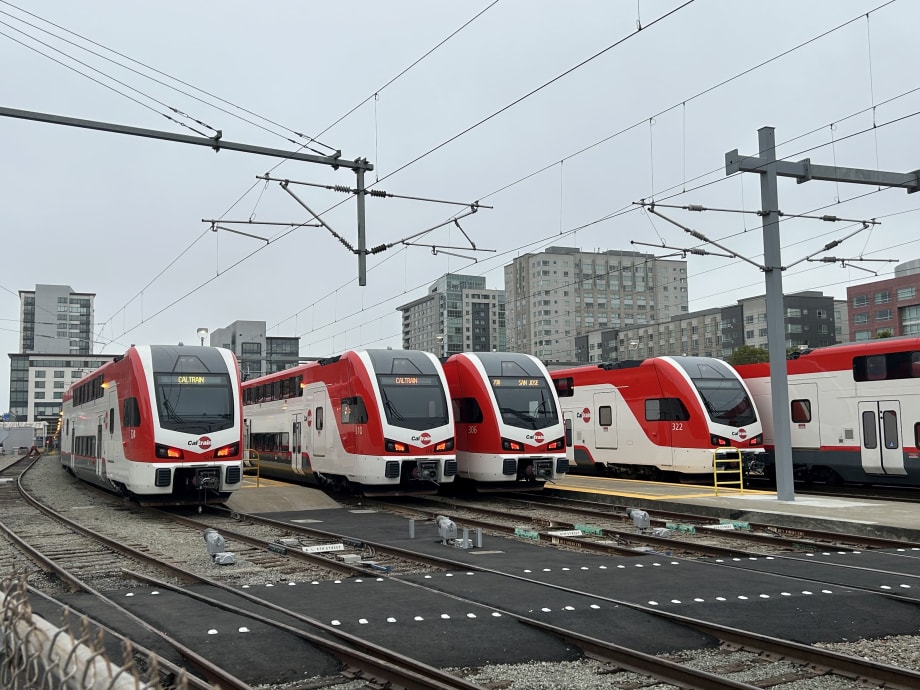
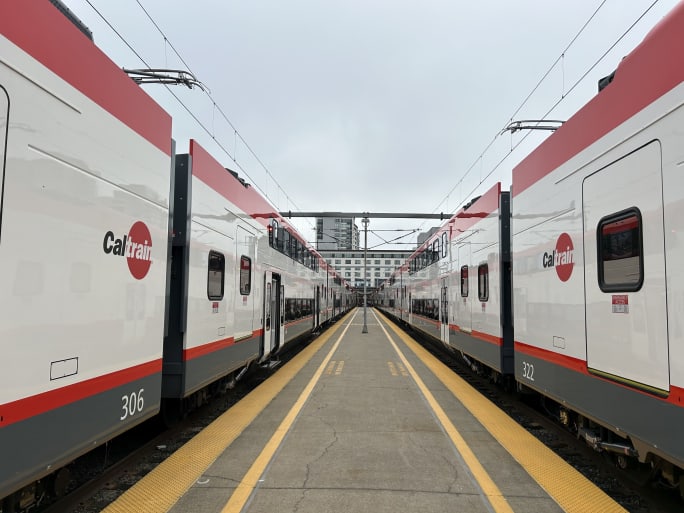
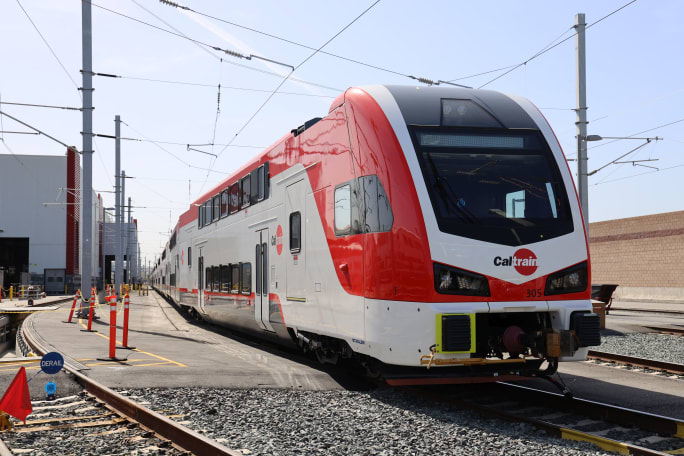
After nearly a decade of construction, these new trains signify a landmark shift toward a faster, more frequent and environmentally friendly public transportation network along the San Francisco Peninsula.
Beginning August 11, the electric trains will run their first regular service. Additional electric trains will be introduced every week until the launch of the new schedule and full electrified service between San Francisco and San Jose on Sept. 21.
Photo: Caltrain
2 min to read
California’s Caltrain debuted its cutting-edge electric fleet, hosting a VIP tour where participants boarded the trains for its historic inaugural service.
After nearly a decade of construction, these new trains signify a landmark shift toward a faster, more frequent and environmentally friendly public transportation network along the San Francisco Peninsula.
Ad Loading...
Kicking Off Caltrain’s New Fleet
The event included a 30-minute round-trip experience, starting in San Francisco with the opportunity to engage with federal, state, local elected officials as well as transportation, business, labor, and community leaders.
Beginning August 11, the electric trains will run their first regular service. Additional electric trains will be introduced every week until the launch of the new schedule and full electrified service between San Francisco and San Jose on Sept. 21.
The new high-performance electric trains offer a better experience for Caltrain riders while providing faster and more frequent service.
Photo: Caltrain
The Benefits of Electrification
The new high-performance electric trains offer a better experience for Caltrain riders while providing faster and more frequent service. Express service will allow commuters to travel between San Francisco and San Jose in under an hour.
The new trains will also increase service by 20% because they can accelerate and decelerate much faster than diesel trains, which provides more robust and flexible access to cities throughout the rail system — with 16 stations seeing trains every 15 to 20 minutes at peak hours and all stations receiving service every 30 minutes on the weekend compared to hourly service today.
Additionally, electrified service will advance equity along the corridor by reducing noise and air pollution while increasing access and service for equity priority communities by 26%.
Ad Loading...
Electrification will also help meet ambitious regional and state climate action goals by lowering greenhouse gas emissions, improving air quality, and relieving traffic congestion.
By transitioning from diesel to electric trains, carbon dioxide emissions will be cut by 250,000 metric tons annually—- equivalent to removing 55,000 cars from the road each year.
The Electrification Project not only decreases emissions and noise pollution in priority equity communities, but also provides better access and more robust and flexible service for everyone.
Caltrain's Electrification Project not only decreases emissions and noise pollution in priority equity communities, but also provides better access and more robust and flexible service for everyone.
Photo: Caltrain
Enhanced Amenities
Additionally, the new vehicles offer enhanced amenities, including customer-facing Wi-Fi, new digital onboard displays, power outlets at each forward-facing seat, energy-efficient lighting, an improved climate control system, baby-changing tables in the bathroom, security cameras, and expanded storage under the cantilevered seats.
They will also generate less noise than their diesel equivalent, making the trip more enjoyable both for riders and residents that live near Caltrain tracks.
Ad Loading...
Caltrain is the oldest continuously operated railroad in the West, starting steam train passenger service 160 years ago when Abraham Lincoln served as President.
Contract Four is the largest in the Second Avenue Subway Phase 2 project and includes construction of station infrastructure, tracks, and signals for the subway expansion, MTA officials said. Work on Contract Four will begin in 2027.
The Garden State Initiative analysis examines the roles of Amtrak infrastructure, fleet management, and agency operations while recommending a more performance-based approach to improving reliability.
Beginning in 2027, Stadler will provide on-site technical expertise, spare parts support, training, and obsolescence management to help extend the reliability and longevity of CapMetro’s GTW fleet.
In METRO's latest installment, we take a look at recent news from Complete Coach Works, Beep, FlixBus, and more partnerships making headlines across the transportation sector.
Pedestrian microsimulation is helping rail planners identify bottlenecks, test station designs, and prepare complex transit hubs for growing passenger volumes.
The privately developed project would offer a 15-minute trip between downtown and O’Hare’s Terminal 2, with trains operating every 15 minutes on a dedicated track. The service would use battery-electric trains and three existing freight rail rights-of-way.
The draft feasibility report identifies strategies to protect the coastal rail line for decades as the agency continues near-term stabilization and sand placement efforts.