



Accounting for Thermal Events On The Road, At Transit Facilities
As the popularity of EVs rises, structures designed to house them are being planned around preventing and mitigating the effects of fires caused by Thermal Runaway Events, especially in high temperature areas.

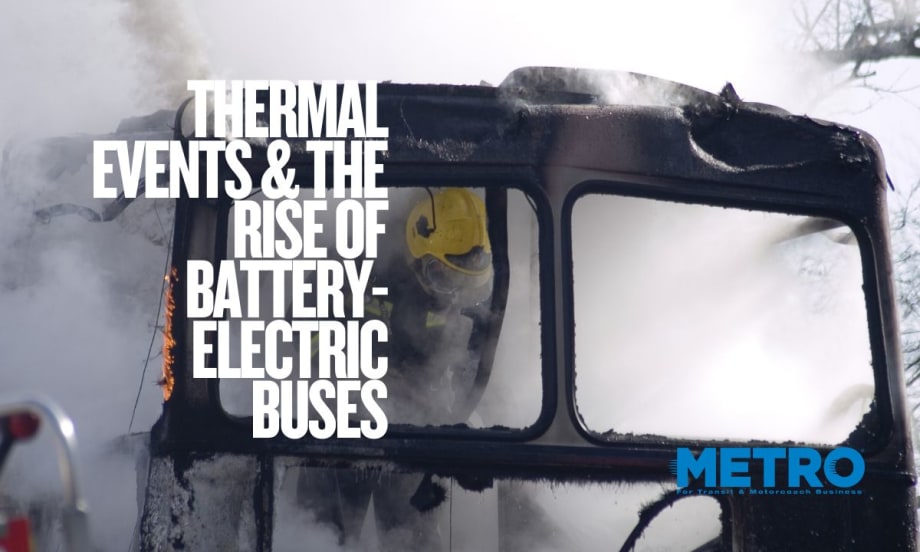
As more EVs have been put into use, there have been a growing number of thermal runaway events across the country.
Photo: METRO
- The increasing popularity of electric vehicles (EVs) is leading to the design of facilities specifically aimed at preventing fire hazards.
- New structures are being planned with strategies to mitigate the effects of thermal runaway events in EVs.
- Special focus is given to high-temperature areas where the risk of such thermal events is greater.
*Summarized by AI
With the rise in popularity for Electric Vehicles (EVs), transit agencies are facing new issues that come with the batteries that these vehicles utilize — thermal runaway events.
Thermal Runaway Events
Thermal runaway events can occur in electric vehicles that utilize high energy density battery technology.
Thermal runaway is the rapid self-heating of a battery cell due to an exothermic reaction that occurs within a battery cell. The heating can spread to other cells, initiating a chain reaction, which can potentially result in a fire.
When a thermal runaway event occurs in a battery-electric bus, there is a very real possibility of it leading to a fire. The fire can spread to the bus and cause damage to its surroundings including any adjacent parked vehicles and structures.
There are many factors involved that lead to thermal runaway, such as the ambient conditions under which the vehicle is operating, the type of batteries used, and the battery management system (BMS) of the vehicle.
Typically, batteries undergo thermal runaway due to an electrical failure, mechanical damage, or excessive exposure to heat.
Electrical failure can occur for example during charging.
“There are on-board battery management systems that are designed to detect an anomaly before it occurs,” said William Connell, sr. VP, mechanical engineering, with WSP. “In battery-electric buses, if an anomaly is detected such as condition(s) for thermal runaway, then the BMS can relay the signal to a designated location so that appropriate action can be taken.”
Mechanical failure can be a result of vehicle collision or other type of physical damage to the batteries. This can occur for example during vehicle maneuvering in and out of parking garages or on the road.
“Day-to-day operations of battery-electric buses and other EVs can lead to excessive exposure to heat, particularly during hot ambient conditions,” explained Connell. "This can lead to overheating of the batteries and trigger thermal runaway."
EVs and the Increase in Thermal Runway Events
As more EVs have been put into use, there have been a growing number of thermal runaway events across the country.
“Thermal runaway events are something that transit agencies are becoming more aware about, as it introduces a unique fire hazard risk with the adoption of battery-electric buses,” said Connell. “Because this technology has been adopted so fast the fire risk and the fire hazard associated with these battery-electric buses and electric vehicles were not fully realized.”
With awareness rising about the risk of fire in EVs, engineers are better able to design systems to reduce risks and mitigate damage when such fire occurs.
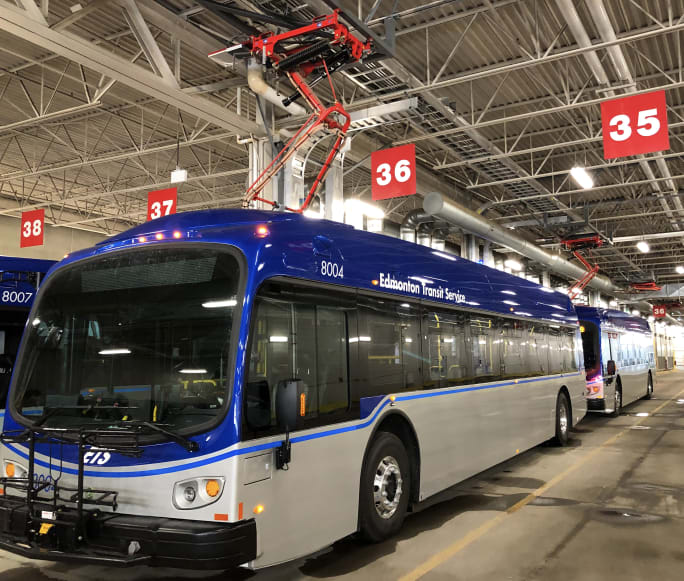
With awareness rising about the risk of fire in EVs, engineers are better able to design systems to reduce risks and mitigate damage when such fire occurs.
Photo: ETS/Proterra
Preventing Thermal Runaway Events
There are a number of steps that can be taken to reduce the risk of fires in EVs, including an effective BMS that is capable of monitoring and protecting the batteries from reaching high temperatures, as well as timely reporting of any anomaly and potential thermal runaway.
Making sure an EV has an appropriate battery cooling system is also a simple and efficient way to reduce the risk of thermal runaway events, as well as keeping on top of maintaining the electrical and mechanical systems of the vehicle.
If a fire initiates in the battery-electric bus, having an on-board fire suppression system can help to control the fire and prevent it from spreading.
When looking into electrifying a fleet, knowing the risks associated with EVs can also allow additional precautions to be taken when designing facilities or plans in case of a thermal runaway event.
“Our first plan of action is to always inform the client about the unique fire hazard that is associated with the introduction of battery electric buses, and what potential mitigation measures can be placed in their facilities to minimize this fire hazard and the damage that it can cause,” said Connell.
Risks include rapid fire spread to adjacent parked buses and damage to nearby critical structures. If a battery-electric bus fire is not controlled, it can quickly lead to significant asset loss and extensive structural damage, threatening the life safety of occupants.
“Our approach to address this fire hazard has usually been to get the fire department involved as early as possible in the conversation and coordinate with them the type of analysis work we will perform to assess the fire risk of the particular type of battery-electric bus, the results of our analysis, and our recommendations for the fire protection system that should be installed along with any additional mitigation measures,” explained Connell.
Connell added that because there are different battery energy capacities on different buses, the fire hazard can increase depending on the number of batteries packed onto the bus, as well as the combustible products present, based on the size of the bus.
Planning Considerations
When planning fire protection systems for transit facilities, designers must consider many factors, such as the ambient temperature, vehicle spacing, and the surrounding structural elements.
“Due to limited guidance from existing codes and standards for battery-electric bus facilities, we adopt a performance-based design approach that considers a worst-case scenario of a fully engulfed battery-electric bus fire,” said Connell. “We account for many factors in our analysis, assessing the fire hazard and risks including potential for fire spread to adjacent parked buses, damage to the structural members, and resulting toxicity to ensure life safety for the occupants and safe egress.”
Another consideration is the type of buses planned to be parked and charged.
“We coordinate the potential fire hazard and risks of a battery-electric bus fire, our performance-based design approach, analysis results, recommendations for the appropriate fire protection systems and mitigation measures with the local fire department,” said Connell.
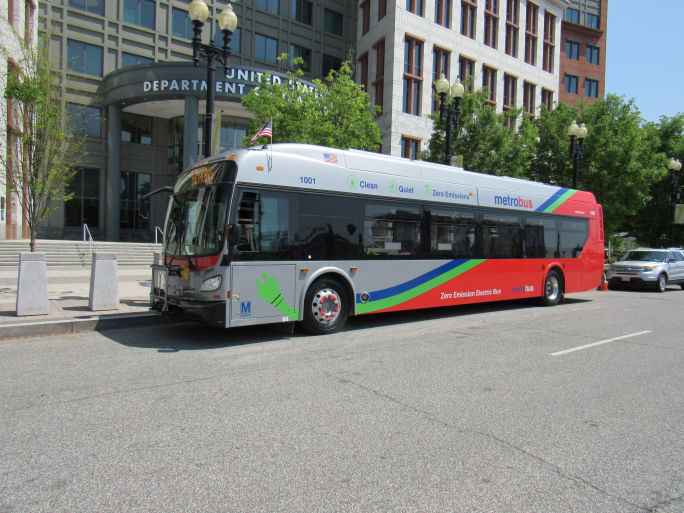
If a fire initiates in the battery-electric bus, having an on-board fire suppression system can help to control the fire and prevent it from spreading.
Photo: New Flyer
Advice for Existing and New Bus Facilities
When it comes to bus facilities, either existing or new, accommodating battery-electric buses, it is best to be aware of the potential fire hazards introduced by their on-board battery technology and have an egress plan for life safety of the occupants in the event of an emergency.
An effective fire protection system that can control a battery-electric bus fire, minimize rapid fire spread to adjacent parked buses, and reduce thermal exposure to the surrounding structures is also essential to minimize asset loss and structural damages.
“It is important to understand that a fully-engulfed battery-electric bus fire can occur from thermal runaway, which can lead to rapid fire spread, severe structural damage, and impact life safety without any appropriate fire protection system,” said Connell. “Therefore, there is a real need for coordination with the authorities, as well as the emergency response and management agencies like fire departments. For existing or new bus facilities that are being renovated or designed to accommodate battery-electric buses, it is very important to involve them at the early stages of the design, rather than later.”
Quick Answers
A Thermal Runaway Event is a situation where the temperature within an electric vehicle's battery system increases uncontrollably, potentially leading to a fire.
*Summarized by AI
More Security and Safety

FTA Ends Direct Oversight of MBTA Safety Actions
The federal agency closed its remaining special directive to the Massachusetts Department of Public Utilities following a safety review that began in 2022.
Read More →
Transit Agencies Highlight Safety Gains at National Summit
Leaders from 15 major transit systems shared crime-reduction results and safety initiatives while discussing the role of continued federal support.
Read More →
DART Launches Major Security, Fare Enforcement Initiative
The 90-day demonstration will deploy coordinated security teams at five light rail stations while testing controlled access and gathering data to guide future investments.
Read More →
RTD Launches NextRide App to Consolidate Trip Planning, Fares, Security Reporting
The app expands on RTD’s existing NextRide web application and allows customers to view real-time vehicle locations and service alerts, purchase and store digital fares, and access customer support.
Read More →
TAPTCO Updates OSHA Compliance Training for Transit Maintenance Operations
The revamped program addresses 26 OSHA standards for maintenance facilities, with TAPTCO pointing to training, documentation, and everyday shop hazards as continuing challenges for transit operations.
Read More →
FRA Announces $5.3B in Rail Investments, Including $2B for Amtrak
Funding will support grade-crossing improvements, infrastructure upgrades, and new Amtrak equipment in 23 states.
Read More →
Chicago, Maryland Expand Non-Law-Enforcement Safety, Rider Support
The CTA and MTA are launching new programs aimed at de-escalation, crisis response, rider assistance, and greater transparency.
Read More →
LA Metro, City of West Hollywood, and Partners Advance Smarter Bus Lane Enforcement
The award-winning partnership combines AI-powered detection with human oversight to improve bus reliability, accessibility, and enforcement efficiency.
Read More →
LA Metro Reports 57% Decline in Homelessness on Transit System Since 2024
The agency's latest homelessness count offers new data on how care-based services and cross-sector partnerships can complement traditional transit security strategies.
Read More →
FTA Launches 'Transit Moves America' Dashboard to Highlight Agency Safety and Performance
The online dashboard transforms National Transit Database information into a public-facing resource that allows users to compare transit agencies on key operational and safety metrics.
Read More →