




More News: Pittsburgh PRT Requests Partner for Transit-Oriented Development
WMATA Selects Developer for Future Mixed-Use Buildings
WMATA is looking to utilize its properties to help encourage people to utilize their transit systems by providing easy access to residential and commercial areas.
April 21, 2025
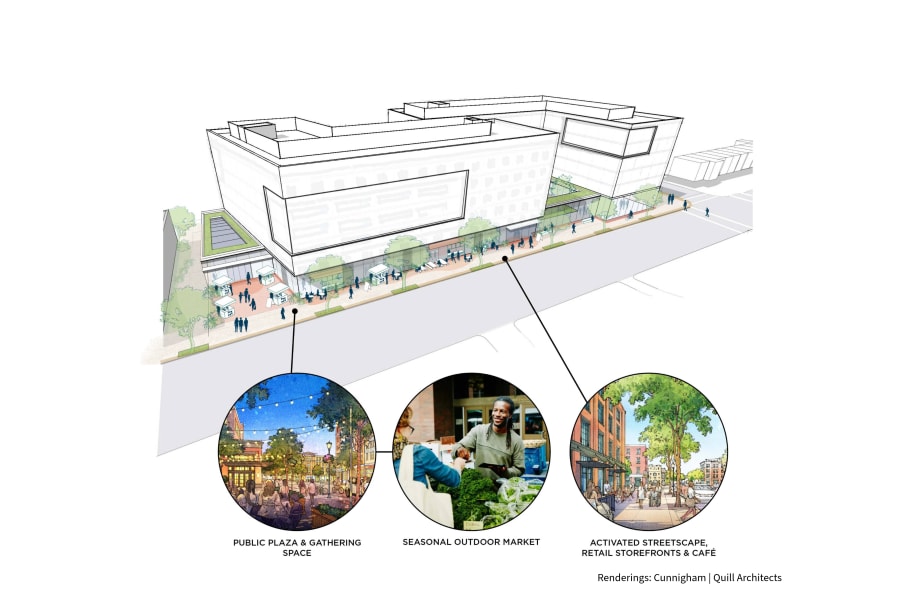
The new Deanwood development looks to bring residents and businesses close to public transportation options in the D.C. area.
Photo: Rendering via Cunningham/Quill Architects
3 min to read
The Washington Metropolitan Area Transit Authority (WMATA) announced Northern Real Estate Urban Ventures (NREUV) and Nix Development Company (NixDev) as the development team for the Deanwood joint development. Other members include local architect Cunningham Quill and general contractor Bozzuto Construction Company.
Future developments will bring new housing and retail options to the community near the Deanwood station entrance in Northeast D.C.
Enabling the Development
This results from several years of planning and engagement with community leaders.
The development at Deanwood station was enabled by a Compact Public Hearing hosted by WMATA. In 2023, the board approved closing the surface parking lot. Permission to rezone the property to medium-density mixed-use was granted in September 2024.
The mixed-use development will be complemented by a new 20,000-square-foot DC Public Library, which was approved in April 2024. The DC Public Library, which has allocated $24 million in funding for the project, is working with WMATA separately to develop an agreement.
“We look forward to this site getting a fresh start by transforming an underutilized space into a vibrant, mixed-use hub of housing and amenities for Ward 7,” said Mayor Muriel Bowser. “We have a world-class public transit system, we have a world-class library system, and this project will bring them together and deliver jobs, housing, and more for DC residents.”
WMATA has worked to ensure that land near its stations is fully utilized to drive new ridership and provide new community amenities.
“Deanwood station is a fantastic example of WMATA working with the city and the local community to replace a mostly empty parking lot with a development that will enhance the neighborhood,” said WMATA GM/CEO Randy Clarke. “Transit-oriented development is a key component of WMATA’s Regional Opportunity and Partnership strategic goal and WMATA remains a national leader in cultivating livable communities near our stations that create new transit users and connect people to economic opportunities.”
Selecting the Contractors
NREUV and NixDev were competitively selected based on a track record of completing mixed-income developments in the area and commitment to community engagement and economic empowerment.
The proposed development includes 169 mixed-income residential units, ground-floor retail, and services, including a teen tech center.
Proposals were received from three other development teams.
Staff will commence negotiations on the joint development agreement in anticipation of bringing it to WMATA’s Board of Directors later this year for approval.
Specific development timelines are still being determined and are subject to obtaining financing. However, construction is estimated to start by 2028.
Since issuing a 10-year strategic plan for joint development in April 2022, WMATA and its joint development partners have broken ground on seven regional developments, with five being completed.
Approximately 1,900 units, including 1,100 affordable units, were constructed through these developments.
Leveraging WMATA’s real estate holdings helps foster regional partnerships to generate revenue, build ridership, connect people to more jobs, and create new tax revenues for local and state partners.
More Management

METRO Opens Submissions for 2026 Motorcoach Awards
Nominations are now being accepted for METRO Magazine’s Operator of the Year and Innovative Operator of the Year awards.
Read More →
New York MTA Advances Final Contract for Second Avenue Subway Expansion
Contract Four is the largest in the Second Avenue Subway Phase 2 project and includes construction of station infrastructure, tracks, and signals for the subway expansion, MTA officials said. Work on Contract Four will begin in 2027.
Read More →
Transit Agencies Highlight Safety Gains at National Summit
Leaders from 15 major transit systems shared crime-reduction results and safety initiatives while discussing the role of continued federal support.
Read More →

NITA Names New Leadership, Expands Reduced-Fare Program at First Board Meeting
The new regional transit authority appointed its first board chair and interim executive director while extending reduced fares across CTA, Metra, and Pace for eligible riders.
Read More →
Beyond the Checklist: A Structured Approach to Transit Maintenance
Reliability-Centered Maintenance helps transit agencies move beyond routine checklists to focus limited resources on the assets and failures that have the greatest impact on safety, reliability, and service.
Read More →
APTA 2026 Nominating Committee Selects Leadership Slate, Names Chair and Vice Chair Nominees
Leadership changes will help shape the association’s priorities and its representation of the transportation industry during the 2026–2027 term.
Read More →
DART Launches Major Security, Fare Enforcement Initiative
The 90-day demonstration will deploy coordinated security teams at five light rail stations while testing controlled access and gathering data to guide future investments.
Read More →
Sponsored•September 9, 2026
Advancing Fare Collection Through Technology and Innovation
Learn about delivering 1300 gates at 91 stations while managing fare evasion. Explore the large scale deployment, solution customization and real-world results that affect the region. Prepare for deployment in your region now.
Read More →
Game Day in Motion: Moving Millions During the 2026 World Cup
Between packed transit stations and team motorcoaches, see how agencies and operators across North America tackled the transportation demands of the 2026 FIFA World Cup.
Read More →
Surface Transportation Extension Averts Shutdown, Leaves Transit Funding Gap
The stopgap keeps federal transportation programs moving, but missing advance funding could complicate the transit and rail projects agencies are planning next.
Read More →