



New York MTA Approves Resubmitting Historic Five-Year Capital Plan
The proposed plan will now be resubmitted to the MTA Capital Program Review Board in Albany, signaling a major step forward for what MTA officials are calling the agency's most rigorously developed capital program.

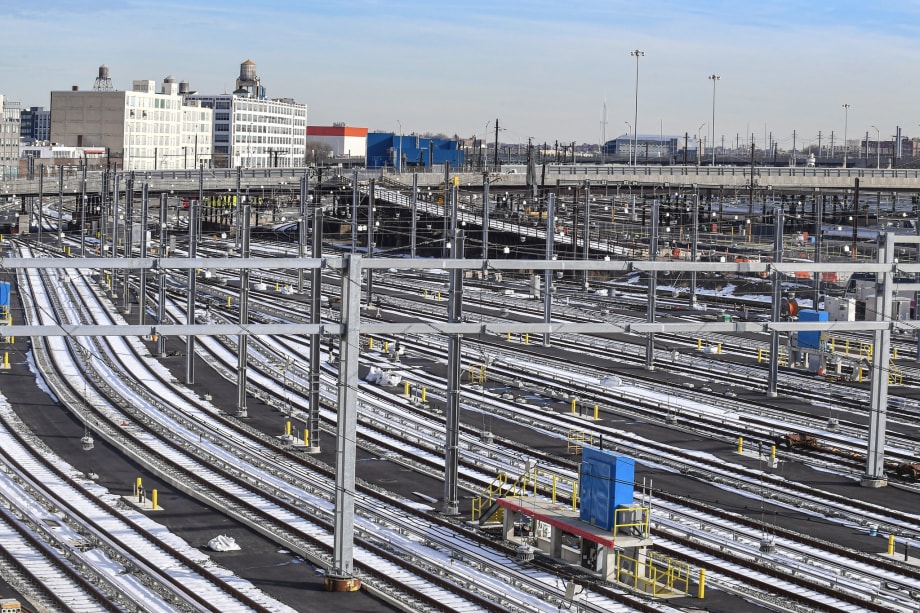
The plan is grounded in the Twenty-Year Needs Assessment, the MTA’s most comprehensive system-wide evaluation to date, and emphasizes investments that prioritize state of good repair, system modernization, and long-term sustainability.
Photo: New York MTA/Marc A. Hermann
The New York Metropolitan Transportation Authority (MTA) board formally approved a revised $68.4 billion Capital Plan for 2025–2029, following the allocation of state funding in the newly passed New York State budget.
The proposed plan will now be resubmitted to the MTA Capital Program Review Board in Albany, signaling a major step forward for what MTA officials are calling the agency's most rigorously developed capital program.
A Historic Investment in Resilience, Reliability
The plan is grounded in the Twenty-Year Needs Assessment, the MTA’s most comprehensive system-wide evaluation to date, and emphasizes investments that prioritize state of good repair, system modernization, and long-term sustainability.
“This is the first capital plan based on a comprehensive review of the condition of this priceless system,” said MTA Chair/CEO Janno Lieber. “And it unapologetically puts the spotlight on maintaining and modernizing the infrastructure New Yorkers depend on every day.”
With aging assets across the subway, bus, commuter rail, bridge, and tunnel networks, the plan allocates funding toward:
Modernizing 75 miles of signaling.
Making 60 stations ADA accessible.
Rebuilding more than 80 power substations.
Installing new fare gates at 150 stations.
Enhancing station security and passenger information systems.
Overhauling the Grand Central Artery.
Upgrading key train yards, shops, and substations.
Initial phases of work are already underway, including signal modernization along the Fulton and Liberty lines, early design for the Interborough Express, and climate resiliency projects on Metro-North’s Hudson Line.
Maximizing Efficiency with In-House Delivery
MTA Construction & Development (MTA C&D) is prepared to accelerate project delivery using its internal team, which has already initiated nearly half of the plan’s components.
A reassessment of scope has led to shifting additional responsibilities in-house, such as barrier installations, component repairs, and substation work, yielding notable cost savings.
So far in 2025, the MTA has installed platform barriers at 19 stations, and it plans to complete 100 installations by the end of the year.
The Capital Program Review Board in Albany will finalize the proposed plan.
Once approved, MTA C&D is set to proceed at full speed with delivering the proposed upgrades, the agency said.
More Management

ENC Lands MATA Contract and More in Biz Briefs
In this edition of Biz Briefs, we spotlight the latest developments shaping the future of mobility.
Read More →
From Surviving to Thriving: Building Stronger Transportation Organizations
Bus Business Consultants founder Brian Dickson shares lessons on leadership, organizational health, and creating options for long-term success in a changing transportation industry.
Read More →
Everett Transit, Community Transit Outline Consolidation Agreement
The proposed agreement calls for a 50% increase in bus service in Everett, a new microtransit zone, continued paratransit service, and the transfer of Everett Transit operations to Community Transit.
Read More →

Strada360’s Steve Lassey on Turning Transit Data Into Better Decisions
From breaking down data silos to preparing for AI, Strada360 CEO Steve Lassey discusses how transit agencies can use technology to improve operations, customer information, and long-term decision-making.
Read More →
People Movement: Phil Washington Joins HNTB, Denver RTD Launches CEO Search, and More
In this edition, we also spotlight recent personnel moves at STV, the Eno Center for Transportation, and more, highlighting the people taking on new roles across the transportation industry.
Read More →
SEPTA Details Accelerate Vision for Transit System
The plan outlines investments in trolley modernization, new Metro and Regional Rail vehicles, accessible stations, and more frequent bus and rail service.
Read More →
FTA Ends Direct Oversight of MBTA Safety Actions
The federal agency closed its remaining special directive to the Massachusetts Department of Public Utilities following a safety review that began in 2022.
Read More →
Report: Transit Bus Manufacturing Supports 34,100 Jobs, $5.1B in GDP
The “Buses Mean Business” report examines the transit bus manufacturing industry’s economic footprint, supply chain, and rising demand for vehicle replacements.
Read More →
LIT Marks 10-Year Milestone at Annual Summit
Hosted by the COTA from September 10 to 13, the Summit carried the theme “Celebrating 10 Years of Excellence, Leadership, and Impact,” with every part of the program honoring the people, agencies, and partners who built LIT over its first decade.
Read More →
People Movement: Dan Dipert Coaches Adds Third-Generation Leader, Keolis Names New Valley Metro VP/GM, and More
In this edition, we also cover recent appointments and announcements at the Wabtec, SilverRide, HNTB, and more, showcasing the individuals helping to shape the future of transportation.
Read More →