




Looking Back:TriMet's 9 Tips for Returning Riders
TriMet Announces Service Cuts, Other Reductions to Address Budget Shortfall
See how the agency’s budget reduction aims to preserve service and jobs as much as possible.
July 24, 2025
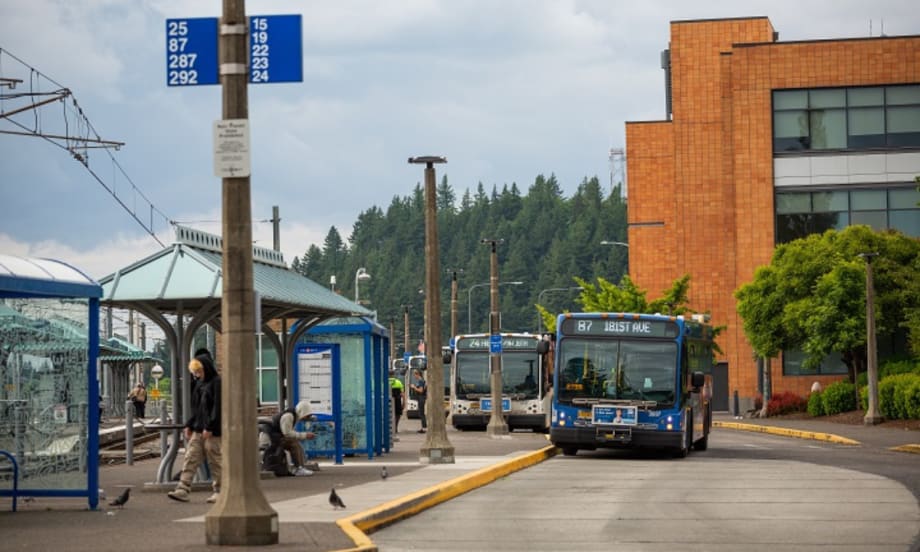
Without funding from HB2025, TriMet faces a growing deficit and will begin cutting service this year.
Photo: TriMet
3 min to read
In the wake of the Oregon Legislature’s failure to pass House Bill 2025 — the Oregon Transportation Reinvestment Package (TRIP) — TriMet will make a series of budget reductions beginning this year, including service cuts, to address a significant, growing fiscal challenge.
According to an agency release, the service cuts are necessary to avoid drastic fiscal cuts in the future. The failure of HB2025 leaves many of Oregon’s transit agencies without sufficient funding to sustain service levels in the years ahead.
TriMet will make service cuts this November and March 2026, with additional reductions necessary in the years ahead to begin closing a projected $300 million gap between the agency’s annual expenditures and revenues.
“We are facing a fiscal cliff in 2030, so we must act now to balance our budget for the long term,” said TriMet General Manager Sam Desue Jr. “As Oregon’s largest public transit provider, we have a tremendous responsibility to keep people in our region moving. Cutting service now means avoiding sudden, catastrophic cuts in the future.”
Funding Gap Forces TriMet to Cut Routes, Reduce Frequencies
TriMet’s fiscal year 2026 budget, adopted in May 2025, did not include expected funding from HB2025 and the Statewide Transportation Improvement fund. TriMet identified $24.2 million in discretionary spending cuts to address the resulting shortfall and plans further internal savings and reductions. The agency aims to balance its budget by July 1, 2028.
TriMet announced they “must” reduce their service this winter, with a series of further cuts over the next few years, resulting in a 10% overall cut to service by the end of August 2027. Without an increase in revenue, TriMet will be forced to cut another $48 million in service and other spending.
Initially, service cuts will focus on reducing frequencies on some bus lines. Following that, TriMet will need to eliminate some bus lines, adjust some bus routes, and adjust MAX service. Because of the bus and MAX service changes, the agency’s LIFT paratransit service will also be reduced.
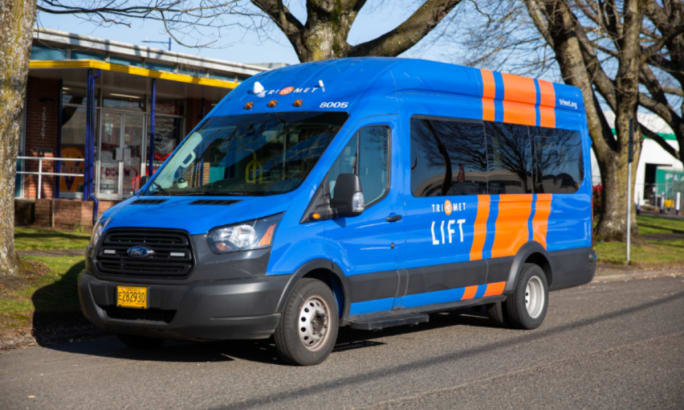
Planned bus and MAX service changes will also reduce TriMet’s LIFT paratransit service.
Photo: TriMet
TriMet Plans Staggered Service Cuts Starting November 2025
If TriMet is unsuccessful in increasing our revenue by fall 2027, more service cuts will be needed. Service cuts include:
November 2025
TriMet will reduce service on November 30, 2025, by cutting the frequency, or how often buses run, on the following:
Some Frequent Service lines during evenings and mornings.
FX2-Division bus line at night.
Up to eight other bus lines during all service hours.
March 2026:
TriMet will need to make additional service cuts, effective March 1, 2026. We will be engaging our riders and the public this fall to discuss these cuts, but the proposed cuts would include:
Eliminating some low ridership bus lines.
Eliminating evening service on lower ridership bus lines.
Changing routes on some bus lines to increase efficiency.
Reducing the MAX Green Line route. Green Line trains would only serve stations between Clackamas Town Center and Gateway Transit Center. Riders would need to transfer to other trains at Gateway Transit Center.
May 2026 Through August 2027
Further service cuts will be required between May 2026 and August 2027 to reach the needed 10% service reduction. Without an increase in revenue, TriMet will have to cut additional service above that 10% to balance our budget.
These service reductions will likely include:
Additional cuts to frequency on at least a dozen bus lines.
Eliminating other bus lines or portions of lines.
Reducing the frequency on all MAX lines during some parts of the day.
The anticipated service cuts outlined above add up to about an 18% overall reduction in MAX service — the largest cut to MAX in its history — and about an 8% reduction in bus service — the third largest cut since at least 1986.
TriMet will launch a dedicated web page at trimet.org/budget in the weeks ahead.
More Management
Indian River Transit’s Community-Focused Approach Earns National Recognition
Named APTA’s 2026 Outstanding Public Transportation System in its size category, Florida’s Indian River County transit system continues to grow ridership through fare-free service and a focus on evolving community needs.
Read More →
ENC Lands MATA Contract and More in Biz Briefs
In this edition of Biz Briefs, we spotlight the latest developments shaping the future of mobility.
Read More →
From Surviving to Thriving: Building Stronger Transportation Organizations
Bus Business Consultants founder Brian Dickson shares lessons on leadership, organizational health, and creating options for long-term success in a changing transportation industry.
Read More →

Everett Transit, Community Transit Outline Consolidation Agreement
The proposed agreement calls for a 50% increase in bus service in Everett, a new microtransit zone, continued paratransit service, and the transfer of Everett Transit operations to Community Transit.
Read More →
Strada360’s Steve Lassey on Turning Transit Data Into Better Decisions
From breaking down data silos to preparing for AI, Strada360 CEO Steve Lassey discusses how transit agencies can use technology to improve operations, customer information, and long-term decision-making.
Read More →
People Movement: Phil Washington Joins HNTB, Denver RTD Launches CEO Search, and More
In this edition, we also spotlight recent personnel moves at STV, the Eno Center for Transportation, and more, highlighting the people taking on new roles across the transportation industry.
Read More →
SEPTA Details Accelerate Vision for Transit System
The plan outlines investments in trolley modernization, new Metro and Regional Rail vehicles, accessible stations, and more frequent bus and rail service.
Read More →
FTA Ends Direct Oversight of MBTA Safety Actions
The federal agency closed its remaining special directive to the Massachusetts Department of Public Utilities following a safety review that began in 2022.
Read More →
Report: Transit Bus Manufacturing Supports 34,100 Jobs, $5.1B in GDP
The “Buses Mean Business” report examines the transit bus manufacturing industry’s economic footprint, supply chain, and rising demand for vehicle replacements.
Read More →
LIT Marks 10-Year Milestone at Annual Summit
Hosted by the COTA from September 10 to 13, the Summit carried the theme “Celebrating 10 Years of Excellence, Leadership, and Impact,” with every part of the program honoring the people, agencies, and partners who built LIT over its first decade.
Read More →