Ballot Measure Kicks Nashville’s Multimodal Plan into High Gear
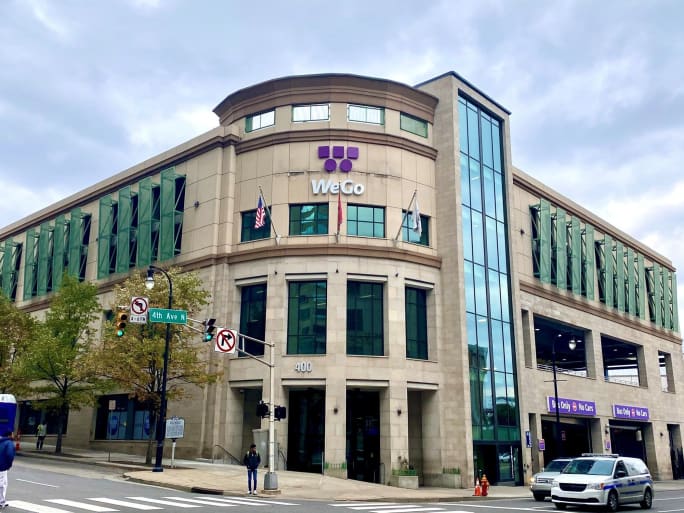
Six years after a bill was soundly defeated by voters, the recently passed $3.1 billion “Choose How You Move” initiative will utilize a half-cent sales tax to fund expanded WeGo Public Transit services, as well as neighborhood transit centers, 86 miles of sidewalk improvements, and much more.
In September 2024, WeGo Public Transit announced fixed-route bus ridership in the fourth quarter of fiscal year 2023-2024 was at 101% — an increase of 6% over the previous year and the highest fourth quarter ridership in the region since 2018.
Photo: WeGo Public Transit
9 min to read
The newly passed $3.1 billion “Choose How You Move” initiative aims to enhance transportation infrastructure in Nashville.
A half-cent sales tax will fund improvements, including expanded WeGo Public Transit services and neighborhood transit centers.
The plan also includes upgrades to 86 miles of sidewalks as part of its comprehensive approach.
*Summarized by AI
In November 2024, Nashville voters passed the $3.1 billion “Choose How You Move” transit referendum — a half-cent sales tax increase for consolidated Nashville-Davidson County that will fund bus rapid transit expansion (BRT), transit service, and the construction of 86 miles of sidewalk and 12 neighborhood transit centers, as well as additional safety improvements and smart traffic signals.
While the success of transit referendums has been the norm over the past several years, what makes Choose How You Move interesting is that 64% of voters resoundingly struck down 2018’s “Let’s Move Nashville” ballot measure. Six years later, however, Choose How You Move won by a vote of about 65% to 35%.
Ad Loading...
“If you talk to the voters, generally, this program was a bit more relatable, with improvements being seen in a shorter amount of time,” said WeGo Public Transit’s CEO Stephen Bland. “Also, in the six years since the 2018 referendum, they've actually seen some of the things that can be possible because we’ve been hard at work.”
In the six years since the defeat of the Let’s Move Nashville initiative, WeGo Public Transit slowly built confidence in the services they provided, which ultimately helped pave the way for the 2024 initiative’s success.
Photo: WeGo Public Transit
Building A Better Bus Network
Bland explained one key difference between 2018’s referendum and the measure passed in 2024 was that the former focused on building a new light rail system, while the latter builds a more multimodal program for Nashville.
“This time around we have some nominal improvements planned for our one commuter rail line, but this is largely a bus, pedestrian, bicycle, and auto-focused plan, which is more multimodal in nature,” he said. “What we did was to focus on broader mobility improvements adjacent to the transit system, and our Mayor O'Connell's four tenets of the program were sidewalk, safety, signals, and service. So this measure has tons of improvements in all of those areas.”
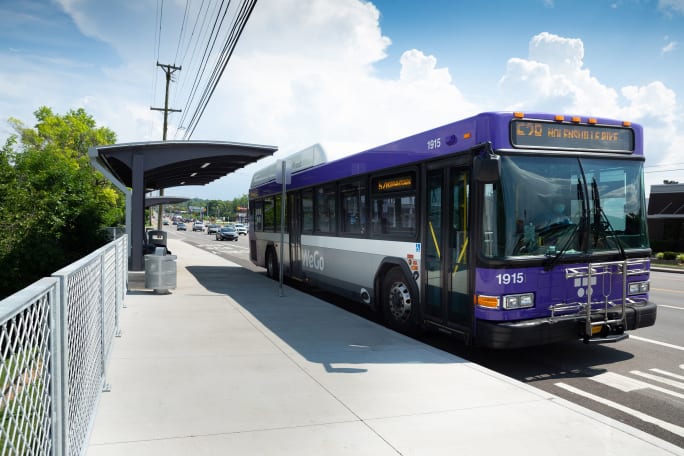
Rather than focus on building a new light rail system, Choose How You Move focuses on 54 miles of “all access corridors” focused on areas of heavy ridership, which includes a BRT system complete with operational improvements, including queue jumps, transit signal priority, and off-platform boarding.
The ballot measure also includes improved sidewalks, safer pedestrian crossings, utility upgrades, bus stop improvements, and other aesthetic upgrades in those corridors.
Ad Loading...
“One of the things we believe that resonated with voters is that it's very neighborhood contextual,” said Bland. “In 2018, there was a sense in some neighborhoods that we were going to force light rail down their throats, whether they liked it or not.”
With Choose How You Move’s plan painting a clearer picture, WeGo and key stakeholders were able to narrow communication efforts to point out how individualized neighborhoods would be impacted.
“Whether it was interactive online maps or advertising we had on our bus benches, we talked about what you could see in your neighborhood, down to which sidewalk segments would be improved, which bus routes would see upgrades, and which intersections would see improvements,” said Bland. “Much of these improvements are planned with a large focus on Vision Zero, because Nashville has one of the highest rates of pedestrian fatalities in the nation, and sadly, a lot of those pedestrian fatalities are people trying to get to and from bus stops to get to our system.”
Laying the Groundwork
In the six years since the defeat of the Let’s Move Nashville initiative, WeGo Public Transit slowly built confidence in the services they provided, which ultimately helped pave the way for the 2024 initiative’s success.
After light rail was overwhelmingly rejected in 2018, city officials and WeGo were forced to pivot to find ways to move people in a region that continues to face rapid growth.
Ad Loading...
To do so, WeGo began to redeploy its bus services to areas that were experiencing high ridership. This process was only exacerbated by COVID, said Bland.
“Like everybody else, when the pandemic hit our ridership cratered almost overnight, but we bottomed out ultimately at about 40% of our pre-pandemic ridership, and those patterns stayed pretty predictable,” he explained. “With our busiest lines continuing to see high ridership, though, we began pumping more services into those mainline corridors.”
As a result, WeGo beefed up frequencies on about a dozen of its highest ridership corridors and extended its closing hours from 1:30 am to 4:30 am.
Under the recently passed initiative, Bland says that frequencies in those high ridership corridors will be no worse than every 15 minutes, and as much as every 10 to 12 minutes on some lines, while service will be extended to 24 hours.
The agency has also increased ridership through partnerships with its local sports teams, including Major League Soccer’s Nashville SC, which partnered with the WeGo to essentially provide subsidized fares on the routes serving the soccer stadium on game days.
Ad Loading...
Through that partnership, WeGo offers fare-free service on those routes, as well as augmented service on one of its suburban routes that serves the stadium.
The agency has also partnered with the NFL’s Tennessee Titans for fare-free service systemwide on game days, which has proven beneficial for both fans and riders choosing to use the system on weekends.
“We have seen about a 25% increase in Sunday ridership through that partnership,” said Bland. “And by the way, it’s not just Titans fans. We have also seen our general ridership grow considerably on Sundays.”
For areas where services have had to be reduced due to ridership being down, WeGo has introduced its WeGo Link microtransit service, which helps people get from more suburban, or less densely developed areas, into areas where frequencies are typically higher.
All of these moves have combined to get WeGo’s ridership up past its pre-COVID numbers.
Ad Loading...
In September 2024, the agency announced fixed-route bus ridership in the fourth quarter of fiscal year 2023-2024 was at 101% — an increase of 6% over the previous year and the highest fourth quarter ridership in the region since 2018.
With Choose How You Move’s plan painting a clearer picture, WeGo and key stakeholders were able to narrow communication efforts to point out how individualized neighborhoods would be impacted.
Photo: WeGo Public Transit
Showing Transit’s Power to Transform
With one focal point of the Choose How You Move initiative being the construction of 12 new neighborhood transit centers, WeGo has already opened a couple that began making an impact on ridership and community building almost immediately.
One of those neighborhood transit centers is the Dr. Ernest Rip Patton Jr. North Nashville Transit Center, which was opened in late August and named after an early member of Nashville’s 1960s civil rights movement who participated in lunch counter sit-ins and other nonviolent protests.
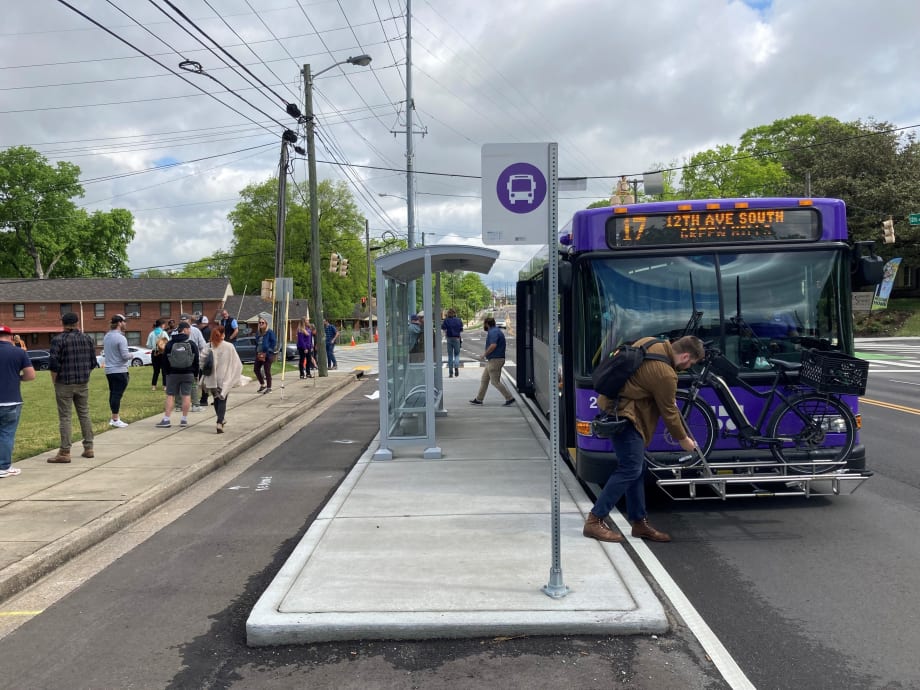
The center provides riders with more connections, additional service, and better amenities, including real-time bus arrival information, QuickTicket vending machines, a waiting room, restrooms, Wi-Fi, and multiple bus bays to connect several routes across town.
Showing an immediate impact in the neighborhood, the seven routes connecting to the Transit Center experienced a 36% jump in ridership compared to the same time period the year previous.
Ad Loading...
The center represents a total investment of $17 million and is in alignment with nMotion, the Middle Tennessee Region’s adopted 25-year integrated and multimodal transportation strategy.
Funding partners included Metro Nashville, the Tennessee Department of Transportation, and the Federal Transit Administration, with additional crosswalk and sidewalk improvements coming through a Greater Nashville Regional Council grant with the Federal Highway Administration.
“North Nashville is a great example of how we were able to message effectively in specific neighborhoods,” said Bland. “In 2018, that was a neighborhood that voted significantly against our transit plan but turned out very much in favor this time around.”
Bland added that one telling point for the broad reach of the plan was the fact that Nashville has 35 council districts, one of the largest in the country, and the plan passed with a majority vote in all 35 districts.
“Whether you were hardcore in the urban center of the city, or in some of the more suburban or rural outlying parts, people saw something in the plan they related to and thought would be productive for mobility in the area,” he said.
Ad Loading...
To improve upon its aforementioned pedestrian fatalities issue, the initiative also includes a plan to add hundreds of new bus shelters throughout the region, building upon the successful implementation of hundreds of bus shelters over the last several years.
In fact, in July, WeGo Public Transit celebrated the completion of its 300th bus shelter, which Bland said is another way the agency was able to show its ability to affect change in neighborhoods throughout Nashville.
“We have about tripled the number of sheltered bus stops over the last seven or eight years, and I do believe we built some positive momentum with the voters as they saw these projects come to fruition,” said Bland. “With the ballot initiative just passed, we will double that number again, so over a quarter of all of our stops will have shelter upgrades, as well as other amenities, including trash cans, benches, real-time digital signage, and better pedestrian and accessible connections to get to those stops.”
Additionally, while WeGo currently operates two bus operations facilities, both are nearing capacity. Therefore, a new bus operations facility will be an important component moving forward to allow for expanded service and new fleet technology.
Rather than focus on building a new light rail system, Choose How You Move focuses on 54 miles of “all access corridors” focused on areas of heavy ridership.
Photo: WeGo Public Transit
Key Takeaways from WeGo
It was a long road back from the overwhelmingly defeated ballot initiative in 2018, but Bland says one important aspect that played a key role in WeGo Public Transit’s success in 2024 was strong support from elected officials, especially from Nashville’s Mayor Freddie O’Connell.
Ad Loading...
“Mayor O'Connell started as a transit rider and has been a rider of our system for years and years — pretty much since he got out of college and returned to Nashville,” he explained. “He’s only been in office a bit over a year, but this was a major initiative for him while he was running and was seemingly everywhere leading up to election day.”
Bland added that with his knowledge and passion for transit, Mayor O’Connell was able to personalize the message in a way that bought trust from voters and led them to educate themselves via the plan documents on the website and the interactive devices that were out there for people to get out to a meeting and learn how the project may impact their neighborhood.
This leads to another key for WeGo’s success, which is the actual engagement itself, beginning with the stakeholders.
“One of the things that happened in 2018 was that our governing body has to approve the transportation plan that goes to that ballot and the debate at that point was very contentious,” said Bland. “While this time the plan was unanimously approved to go to the ballot, in 2018 there were those who disagreed with the plan but felt that voters should at least have a chance to vote on it.”
This time around, Bland explained, by building consensus early with city council members they were able to more effectively message to potential voters, as well as garner support from key stakeholders in the community.
Ad Loading...
“This time around through the projects being more relatable, we had organizations like Stand Up Nashville, which is a tremendous social justice advocate here in town, as well as other housing and social just organizations come out and endorse the program, in addition to the business community,” said Bland.
As for selling the plan itself to voters, Bland adds that the key ultimately proved to be the initiative’s ability to not only improve public transit services, but also transportation as a whole in one of the fastest growing cities in America.
“We’re a rapidly growing city that was designed and built around the automobile, and people aren’t going to instantly turn to transit or even use it in the foreseeable future,” said Bland. “A big key for us was that we were able to effectively message to voters what else was in the initiative, including improvements to traffic signals and pedestrian safety, while also improving our bus, rail, and paratransit services for those who really need it and will use it, either today or sometime in the future.”
Quick Answers
The 'Choose How You Move' initiative is a $3.1 billion plan funded by a half-cent sales tax to enhance Nashville's multimodal transit system, including expanding WeGo Public Transit services and improving sidewalks and neighborhood transit centers.
The initiative will be funded through a half-cent sales tax.
The initiative includes expanded WeGo Public Transit services, the development of neighborhood transit centers, 86 miles of sidewalk improvements, and other enhancements.
A similar bill was soundly defeated by voters six years ago.
The initiative is expected to significantly improve Nashville's multimodal transportation infrastructure, making it more accessible and efficient for residents.
The agency is seeking manufacturers for 650 new CNG buses to replace aging vehicles, improve reliability, and advance its broader fleet modernization strategy.
John Hroncich discusses BAE Systems’ modular and scalable approach, lessons learned from decades of real-world operations, and how agencies can identify electrification strategies that fit their fleets.
LA Metro’s Obed Mejia discusses technician training, evolving maintenance technology, fleet replacement, and strategies for getting the most out of today’s transit fleets.
In METRO's latest installment, we take a look at recent news from Siemens, Prevost, Dodge, and more partnerships making headlines across the transportation sector.
In this edition, we also cover recent appointments and announcements at Pace, CamTran, MCI, and more, showcasing the individuals helping to shape the future of transportation.
Transit leaders and policymakers examine how standardized bus designs, streamlined procurement, and predictable funding could help agencies stretch budgets and deliver better service.
As chair of APTA’s Business Members Board of Governors, Ray Melleady explains how more than 850 business members are partnering with transit agencies to advance funding, innovation, and industry-wide collaboration.
Bus Business Consultants founder Brian Dickson shares lessons on leadership, organizational health, and creating options for long-term success in a changing transportation industry.
The award-winning partnership combines AI-powered detection with human oversight to improve bus reliability, accessibility, and enforcement efficiency.