



SEPTA, MetroLink Tulsa Redefine Paratransit Through RideCo Partnership
With SEPTA Access in Philadelphia and LinkAssist in Tulsa, both agencies partnered with RideCo to transform outdated systems into cutting-edge, AI-powered services, earning them each a METRO Magazine Innovative Solutions Award.

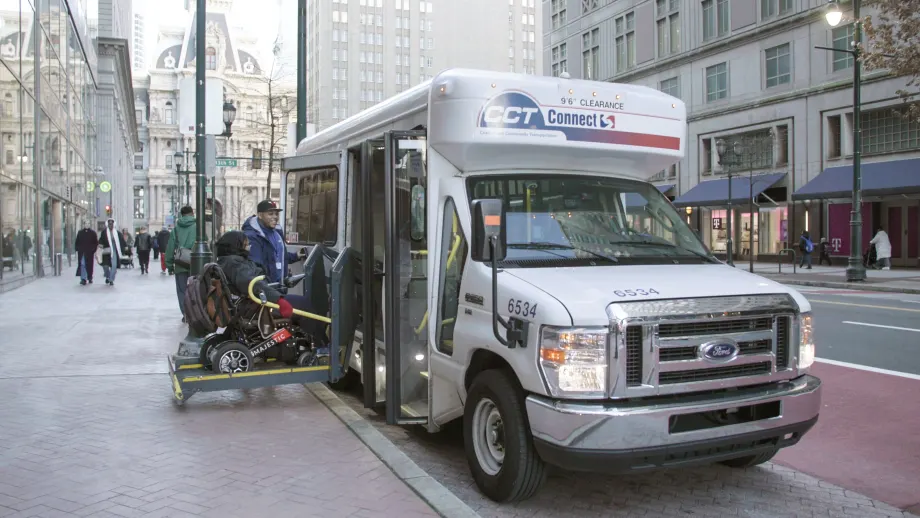
In Philadelphia, SEPTA replaced a 15-year-old platform with a cloud-based on-demand solution, covering a fleet of 411 vehicles over 716 square miles, making it the largest cloud-based paratransit deployment in the U.S.
Photo: SEPTA
- SEPTA and MetroLink Tulsa have partnered with RideCo to modernize their paratransit services using AI technology.
- The collaboration has resulted in the transformation of SEPTA Access in Philadelphia and LinkAssist in Tulsa.
- Both agencies received the METRO Magazine Innovative Solutions Award for their efforts.
*Summarized by AI
Over 1,000 miles apart, two transit agencies have arrived at the same destination: a modern, efficient, and customer-centric paratransit system.
With SEPTA Access in Philadelphia and LinkAssist in Tulsa, both agencies partnered with RideCo to transform outdated systems into cutting-edge, AI-powered services, earning them each a METRO Magazine Innovative Solutions Award.
These projects demonstrate how vision, collaboration, and technology can redefine what’s possible in demand-responsive transit.
From Legacy Systems to Leading Solutions
For SEPTA and MetroLink Tulsa, the journey began with a shared challenge: outdated legacy systems, inefficient manual processes, and growing pressure to improve service quality without expanding fleets or budgets.
In Philadelphia, SEPTA replaced a 15-year-old platform with a cloud-based on-demand solution, covering a fleet of 411 vehicles over 716 square miles, making it the largest cloud-based paratransit deployment in the U.S.
“The modernization of our paratransit system has been one of the fastest, large-scale deployments in SEPTA’s history,” said Cassandra West, SEPTA’s assistant. COO. It has been a fantastic journey so far, and we are thrilled to immediately see such a positive impact on the operators and staff.”
In Tulsa, MetroLink made a bold move to bring paratransit operations in-house and selected RideCo to power its LinkAssist program, following the successful rollout of its MicroLink microtransit service.
“It was clear that if we were going to manage the service ourselves, we needed tools that could support more efficient operations and improve the rider experience,” said MetroLink’s GM/CEO Scott Marr. “Fortunately, we had already been working with RideCo on our MicroLink microtransit service, and that partnership laid the groundwork for a smoother transition.”
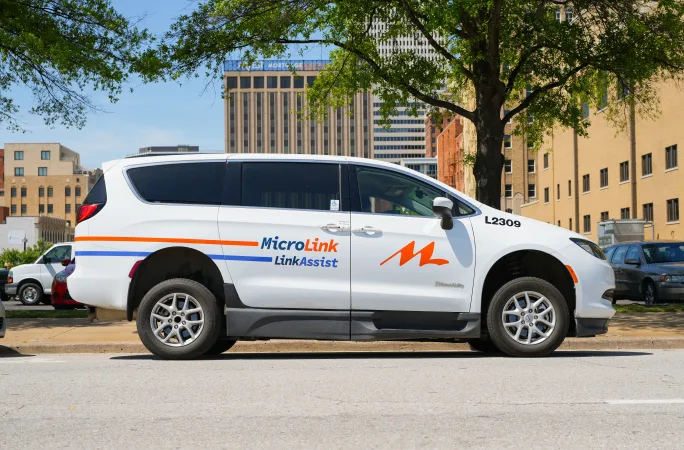
Together, SEPTA and MetroLink Tulsa are showing the industry how to modernize paratransit with purpose and deliver better outcomes for all.
Photo: MetroLink Tulsa
Optimization That Works in Real Time
Both systems' core is RideCo’s Solver optimization engine, which recalculates vehicle assignments every 20 seconds to adapt to traffic, cancellations, and real-time changes. This AI-powered technology not only increased productivity but also significantly reduced operating costs.
SEPTA saw a:
- 7.2% increase in passengers per vehicle hour.
- $5 million in annualized cost savings.
- Reduction in cost per passenger from $55.13 to $51.40.
- Drop in annual overtime hours from 8,197 to 3,161.
Meanwhile, MetroLink Tulsa achieved:
- 14% reduction in cost per passenger.
- On-time performance averages 95%.
- Seven-minute average pickup wait time.
- 301 daily riders, with 1.8 passengers per vehicle hour.
“We’ve embraced change and are seeing the benefits of using RideCo’s modern software,” said Marr. “What we’re getting back from the team is that they love it — they’re seeing the impact of today’s paratransit technology and a future for our industry because of it.”
Both agencies dramatically improved the customer journey. Riders now have multiple booking options via app, web, AI Agent, or call center, and receive automated alerts when their vehicle approaches.
“I love that clients get a text message saying, ‘You’re next to be picked up’, so they know they’ve got to get ready. Then they get another one saying, ‘Your vehicle is outside.’ Or they can opt to get a phone call instead,” said Valerie Courchesne, director of the control center at MetroLink Tulsa. “That has dropped [status] calls way down … and it’s helped our on-time performance because now they know they have to be ready and be out at this time.”
SEPTA’s riders gave the upgraded service an average rating of 4.9 out of 5, while MetroLink Tulsa’s customers rated LinkAssist 4.8 out of 5 — a clear sign of growing rider trust.
Both systems also integrate with fixed-route trip planners, enabling seamless multimodal trip planning and reducing service duplication.
“RideCo’s integration with our GoPass trip planner allows riders to view and book fixed-route and on-demand rides in one place,” said Marr. “It’s a game changer.”
SEPTA’s riders gave the upgraded service an average rating of 4.9 out of 5, while MetroLink Tulsa’s customers rated LinkAssist 4.8 out of 5 — a clear sign of growing rider trust.
Photo: SEPTA
Transformative Training and Collaboration
Rapid deployment wasn’t just about technology; it required deep staff engagement and training.
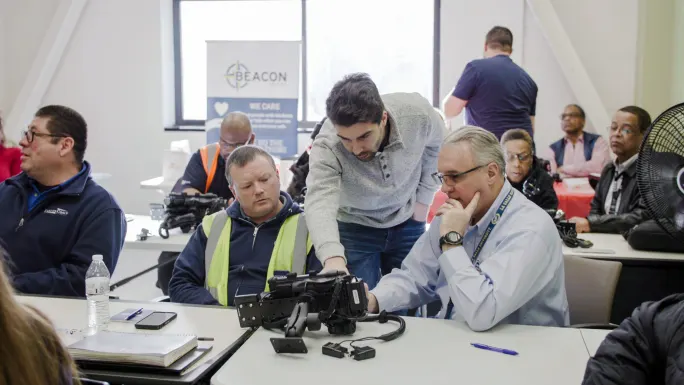
SEPTA implemented the platform in just 4.5 months, with structured training via RideCo University, in-person sessions, and change management initiatives.
“Some people [do better with] book learning, some [do better with] hands-on learning,” said Chase Campbell, SEPTA’s director, paratransit scheduling. “RideCo’s training [program] is accommodating everybody.”
MetroLink also prioritized internal readiness.
“One of the biggest hurdles was managing change,” said Marr. “RideCo was a strong partner. Their responsiveness and hands-on support were key to overcoming early challenges.”
Both projects have demonstrated the power of tech-enabled service transformation, providing flexibility, reliability, and cost-efficiency while elevating the rider experience.
“SEPTA is proud to be recognized by METRO Magazine for our collaboration with RideCo,” said Campbell. “The operational success and customer satisfaction reflect our combined commitment to innovating our industry. We certainly hope other agencies get on board and follow suit.”
“Winning this award is a tremendous honor,” added Marr. “It validates the hard work and innovation driving change for our community, and sets an example other agencies can follow.”
Whether in a dense urban region like Philadelphia or a growing market like Tulsa, these two award-winning projects show what’s possible when transit agencies pair bold vision with the right technology and partnership.
Together, SEPTA and MetroLink Tulsa are showing the industry how to modernize paratransit with purpose and deliver better outcomes for all.
Quick Answers
SEPTA Access in Philadelphia and LinkAssist in Tulsa have partnered with RideCo.
*Summarized by AI
More Technology

ENC Lands MATA Contract and More in Biz Briefs
In this edition of Biz Briefs, we spotlight the latest developments shaping the future of mobility.
Read More →
Strada360’s Steve Lassey on Turning Transit Data Into Better Decisions
From breaking down data silos to preparing for AI, Strada360 CEO Steve Lassey discusses how transit agencies can use technology to improve operations, customer information, and long-term decision-making.
Read More →
Almaviva Looks to Open Architecture to Advance Transit Technology
Eric Reese discusses how interoperability, open architecture, and modular design can help transit agencies control costs, reduce vendor lock-in, and upgrade technology without starting over.
Read More →

Driving Smarter Paratransit
John Hanlon shares how AlphaRoute is leveraging AI-powered technology to help paratransit providers optimize operations, support frontline staff, and enhance the rider experience.
Read More →
From Hardware to Digital Partner: Luminator Charts Its Next Chapter
CEO Magnus Friberg discusses Luminator’s shift toward becoming a digital partner, the growing importance of software and interoperability, and how AI can help agencies improve operations and passenger experience.
Read More →
Beyond the Checklist: A Structured Approach to Transit Maintenance
Reliability-Centered Maintenance helps transit agencies move beyond routine checklists to focus limited resources on the assets and failures that have the greatest impact on safety, reliability, and service.
Read More →
NJ TRANSIT Advances Bus Technology Upgrades Across Statewide Fleet
More than 1,500 buses now feature upgraded technology designed to improve arrival predictions and provide free Wi-Fi, with deployment expected to reach nearly 2,000 buses by the end of 2026.
Read More →
Building a Flexible Path to Transit Electrification
John Hroncich discusses BAE Systems’ modular and scalable approach, lessons learned from decades of real-world operations, and how agencies can identify electrification strategies that fit their fleets.
Read More →
Biz Briefs: Alstom Lands Canadian Contract, LYT to Supply California TSP, and More
In METRO's latest installment, we take a look at recent news from Complete Coach Works, Beep, FlixBus, and more partnerships making headlines across the transportation sector.
Read More →
From Legacy Silos to Conversational Intelligence
What if transit leaders could ask any operational question and get a trusted answer in seconds? Conversational AI is transforming how agencies use their data.
Read More →