



How DART's GoPass Is Redefining Regional Mobility
Serving 14 transit agencies, GoPass simplifies multimodal travel by allowing riders to plan, pay for, and manage an entire trip through one app.

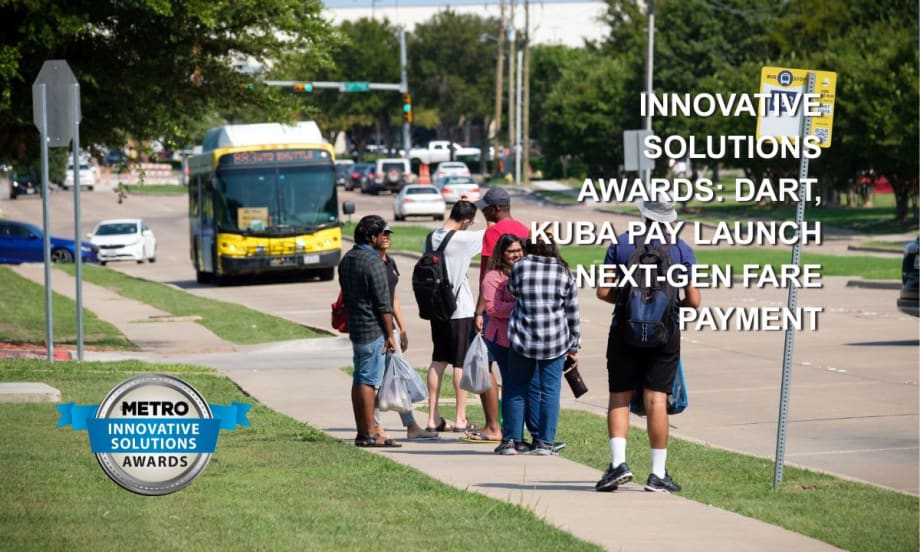
The platform's innovative approach recently earned DART and its supplier partner Kuba Pay a METRO Magazine Innovative Solutions Award.
DART/METRO
- GoPass integrates services from 14 different transit agencies, enhancing regional mobility options for users.
- The app streamlines travel by allowing users to plan, pay, and manage their trips in one convenient platform.
- Multimodal travel is facilitated through GoPass, simplifying the process of using various transport modes.
*Summarized by AI
For many transit riders, getting from point A to point B has long meant navigating a maze of separate transit agencies, fare systems, schedules, and mobile apps. As metropolitan regions expand and travel becomes increasingly multimodal, those fragmented experiences have become a significant obstacle to making public transportation more seamless and convenient.
Recognizing the need for a better approach, Dallas Area Rapid Transit (DART) developed GoPass, a unified mobility platform that brings trip planning, fare payment, real-time information, microtransit, paratransit, and regional transit services together in a single application. By integrating multiple transportation options into one digital experience, GoPass is helping redefine how riders plan, pay for, and complete their journeys across North Texas.
The platform's innovative approach recently earned DART and its supplier partner Kuba Pay a METRO Magazine Innovative Solutions Award.
"It is an honor to see GoPass receive the METRO Innovative Solutions Award, and it is a testament to the work our team and partners continue to put into the platform," said Sejal Christian, DART's director of mobile fare systems. "Public transportation has become increasingly technology-forward, and we are seeing that evolution across transit systems of all sizes around the world."
Rather than functioning solely as a mobile ticketing app, GoPass was designed as a complete mobility ecosystem. Riders can plan, book, pay for, and manage their entire journey on a single platform, eliminating the need to switch between multiple applications or to figure out which transit agency operates each segment of a trip.
Today, the platform serves 14 transit agencies, demonstrating how technology can connect multiple providers while delivering a seamless customer experience.
"We recognized that riders needed to be able to plan a trip, purchase fares, and manage their journey in one place, with systems that communicate seamlessly behind the scenes," Christian said. "The response to GoPass from both riders and transit agencies has shown that DART was not alone in experiencing this gap."
A Vision Years in the Making
GoPass first launched in 2012, combining mobile trip planning with fare payment in a single app.
In 2015, DART became one of the first transit agencies in the country to integrate Uber, Lyft, and Zipcar into the customer experience, helping bridge first- and last-mile connections during one of North Texas' busiest weekends. A Federal Transit Administration Mobility on Demand Sandbox Demonstration Grant accelerated that work, leading to the launch of DART's Unified Mobility Platform in 2018.
Since then, GoPass has evolved into a comprehensive regional mobility solution with real-time trip planning, a mobile wallet, multimodal transportation options, and an expanding network of transit providers.
"GoPass was created to close the gaps among trip planning, fare purchasing, and navigating the actual journey across the Dallas-Fort Worth region," Christian said. "DART recognized the need for a single, customer-focused solution that would simplify the entire travel experience. Riders want a reliable and convenient way to reach their destination."
Creating that level of integration required more than new technology. It meant connecting systems that were never designed to communicate with one another.
Working alongside technology partner Kuba Pay, DART tackled the challenge of bringing together agencies with different fare structures, operating rules, and technology platforms.
The objective was to hide that complexity from riders, allowing them to experience one simple, connected journey regardless of how many agencies or services were involved.
Collaboration is Key
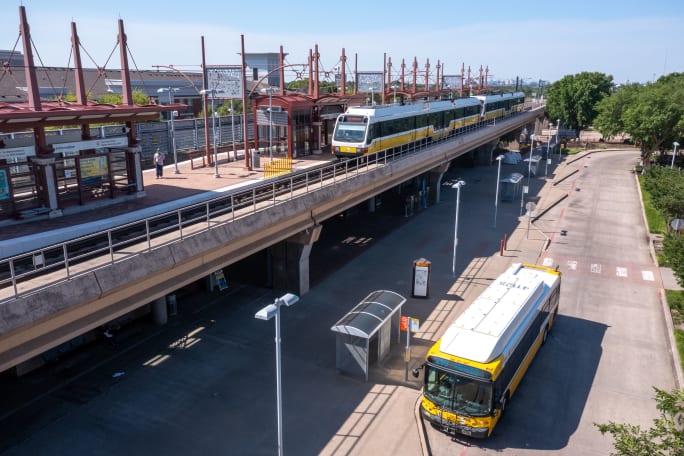
With North Texas recently hosting FIFA World Cup matches, GoPass was positioned as the primary mobility platform for visitors and residents alike.
Photo: DART
The platform's success has also been driven by regional collaboration.
Built in partnership with Trinity Metro and Denton County Transportation Authority (DCTA), GoPass was designed from the outset to support multiple transit agencies. That flexibility has enabled the platform to expand well beyond North Texas while helping participating agencies share technology investments, collaborate on enhancements, and provide riders with a consistent experience across jurisdictional boundaries.
"As North Texas continues to grow, riders don't think about agency boundaries," Christian said. "They simply want to get to work, school, a doctor's appointment, or a sporting event as easily as possible."
By sharing a common mobility platform, she added, participating agencies "avoid duplicating technology investments and can take advantage of ongoing enhancements, share expertise, and collaborative innovation."
The benefits are especially apparent during major events.
With North Texas recently hosting FIFA World Cup matches, GoPass was positioned as the primary mobility platform for visitors and residents alike.
Available in 11 languages, the app guided users across multiple transit systems while highlighting venues, points of interest, and event-specific travel options.
"The integrated regional experience allows GoPass to guide riders through the full journey without requiring them to understand the agencies and systems operating behind it," Christian said. "One of our biggest lessons since GoPass launched has been to simplify whenever possible. We do that by using the app ourselves, testing the complete rider journey, and listening closely to customer feedback."
A Still Evolving Technology
GoPass continues to evolve with features including live journey tracking, multimodal trip planning, integrated microtransit booking, and an AI-powered chatbot that provides riders with real-time assistance throughout their journey.
Looking ahead, DART plans to expand accessibility features, strengthen regional integrations, and introduce services such as parking, loyalty and rewards, trip sharing, and additional mobility options.
"Live journey tracking is one of our most significant recent enhancements because it addresses one of the biggest concerns riders have: uncertainty," Christian said. "Moving forward, we are most excited about making GoPass even more connected, personalized, and proactive. The goal is for GoPass to support the rider from the moment they begin planning until they safely reach their destination."
Receiving METRO Magazine's Innovative Solutions Award affirms what DART has been working toward for more than a decade: making public transportation feel less like a collection of independent systems and more like one connected network.
"This recognition reinforces the growing importance of integrated mobility platforms and their role in making public transportation simpler, more connected, and more accessible," noted Christian.
As cities continue to embrace integrated mobility, GoPass offers a glimpse of what the future of transit can look like — one app, one journey, and a rider experience built around simplicity rather than system boundaries.
Quick Answers
DART's GoPass is a mobile application that facilitates travel across multiple transit agencies by allowing users to plan, pay for, and manage their entire trip through a single platform.
*Summarized by AI
More Technology
Almaviva Looks to Open Architecture to Advance Transit Technology
Eric Reese discusses how interoperability, open architecture, and modular design can help transit agencies control costs, reduce vendor lock-in, and upgrade technology without starting over.
Read More →
Driving Smarter Paratransit
John Hanlon shares how AlphaRoute is leveraging AI-powered technology to help paratransit providers optimize operations, support frontline staff, and enhance the rider experience.
Read More →
From Hardware to Digital Partner: Luminator Charts Its Next Chapter
CEO Magnus Friberg discusses Luminator’s shift toward becoming a digital partner, the growing importance of software and interoperability, and how AI can help agencies improve operations and passenger experience.
Read More →

Beyond the Checklist: A Structured Approach to Transit Maintenance
Reliability-Centered Maintenance helps transit agencies move beyond routine checklists to focus limited resources on the assets and failures that have the greatest impact on safety, reliability, and service.
Read More →
NJ TRANSIT Advances Bus Technology Upgrades Across Statewide Fleet
More than 1,500 buses now feature upgraded technology designed to improve arrival predictions and provide free Wi-Fi, with deployment expected to reach nearly 2,000 buses by the end of 2026.
Read More →
Building a Flexible Path to Transit Electrification
John Hroncich discusses BAE Systems’ modular and scalable approach, lessons learned from decades of real-world operations, and how agencies can identify electrification strategies that fit their fleets.
Read More →
Biz Briefs: Alstom Lands Canadian Contract, LYT to Supply California TSP, and More
In METRO's latest installment, we take a look at recent news from Complete Coach Works, Beep, FlixBus, and more partnerships making headlines across the transportation sector.
Read More →
From Legacy Silos to Conversational Intelligence
What if transit leaders could ask any operational question and get a trusted answer in seconds? Conversational AI is transforming how agencies use their data.
Read More →
USDOT Announces Rail Vehicle Replacement Grants, Chattanooga AV Shuttle Funding
More than $191 million in federal funding will help three transit agencies replace aging rail vehicles and support a new autonomous shuttle service in Chattanooga.
Read More →
Bus Tech Talk: Keeping Transit Technicians Ahead of the Technology Curve
LA Metro’s Obed Mejia discusses technician training, evolving maintenance technology, fleet replacement, and strategies for getting the most out of today’s transit fleets.
Read More →