



2016 Paratransit Survey: Soaring Costs, Demand Remain Key Issues
Development of travel training programs to offset some demand continues growth, while taxi usage is steady.
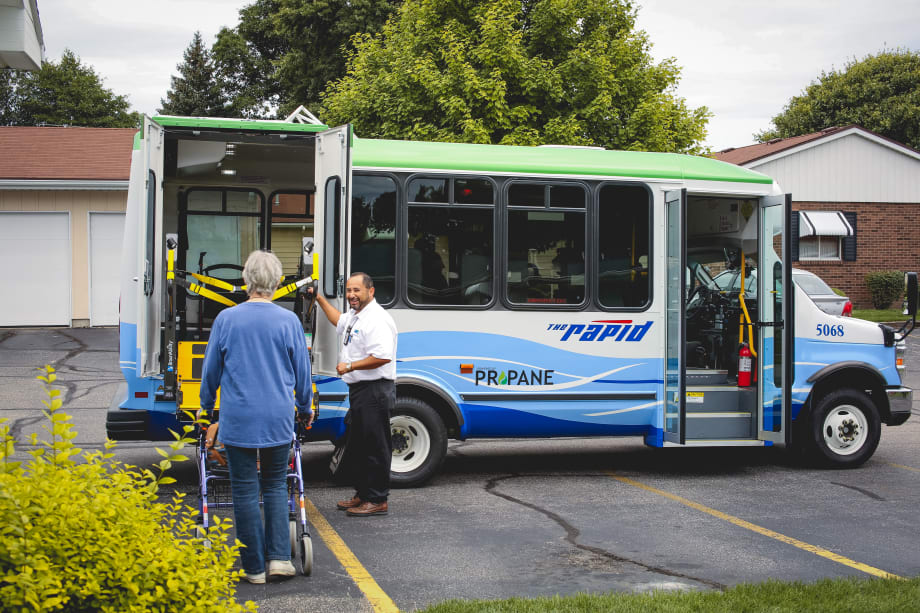
The Rapid
The Rapid
Operations responding to METRO’s Annual Paratransit Survey continue to see demand for services grow, with 70% reporting that the number of riders transported in 2015 was higher than the previous year. Additionally, 17% reported that demand was also one of their greatest overall challenges.
To that end, some agencies have partnered with taxi services (14%) to supplement their fleets, while 45% have turned to travel training programs to offset demand.
Soaring costs also continue to plague paratransit operators, with some referencing the cost of insurance and the costs associated with training and equipping new drivers.
Some cost-cutting solutions agencies are implementing include the aforementioned travel training, with 58% reporting that they have helped cut costs by moving more riders to fixed-route services. One respondent said their agency saw annual savings exceeding $500,000 due to this practice.
Another continuing trend in this year’s survey is the challenge of driver recruitment and retention, which saw 43% of respondents listing this as their single-biggest driver-related concern. Other key issues related to drivers included customer service (21%) and training (16%).
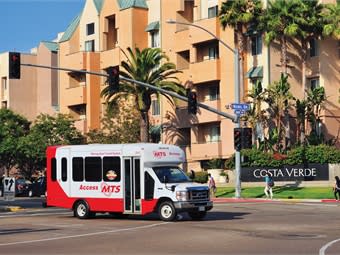
San Diego MTS
Fleets, top tech
The total number of vehicles represented in this year’s survey totaled 15,826. Of those, 91% are wheelchair accessible.
Small buses (25 feet and under) comprised the largest paratransit fleet makeup, with 37% reporting. Medium-to-large buses came in second (35%), while vans made up 24% of fleets. Operators plan on purchasing nearly 500 vehicles this year to supplement their fleets.
Forty-one percent of agencies participating in our survey implemented new technologies in the past year. Scheduling and dispatching software topped the list again, with 65%. AVL systems (26%) and online booking systems (17%) were other key technologies deployed. Usage of computer tablets is still minimal, but growing. One fleet distributed tablets to network the dispatching system for drivers on route, which resulted in streamlined electronic reporting of data, improving accuracy, reducing driver time spent at pickups, and improving communications between dispatch and drivers.
This year’s survey, which provides a snapshot of paratransit trends, received responses from 141 service providers within the U.S. Thank you to everyone who took the time to provide their feedback.
To view the article as it appeared in print, click here.
More New Mobility

From Hardware to Digital Partner: Luminator Charts Its Next Chapter
CEO Magnus Friberg discusses Luminator’s shift toward becoming a digital partner, the growing importance of software and interoperability, and how AI can help agencies improve operations and passenger experience.
Read More →
Biz Briefs: Alstom Lands Canadian Contract, LYT to Supply California TSP, and More
In METRO's latest installment, we take a look at recent news from Complete Coach Works, Beep, FlixBus, and more partnerships making headlines across the transportation sector.
Read More →
CharterUP’s Armir Harris on Technology, AI, and the Future of Group Mobility
In a recent episode of METROspectives, CharterUP Founder/CEO Armir Harris discussed the company’s evolution from an online charter bus marketplace into a technology platform supporting public- and private-sector mobility and much more.
Read More →
Jacksonville’s NAVI Project Charts a New Course for Autonomous Public Transportation
Through its NAVI program, JTA is showing how autonomous vehicles, intelligent infrastructure, and coordinated operations can work together to deliver everyday public transportation.
Read More →
Biz Briefs: Luminator Marks Milestone and More
From manufacturers and suppliers to transit agencies and motorcoach operators, these updates offer a snapshot of the projects, partnerships and business moves driving the industry forward.
Read More →
New Tricks for Old Bureaucracies: Joshua Schank on Making Transit Innovation Stick
Former LA Metro Chief Innovation Officer Joshua Schank discusses why good ideas aren't enough, how transit agencies can overcome resistance to change, and why today's challenges demand more innovation.
Read More →
How DART's GoPass Is Redefining Regional Mobility
Serving 14 transit agencies, GoPass simplifies multimodal travel by allowing riders to plan, pay for, and manage an entire trip through one app.
Read More →
Biz Briefs: OCTA Taps Clean Energy for Hydrogen Station, Stadler to Supply Via Rail Vehicles, and More
From manufacturers and suppliers to transit agencies and motorcoach operators, these updates offer a snapshot of the projects, partnerships and business moves driving the industry forward.
Read More →CharterUP Expands Into New Mobility and Autonomous Transportation
Vice President of New Mobility Stephen Joos discusses how CharterUP is leveraging its nationwide transportation network, technology platform, and autonomous vehicle partnerships to expand into workforce mobility, campus shuttles, and transit solutions.
Read More →
METRO Magazine Announces 2026 Innovative Solutions Awards Winners
Projects Recognized for Advancing Mobility Through Technology, Accessibility, Workforce Innovation, and Operational Excellence
Read More →