



Amtrak Moves Forward Despite Shrinking Budget
New initiatives include deploying mobile security teams to inspect baggage, upgrading services and supporting carbon offsets.
[IMAGE]f_0408c.jpg[/IMAGE]
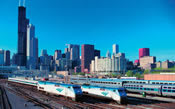
Amtrak continues to fight for every federal penny it needs to continue service. The national rail company has been slighted yet again in the Bush administration’s fiscal year 2009 budget proposal, which was announced in February. The budget shrinks Amtrak’s federal subsidy to $800 million — down from $1.325 billion this year. The majority of the budget — $500 million — would be reserved for infrastructure improvements, particularly in the Northeast Corridor.
The White House sees the reduction as a severe but necessary move to force Amtrak to cut its operating losses and focus on the services that are more promising. The reduction also “reflects that Amtrak has taken few steps to align its business with the traveling public’s demand for intercity rail service and that it consequently continues to hemorrhage taxpayer funds,” as is written in the budget.
The lack of support from President Bush is nothing new. Luckily, Amtrak enjoys strong support from Congress, which has countered the President’s proposals and given Amtrak more than $1 billion in funding each year since 2003.
On Feb. 20, Amtrak submitted its 2009 grant and legislative request to Congress, asking for $1.67 billion in federal subsidies. Amtrak cited an increase in labor and health care costs as well as rising fuel costs and the looming recession as reasons for requesting more than it asked for in fiscal year 2008.
While Amtrak’s viability remains controversial and its future uncertain, it has come a long way from nearly being dismantled and shut down when it failed to meet the federal mandate to turn a profit by 2002. With the support of Congress it got the financial infusion it needed to get back on its feet, while promising to work toward reform and fiscal responsibility.
Amtrak has been working to make good on the promise, having “obtained efficiency savings through improved management processes and targeted investment in areas, such as dining car and lounge car service as well as infrastructure projects to improve reliability,” the company said.
These efforts have led to a savings of $61.3 million in fiscal year 2006 and $52.8 million in 2007. The company expects a savings of $40.3 million in 2008. It has reduced the federal subsidy per passenger mile by approximately 17 percent since fiscal year 2004.
Ridership on the rise
Amtrak’s ridership reached a record 25.8 million passengers in fiscal year 2007, up from approximately 21.7 million in 2002. This was the fifth consecutive year of record increases. Ticket revenue also rose to $1.5 billion in 2007, an 11 percent increase over the $1.37 billion in 2006.
The Northeast saw the greatest revenue increase; its $829 million in revenue was a 14 percent increase over the previous year. The popular Acela Express service, which hits Boston, New York, Philadelphia and Washington, D.C., saw a 20 percent ridership increase to 3.1 million passengers in 2007. The Capitol Corridor service in California, another highly traveled route, grew to 1.4 million passengers in 2007 — a 15 percent increase over the previous year.
“Highway and airway congestion, volatile fuel prices, increasing environmental awareness and a need for transportation links between growing communities” are contributing to the increasing popularity and relevance of Amtrak’s service, said Alex Kummant, Amtrak president and CEO, in a statement. He added that an improvement in on-time performance in the Northeast Corridor was drawing more riders.
Bolstering visible security
Amtrak’s most recent initiative, launched Feb. 19, is a significant measure in improving security. It involves the deployment of trained mobile security teams to patrol stations and trains and randomly inspect passengers’ baggage. The measure was introduced to increase visible security and deter terrorism and not “in response to any kind of threat,” said Amtrak spokesperson Tracy Connell.
The security teams are first being deployed along Amtrak’s busiest route: the Northeast corridor between Washington, D.C., and Boston, Connell said. The teams will eventually be deployed nationally but the timeframe is unknown.
The mobile security teams include armed specialized Amtrak police, armed counter-terrorism special agents in tactical uniforms and bomb-sniffing K-9 units. They will “show up unannounced at stations up and down the Northeast and set up their screening areas, and passengers will be randomly selected from the line to board and have their baggage screened,” Connell said. The setup will vary depending on the layout of the station.
“The screening procedure simply involves swabbing the exterior of the person’s luggage and then placing it into a portable device that can detect any explosives residue,” Connell said. If the test comes up positive, the bag will be opened and examined.
The bag inspection is expected to take less than a minute and should not affect passenger travel times.
The measures were developed in conjunction with the Department of Homeland Security and international counter-terrorism agencies. The Transportation Security Administration has touted randomized security efforts as effective in protecting an open system, such as rail transit, against would-be attackers with minimal disruption to service.
Upgrading service
Improving service and convenience for passengers has been the goal of a few smaller initiatives in 2007.
In July it introduced its newly enhanced Quik-Trak electronic self-service ticketing machines with improved touch screens and ADA-compliant features. Amtrak also nearly doubled the number of machines available from 176 at 67 stations to more than 300 machines at 150 stations. With 31 percent of all tickets issued being picked up from these machines, customers have found them to be a fast and convenient option.
It also became more user-friendly to purchase train tickets through a mobile device. The company launched Amtrak.mobi, an Amtrak Website for riders that is optimized for mobile phones and devices. Online ticket sales are growing, Amtrak said, with 42 percent of all tickets being purchased through the Internet.
Raising the bar on dining options was also a focus in 2007. Overnight trains now offer an expanded and improved menu featuring made-to-order meals, wines by the glass and chef’s specials.
Joan Shim, a former managing editor for Bobit Business Media, is a freelance writer.
More Management

ENC Lands MATA Contract and More in Biz Briefs
In this edition of Biz Briefs, we spotlight the latest developments shaping the future of mobility.
Read More →
From Surviving to Thriving: Building Stronger Transportation Organizations
Bus Business Consultants founder Brian Dickson shares lessons on leadership, organizational health, and creating options for long-term success in a changing transportation industry.
Read More →
Everett Transit, Community Transit Outline Consolidation Agreement
The proposed agreement calls for a 50% increase in bus service in Everett, a new microtransit zone, continued paratransit service, and the transfer of Everett Transit operations to Community Transit.
Read More →

Strada360’s Steve Lassey on Turning Transit Data Into Better Decisions
From breaking down data silos to preparing for AI, Strada360 CEO Steve Lassey discusses how transit agencies can use technology to improve operations, customer information, and long-term decision-making.
Read More →
People Movement: Phil Washington Joins HNTB, Denver RTD Launches CEO Search, and More
In this edition, we also spotlight recent personnel moves at STV, the Eno Center for Transportation, and more, highlighting the people taking on new roles across the transportation industry.
Read More →
SEPTA Details Accelerate Vision for Transit System
The plan outlines investments in trolley modernization, new Metro and Regional Rail vehicles, accessible stations, and more frequent bus and rail service.
Read More →
FTA Ends Direct Oversight of MBTA Safety Actions
The federal agency closed its remaining special directive to the Massachusetts Department of Public Utilities following a safety review that began in 2022.
Read More →
Report: Transit Bus Manufacturing Supports 34,100 Jobs, $5.1B in GDP
The “Buses Mean Business” report examines the transit bus manufacturing industry’s economic footprint, supply chain, and rising demand for vehicle replacements.
Read More →
LIT Marks 10-Year Milestone at Annual Summit
Hosted by the COTA from September 10 to 13, the Summit carried the theme “Celebrating 10 Years of Excellence, Leadership, and Impact,” with every part of the program honoring the people, agencies, and partners who built LIT over its first decade.
Read More →
People Movement: Dan Dipert Coaches Adds Third-Generation Leader, Keolis Names New Valley Metro VP/GM, and More
In this edition, we also cover recent appointments and announcements at the Wabtec, SilverRide, HNTB, and more, showcasing the individuals helping to shape the future of transportation.
Read More →