



Approved border legislation may burden operators
President Bush signed into law a bill that could force bus and motorcoach companies to compile detailed information on their passengers before crossing the U.S. border.

President Bush signed into law a bill that could force bus and motorcoach companies to compile detailed information on their passengers before crossing the U.S. border. Under the Enhanced Border Security Act, HR 3525, commercial vessels must compile and electronically send a detailed passenger manifest to officials before crossing an international border. The manifest must include each passenger's name, address, date of birth, sex, citizenship, passport number and country of issuance, country of residence, visa and/or alien registration number and date and place of visa issuance. The law makes provision for a two-year feasibility study, conducted by the President, to determine how the law will be implemented and to whom it will apply. Whether the Border Security Act will affect motorcoach operators remains to be seen. Collecting manifest information for every passenger would be greatly burdensome for bus and motorcoach operators, especially those who carry itinerant riders without identification documents. "Manifesting is not practical for our industry because most of our services are not provided on a per-person ticket," said Linda Darr, vice president of policy and external affairs at the American Bus Association (ABA). "Our people don't necessarily even have the terminals or ticket counters to be able to administer such a system." The United Motorcoach Association (UMA) is working to convince the Bush Administration that the border security law need not apply to the motorcoach industry. However, another almost identical measure was introduced, called the Customs Border Security Act (HR 3129), which makes no provision for a two-year study. The customs act calls for an implementation date of 45 days after the bill is signed into law. "We have asked Senator John Kerry (D-Mass.) to offer a conforming amendment to the bill that would bring it into line with the Border Security Act. That would give us the opportunity for the study," said Norm Littler, UMA vice president of government affairs. As the southern U.S. border opens in the summer under NAFTA, additional border regulation guidelines are being discussed. The UMA and ABA hope to ensure that the newer security measures, many of which were added after Sept. 11, will not impede motorcoach traffic between NAFTA partner countries. "We have to be very careful not to simply lock the country up and close it off, or the economy is going to crash," said Littler. In cooperation with the U.S. Department of Transportation (DOT), bus and motorcoach representatives are also working to ensure that vehicles entering the U.S. under NAFTA are compliant with federal safety standards. Motor vehicle safety will be further promoted by the new entrant rule that was published by the Federal Motor Carrier Safety Administration and the DOT. Starting Jan. 1, new motor carriers will be granted 18-month probationary interstate operating authority and asked to demonstrate their knowledge of and compliance with federal regulations before receiving permanent authority. These requirements are similar to those issued earlier this year for Mexican companies wanting to conduct business in the U.S.
More Management

People Movement: Connectpoint Expands Leadership Team, Stadler Names New Group CEO, and More
In this edition, we also spotlight recent personnel moves at Burns, UZURV, and more, highlighting the people taking on new roles across the transportation industry.
Read More →
More Than a Summer Job: Building the Next Generation of Transit Talent
The Delaware River Port Authority and PATCO have transformed their internship program into a hands-on professional development experience that introduces students to the breadth of transportation careers — and creates a pipeline for future employees.
Read More →
LA Metro Board Awards 220 Battery-Electric Bus Contract to ENC
The contract, which is the largest base award of battery-electric buses by a U.S. transit agency, will be built in Southern California, sustaining good jobs as LA prepares to welcome the world in 2028
Read More →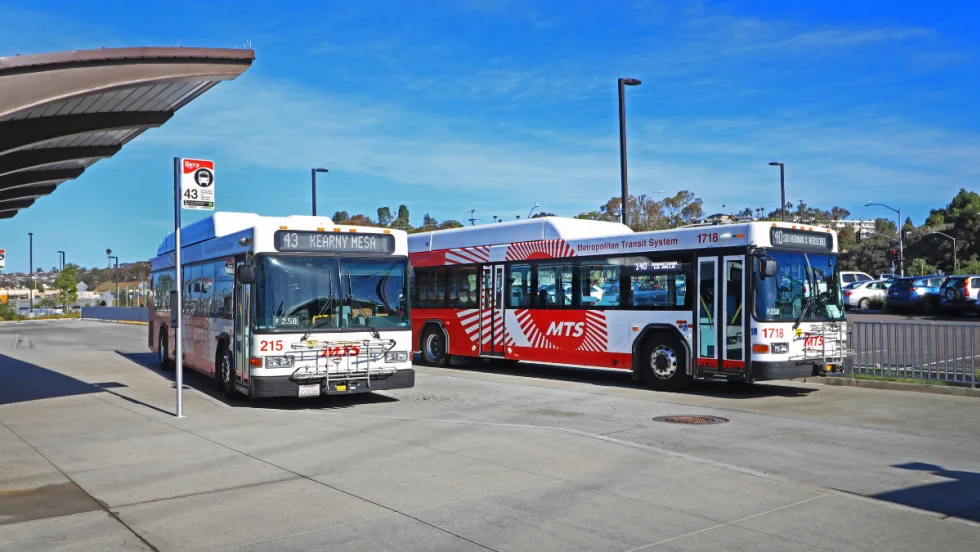
What’s Behind San Diego MTS’s Award-Winning Transit Strategy
Named one of APTA’s 2026 Outstanding Public Transportation Systems with 50 million or more annual passenger trips, California’s San Diego Metropolitan Transit System points to gains in ridership, safety, technology, and reliability as foundations of its success.
Read More →
Public Transit Conference Returning to GFX in 2027, Call for Papers Now Open
The Call for Papers is now open, allowing transit agency professionals and industry experts to help shape the PTC educational program by submitting session ideas for consideration.
Read More →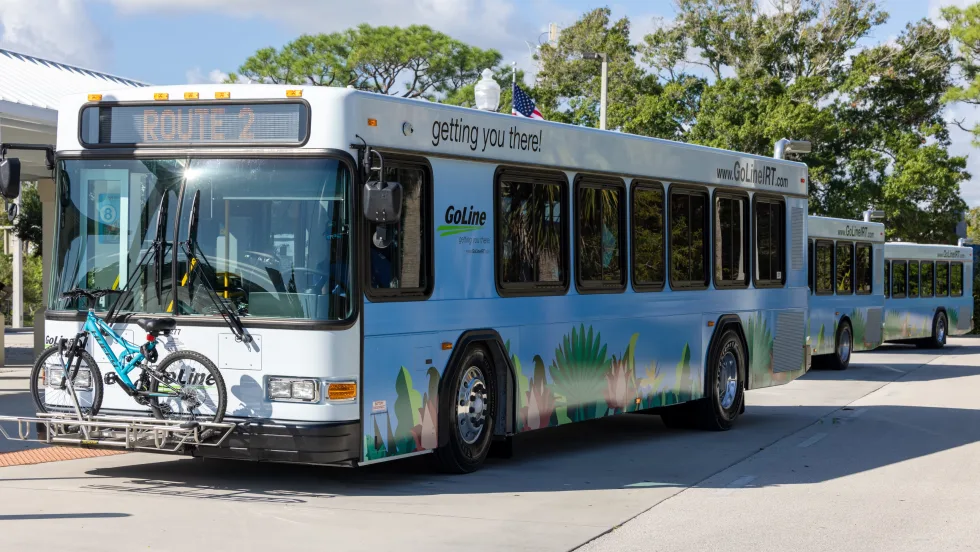
Indian River Transit’s Community-Focused Approach Earns National Recognition
Named APTA’s 2026 Outstanding Public Transportation System in its size category, Florida’s Indian River County transit system continues to grow ridership through fare-free service and a focus on evolving community needs.
Read More →
ENC Lands MATA Contract and More in Biz Briefs
In this edition of Biz Briefs, we spotlight the latest developments shaping the future of mobility.
Read More →
From Surviving to Thriving: Building Stronger Transportation Organizations
Bus Business Consultants founder Brian Dickson shares lessons on leadership, organizational health, and creating options for long-term success in a changing transportation industry.
Read More →
Everett Transit, Community Transit Outline Consolidation Agreement
The proposed agreement calls for a 50% increase in bus service in Everett, a new microtransit zone, continued paratransit service, and the transfer of Everett Transit operations to Community Transit.
Read More →
Strada360’s Steve Lassey on Turning Transit Data Into Better Decisions
From breaking down data silos to preparing for AI, Strada360 CEO Steve Lassey discusses how transit agencies can use technology to improve operations, customer information, and long-term decision-making.
Read More →