



Buy America Revisited
More than two decades since it was enacted by Congress, the Buy America law still generates lively debate in the supplier community and among transit properties.

The transit industry is wrestling with critical issues in regard to timely and efficient procurement of rolling stock that meets their specific needs. One of these issues is the Buy America provisions, which require that vehicles procured by transit agencies using federal funds have a minimum U.S. content value of 60% and that final assembly is performed in the U.S. Although the Buy America provisions have been in effect for more than 20 years, the transit industry still struggles with this issue. Some suppliers and transit properties believe that the law helps to “level the playing field,” while others believe it is detrimental because it restricts free trade. How the Federal Transit Administration (FTA) handles waiver requests has also become a point of contention. Should the FTA be more restrictive in its judgments or does that have the effect of reducing the industry’s access to technological advance? The American Public Transportation Association (APTA) has lobbied the FTA for greater attention to compliance and enforcement, saying the “supply side of our industry is financially strapped and too weak to fight subsidized foreign competition.” In response, FTA Administrator Jenna Dorn reaffirmed FTA’s support of Buy America and agreed to solicit and consider comments from the supplier community to proposed waiver requests. Presented here are opinions from Dorn and industry representatives on Buy America’s impact. Renewed commitmentJENNA DORN, administrator Federal Transit Administration I had a meeting with some of APTA’s business members, and they brought the issue of Buy America to our attention. As a result of that meeting, we recognized that we needed to be more transparent about the process that we use and about the decisions that are made. I think we have improved fairly dramatically over the years in terms of questioning the industry to ensure that we have the right facts and information to respond to waiver requests. We haven’t always made sure that the decision-making process was fully aired or that people know the rationale on which we made that decision. The group felt that we needed to re-up, so to speak, the commitment that is perceived in the industry toward Buy America as a fundamentally important law and requirement. What I was attempting to do in the Dear Colleague letter [June 10, 2002] is let them know we are serious about this and that we’ll do everything we can to provide an open environment in which the decisions can be seen to be rational and appropriate to each case. By doing that, we can be informed if we are in error or missing something in the big picture. It’s complicated, but we’re serious about making the process more transparent and valuable. Hinders technologyPATRICK RONA, president/CEO North American Bus Industries We generally believe Buy America does hinder technology development and deployment somewhat. Its enactment was a product of decades-old protectionist policies that have simply lost their place in today’s world of free trade. However, we understand the FTA’s need to implement the law. In that case, FTA Administrator Jenna Dorn’s recent determinations on waiver requests strike the right balance between responding to trade and technological realities and current federal law. Levels the playing fieldJOHN WALSH, chief maintenance officer New York City Transit I don’t think the industry is really constrained in the quality of products available because of Buy America. The regulation has enough flexibility to allow integration of needed global sources of systems and equipment. It is important that we reflect back to the mid 1980s when we had major infusion of offshore bus manufacturers who brought products to the U.S. market. Most would agree that was less than a successful sojourn for both the suppliers and the end users of the equipment. The cost of ownership was very high for this equipment and the lack of a support infrastructure for the products created a number of issues. At the end of it, almost all of the companies decided not to pursue the market. Things are different now, with many of the current U.S. bus suppliers having “global ownership,” and perhaps that is one of the lessons learned. Competition is the best thing for the marketplace, but I think you have to have a level playing field that goes in both directions. Do U.S. manufacturers and suppliers have the same opportunities to compete in other parts of the global market? It is very important that the manufacturers make the commitment to support the product if they are going to sell it in the U.S. market. We have to look at the lifecycle costs for parts and components. Will the aftermarket costs of offshore parts have an impact on the cost of ownership? Do the established suppliers who developed an infrastructure to support the products they manufacture and sell have an opportunity to compete? Ensures quality productsBRIAN MACLEOD, senior vice president Gillig Corp. Buy America regulations actually help transit properties to procure better rolling stock. Most foreign buses are not designed to cope with the severe duty requirements of U.S. transit service, so Buy America essentially weeds out the less suitable products and then Altoona testing identifies the structurally weaker buses, saving transit systems from an expensive mistake. Additionally, Buy America protects transit properties from many “hidden” costs and problems, such as extra inspection and communication expenses, higher service parts costs and longer lead times and less domestic warranty accountability. History has proven that even world-recognized foreign bus manufacturers have not survived in the U.S. market because their products were not suitable. If they truly have better products, they shouldn’t be afraid of the 60% U.S. content and domestic final assembly. If their products are really good, they should be able to dominate this market and their costs should be even lower because of their inherently higher volumes. But this has not been the case in the last 30 years, and many cities have been left with foreign buses, no domestic support, expensive parts and more downtime. So it is absolutely essential we retain Buy America as a way of ensuring transit systems get better rolling stock and better accountability. I also think the FTA has been a bit too accommodating with Buy America waivers in the past, but I think their recent action seeking domestic industry comments before deciding on waivers is a very responsible move. Considering only a waiver request is like looking at one side of the argument only, but reviewing industry comments as well is like getting a competitive bid — it exposes the full picture from people most closely associated with the subject. It’s a fairer process, ensures proper public disclosure and gets both sides of the issue aired.
More Management

People Movement: Connectpoint Expands Leadership Team, Stadler Names New Group CEO, and More
In this edition, we also spotlight recent personnel moves at Burns, UZURV, and more, highlighting the people taking on new roles across the transportation industry.
Read More →
More Than a Summer Job: Building the Next Generation of Transit Talent
The Delaware River Port Authority and PATCO have transformed their internship program into a hands-on professional development experience that introduces students to the breadth of transportation careers — and creates a pipeline for future employees.
Read More →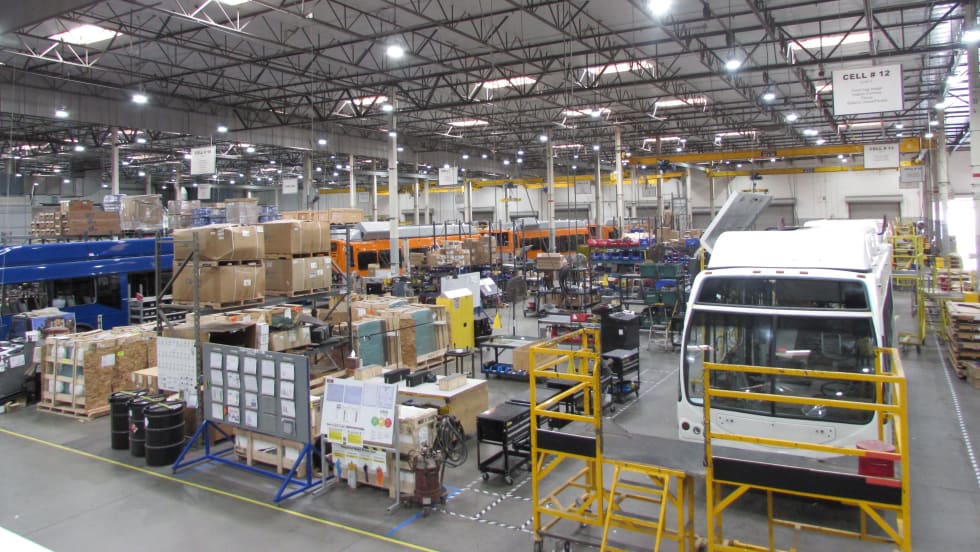
LA Metro Board Awards 220 Battery-Electric Bus Contract to ENC
The contract, which is the largest base award of battery-electric buses by a U.S. transit agency, will be built in Southern California, sustaining good jobs as LA prepares to welcome the world in 2028
Read More →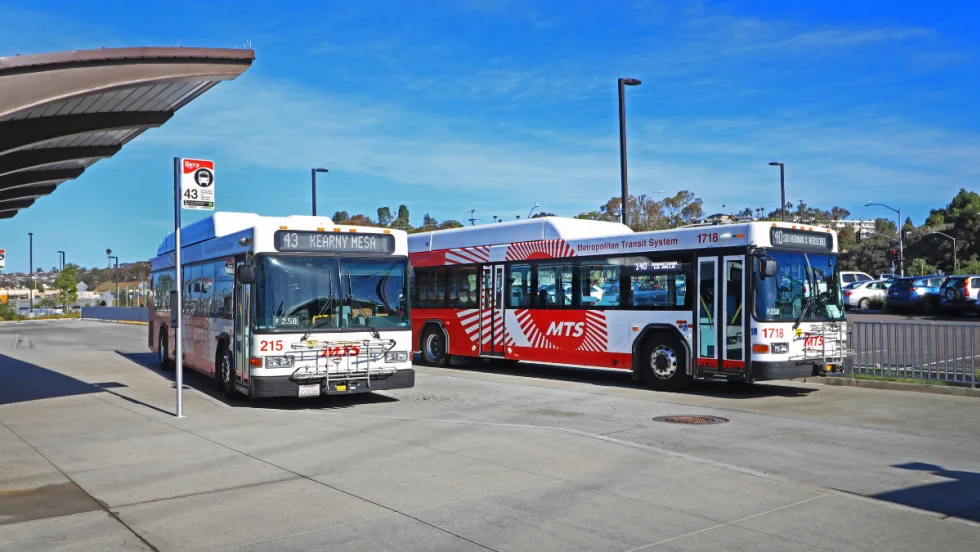
What’s Behind San Diego MTS’s Award-Winning Transit Strategy
Named one of APTA’s 2026 Outstanding Public Transportation Systems with 50 million or more annual passenger trips, California’s San Diego Metropolitan Transit System points to gains in ridership, safety, technology, and reliability as foundations of its success.
Read More →
Public Transit Conference Returning to GFX in 2027, Call for Papers Now Open
The Call for Papers is now open, allowing transit agency professionals and industry experts to help shape the PTC educational program by submitting session ideas for consideration.
Read More →
Indian River Transit’s Community-Focused Approach Earns National Recognition
Named APTA’s 2026 Outstanding Public Transportation System in its size category, Florida’s Indian River County transit system continues to grow ridership through fare-free service and a focus on evolving community needs.
Read More →
ENC Lands MATA Contract and More in Biz Briefs
In this edition of Biz Briefs, we spotlight the latest developments shaping the future of mobility.
Read More →
From Surviving to Thriving: Building Stronger Transportation Organizations
Bus Business Consultants founder Brian Dickson shares lessons on leadership, organizational health, and creating options for long-term success in a changing transportation industry.
Read More →
Everett Transit, Community Transit Outline Consolidation Agreement
The proposed agreement calls for a 50% increase in bus service in Everett, a new microtransit zone, continued paratransit service, and the transfer of Everett Transit operations to Community Transit.
Read More →
Strada360’s Steve Lassey on Turning Transit Data Into Better Decisions
From breaking down data silos to preparing for AI, Strada360 CEO Steve Lassey discusses how transit agencies can use technology to improve operations, customer information, and long-term decision-making.
Read More →