



California transit system touts 'breath of fresh air' program
The San Joaquin (Calif.) Regional Transit District's uses hybrid technology to reduce emissions, cut fuel consumption.

The San Joaquin (Calif.) Regional Transit District (SJRTD) is seeing the benefits of continuing on the diesel path by upgrading its fleet with diesel-electric hybrid vehicles. In 2001, its board of directors decided to continue using diesel, but in the form of diesel-electric hybrid technology, to abide by a California Air Resources Board mandate. The transit system, which offers local, intercity and interregional services, currently has a 161-vehicle fleet, five of which are powered by compressed natural gas. “[The board] felt the infrastructure costs would be lower and the emissions reduction would exceed that of CNG,” said Bobby Kuhn, SJRTD’s director of maintenance. The SJRTD took delivery of two Gillig Corp.-manufactured 40-foot, low-floor hybrid buses in June 2004. Since that time, the operation has experienced firsthand the reductions in fuel consumption, noise levels and emissions offered by diesel-electric technology, Kuhn said. The vehicles are equipped with a General Motors/Allison (GM) Electric Drive system — a parallel hybrid system that consists of two 100kw motors and a 600-volt, nickel metal hydride battery pack. When the bus accelerates from a stop, the battery-powered electric motors assist the diesel engine for acceleration. As the vehicle speeds up, the engine provides the power to maintain the speed. At the same time, the engine-driven generator charges the batteries, giving the vehicle self-sustaining mobility. In addition, the vehicle uses regenerative braking to capture and store energy — normally lost as brake heat — for reuse. “We have a parallel path for engine torque combined with motor torque and the two modes allow the parallel hybrid system to operate efficiently at both low and high speeds,” said GM’s Electric Drive Engineering Manager Dave Neufer. And, although the propulsion system allows for the use of a one-third smaller diesel engine, these hybrid buses can accelerate 50% faster than conventional diesel buses, he said. Another benefit of the hybrid technology includes the production of 60% fewer oxides of nitrogen emissions and 90% fewer particulate, hydrocarbon and carbon monoxide emissions. Once it took on its new hybrids, the SJRTD trained 10 operators on the technology. “In order to achieve the maximum fuel economy, the operator has to understand how [it] works,” said Kuhn. “The more efficient the operator is, the more efficient the fuel economy.” SJRTD uses the hybrid vehicles on both its fixed-route and intercity service. “We wouldn’t use this bus on our interregional service because the fuel efficiency is coming from stop-and-go traffic and we don’t see that on that service,” he said. So far, the peak gas mileage achieved by the new hybrids is 4.9 mpg, which Kuhn expects to exceed once a bus has been permanently placed on a route. “We travel 5 million miles a year, so a savings of 1 to 2 miles to the gallon is a huge dollar amount.” Reduced maintenance costs are also expected as the vehicle’s brakes are slow to wear due to the system’s use of reverse propulsion, he said. In July, the SJRTD put out a bid for 50 more hybrid vehicles to replace the oldest buses in its fleet. One of the agency’s hybrids features an eye-catching wrap touting the operation’s new campaign “A Breath of Fresh Air.” “We’re hoping the public becomes intrigued by [the bus] and would want to try it,” Kuhn said. “We know if we can get a passenger on for the first time, we’ll be able to keep them.”
More Management
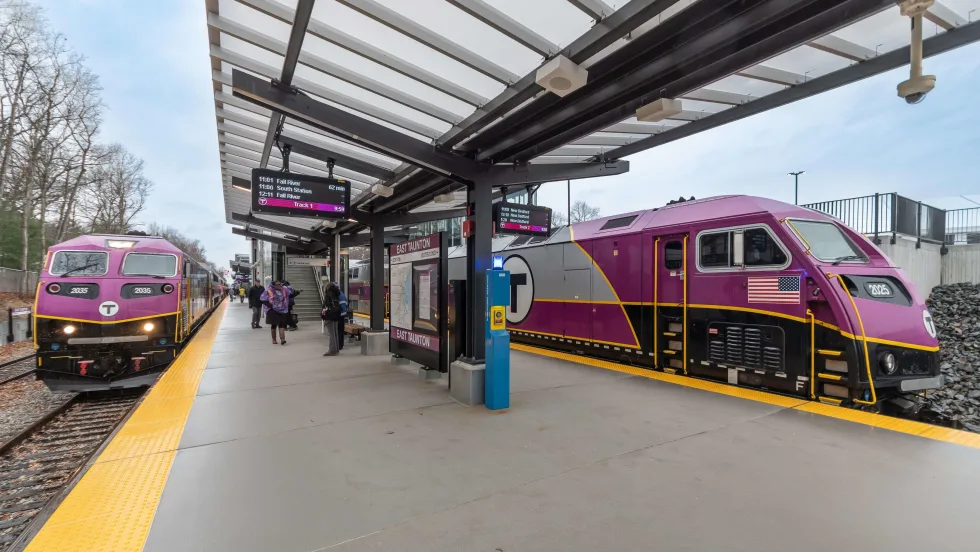
FTA Ends Direct Oversight of MBTA Safety Actions
The federal agency closed its remaining special directive to the Massachusetts Department of Public Utilities following a safety review that began in 2022.
Read More →
Report: Transit Bus Manufacturing Supports 34,100 Jobs, $5.1B in GDP
The “Buses Mean Business” report examines the transit bus manufacturing industry’s economic footprint, supply chain, and rising demand for vehicle replacements.
Read More →
LIT Marks 10-Year Milestone at Annual Summit
Hosted by the COTA from September 10 to 13, the Summit carried the theme “Celebrating 10 Years of Excellence, Leadership, and Impact,” with every part of the program honoring the people, agencies, and partners who built LIT over its first decade.
Read More →

People Movement: Dan Dipert Coaches Adds Third-Generation Leader, Keolis Names New Valley Metro VP/GM, and More
In this edition, we also cover recent appointments and announcements at the Wabtec, SilverRide, HNTB, and more, showcasing the individuals helping to shape the future of transportation.
Read More →
METRO Opens Submissions for 2026 Motorcoach Awards
Nominations are now being accepted for METRO Magazine’s Operator of the Year and Innovative Operator of the Year awards.
Read More →
New York MTA Advances Final Contract for Second Avenue Subway Expansion
Contract Four is the largest in the Second Avenue Subway Phase 2 project and includes construction of station infrastructure, tracks, and signals for the subway expansion, MTA officials said. Work on Contract Four will begin in 2027.
Read More →
Transit Agencies Highlight Safety Gains at National Summit
Leaders from 15 major transit systems shared crime-reduction results and safety initiatives while discussing the role of continued federal support.
Read More →
NITA Names New Leadership, Expands Reduced-Fare Program at First Board Meeting
The new regional transit authority appointed its first board chair and interim executive director while extending reduced fares across CTA, Metra, and Pace for eligible riders.
Read More →
Beyond the Checklist: A Structured Approach to Transit Maintenance
Reliability-Centered Maintenance helps transit agencies move beyond routine checklists to focus limited resources on the assets and failures that have the greatest impact on safety, reliability, and service.
Read More →
APTA 2026 Nominating Committee Selects Leadership Slate, Names Chair and Vice Chair Nominees
Leadership changes will help shape the association’s priorities and its representation of the transportation industry during the 2026–2027 term.
Read More →