



Collision Avoidance With the Help of a Box
The general consensus of the motorcoach industry believes that while collision avoidance technology helps, it cannot replace good training.
A motorcoach traveling eastbound at sunrise at the posted speed limit does not notice a vehicle ahead traveling at a slower speed. Impaired by the glare of the sun, the driver rams into the vehicle. Could this accident have been avoided? The National Transportation Safety Board (NTSB) says yes, with the help of collision warning system (CWS) technology. CWSs alert the driver to obstacles such as slowed vehicles ahead by sounding an alarm or flashing a light so the driver can brake or steer away from and possibly avoid a rear-end collision. Rear-end collisions account for almost one-third of all fatal crashes. In 1999, commercial vehicles were involved in 40% of fatal rear-end collisions, reported the NTSB. Research of passenger vehicles conducted by Mercedes-Benz found that an extra second of warning time could prevent about 90% of these crashes. The NTSB has made a recommendation to the U.S. Department of Transportation to complete rulemaking on collision-warning system performance standards for new commercial vehicles, requiring that all new commercial vehicles be equipped with CWS technology. A recommendation to motorcoach manufacturers has also been made to develop and provide a training program for operators of vehicles equipped with a CWS. The NTSB has based its recommendations on a special investigative study of nine rear-end collisions (two of which involved motorcoaches), conducted over the span of two years, in which 20 people died and 181 were injured. According to the report, the common feature of all nine accidents was the rear-following vehicle’s driver’s degraded perception of the traffic conditions ahead. When heavy commercial vehicles, such as a truck or a bus, are involved in rear-end collisions, the consequences are much more severe, says Jennifer Bishop, NTSB project manager. “Many trucking fleets have deployed [CWSs] on their trucks and had dramatic results in the reduction of collisions,” she says. Of the truck fleets using CWS technology, a decrease of an average of 73% in rear-end collisions has been seen. But are collision-warning systems really helpful in possible accident situations, or are they a hindrance? Technology issues CWS technology is not new to the motorcoach industry. In the early 1990s, Greyhound was the first major fleet to use the first generation of collision warning technology — although unsuccessfully. After a host of problems, the system was pulled. A major issue Greyhound experienced with the collision system was false signals. “Every time the bus would pass a guard rail, a bridge abutment or a sign post, the driver would be alerted,” says Greyhound Safety Director Alex Guariento. The biggest issue, however, was the fact that passengers could also hear the alarms and see the flashing light, causing concern about the driver’s capabilities, says Guariento. “It really created an adverse environment for our drivers.” Today, Guariento feels CWS technology is a good idea that needs to be pursued, but with the needs of passenger carriers kept in mind. American Bus Association President Pete Pantuso agrees that the recommendations cannot just be looked at from the truck perspective. Research specific to the motorcoach industry needs to be done using this technology to determine if it is beneficial, says Pantuso. Currently, the U.S. Department of Transportation (DOT) is conducting studies with trucks. The DOT has no present plans to conduct the study with buses. “It’s a tough time to add any costs to the industry,” says Pantuso. “But if it’s something that truly enhances safety, I don’t think it can be ignored.” The cost factor is first and foremost in Stephen Sprague’s mind. As COO of the United Motorcoach Association, Sprague is in favor of allowing operators to make their own choices about adapting technologies. The cost of CWS technology is about $2,500. Sprague also takes issue with the reliance on technology to address human error — the major cause of commercial vehicle accidents. “Drivers tend to rely on the technology, so they let down their guard and are less attentive,” he says. Greyhound’s Guariento agrees, saying the company’s drivers became over-confident and over-reliant on the technology, causing them to discard common sense skills such as not speeding or not tailgating. The key, says Sprague, is to find the proper balance between complete dependence on technology and complete avoidance of new and possibly productive aspects of technology. Training alternative Many operators see proper training as the better solution to collision avoidance. Chris Craen, director of safety for Peter Pan Bus Lines, favors investing in training programs that cover a variety of tactics, including defensive driving and proper mirror adjustments. “I don’t want a computer telling my driver if he is tailgating,” says Craen. Peter Pan has been using a comprehensive driver-training program since 1995. “It has been very effective. We have seen a reduction in accidents and accident severity,” he says. Safety consultant Carmen Daecher of Daecher Consulting Group believes that good and continued training of space management is fundamental and just as effective as the technology. “I don’t think [CWSs] are the catch-all answer,” he says.“Diligent drivers who practice good space management techniques will perform just as well as those who may need collision warning systems to help them remember.” John Treadwell, director of personnel safety for Frontier Tours of Carson City, Nev., is also an advocate of defensive-driving techniques and their effectiveness. “I think a good driver negates the need for [CWS],” he says. “Computers on buses are not foolproof,” says Tann Teeples, safety director for Frontier Tours of Reno, Nev. “I have a real problem with some of those technologies because of their unreliability.” For preventing rear-end collisions, there is no substitute for good training, professionalism and being well rested and alert, says Teeples. ******************************************* Driver training centers focus on safety Typical driver training programs find senior operators teaching new recruits the ropes. The training program from GE Capital I-Sim provides a simulated environment for operators of any level to learn and practice driving in multiple conditions. GE Capital, a subsidiary of General Electric, opened a new driver development center in Burr Ridge, Ill. The company specializes in simulated driver development training programs for professional drivers, including motorcoach operators of all levels. Drivers undergo a three-part training approach of classroom instruction, computer-based training with complete driver skill evaluation and hands-on experience with state-of-the-art driving simulators. The three training elements are tied into a learning management system that evaluates driver performance. The Mark II™ and Trans Sim VS™ simulators are composed of dome-like projection screens coupled with flat-panel display mirrors to replicate the visual environment for the driver. In addition to life-like visuals, the immersive simulation experience includes motion, vibration, sound, full standard instrumentation and actual vehicle cabs. Training scenarios can be programmed to include various weather conditions, 3-D road surfaces, payloads, traffic features and hazards such as potholes, potential obstacles and pedestrians. Training courses are modified to fit the driver’s needs and experience level, says Mark Stulga, CEO of GE Capital I-Sim. More than 100 training modules are available in such areas as defensive driving tactics, space management and city driving versus over-the-road driving. Stulga says that driver response to the training has been enthusiastic. “Drivers are impressed with the technology. When they encounter risky situations in the simulation training, their palms sweat and their heart rate accelerates,” he says. GE Capital I-Sim is currently working with insurance industry leaders to establish accreditation for the training program, says Stulga. In addition to the Burr Ridge location, GE Capital I-Sim is in the process of launching training centers in Los Angeles, Salt Lake City, Denver, Dallas, Philadelphia, Chicago and Atlanta. On-site training is also available in a mobile format. For more information call (888) 259-4746 or log on to www.i-sim.com.
More Management

Bus Tech Talk: Keeping Transit Technicians Ahead of the Technology Curve
In this episode of Bus Tech Talk, Complete Coach Works’ Business Development Manager Mark Hollenbeck and METRO’s Executive Editor Alex Roman sit down with Obed Mejia, Senior Technical Trainer for Bus Maintenance, at LA Metro to discuss how rapidly evolving bus technology is changing the maintenance shop — and the skills technicians need to keep pace.
Read More →
Michael Schneider Joins Paslay Group to Expand Transportation Practice
The longtime transportation executive will help Paslay Group grow its advisory and program management work across transit, highway, and other infrastructure sectors.
Read More →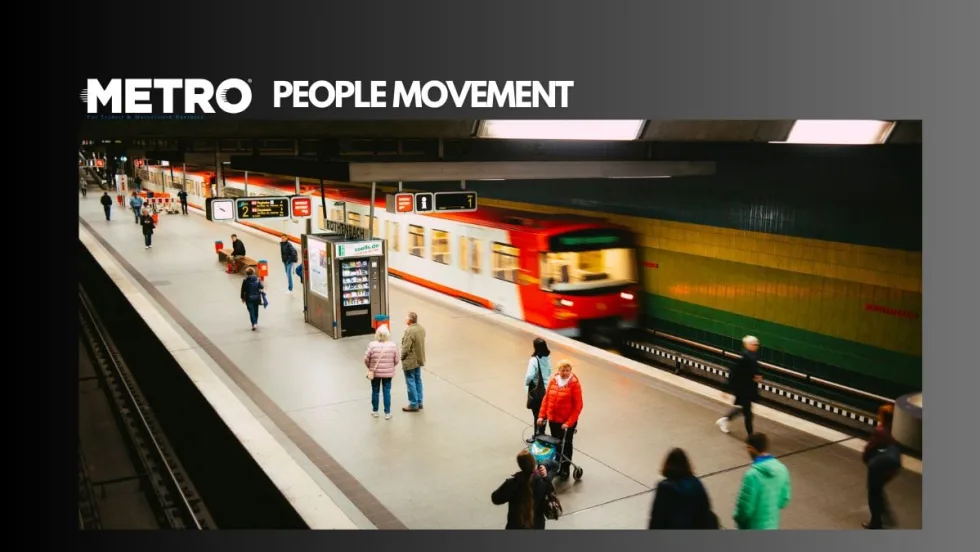
People Movement: Connectpoint Expands Leadership Team, Stadler Names New Group CEO, and More
In this edition, we also spotlight recent personnel moves at Burns, UZURV, and more, highlighting the people taking on new roles across the transportation industry.
Read More →
More Than a Summer Job: Building the Next Generation of Transit Talent
The Delaware River Port Authority and PATCO have transformed their internship program into a hands-on professional development experience that introduces students to the breadth of transportation careers — and creates a pipeline for future employees.
Read More →
LA Metro Board Awards 220 Battery-Electric Bus Contract to ENC
The contract, which is the largest base award of battery-electric buses by a U.S. transit agency, will be built in Southern California, sustaining good jobs as LA prepares to welcome the world in 2028
Read More →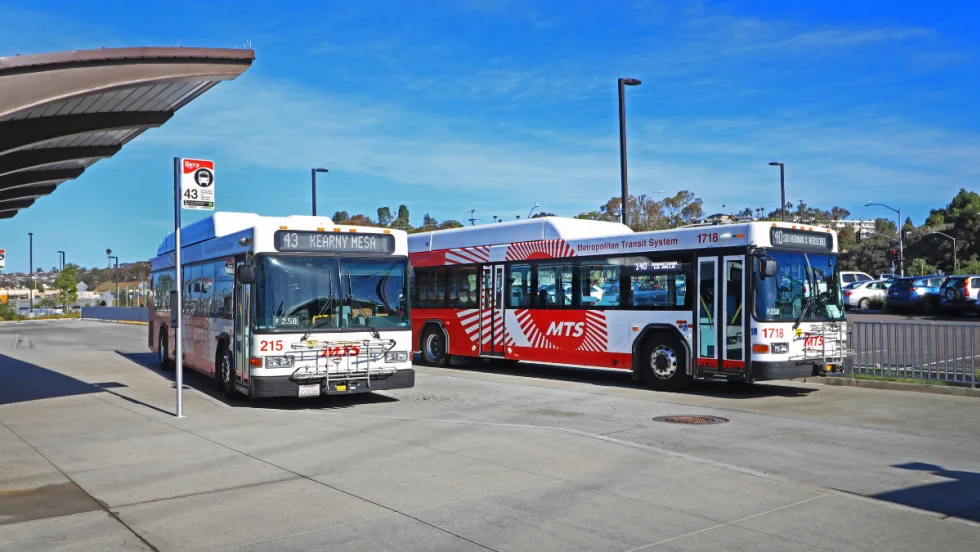
What’s Behind San Diego MTS’s Award-Winning Transit Strategy
Named one of APTA’s 2026 Outstanding Public Transportation Systems with 50 million or more annual passenger trips, California’s San Diego Metropolitan Transit System points to gains in ridership, safety, technology, and reliability as foundations of its success.
Read More →
Public Transit Conference Returning to GFX in 2027, Call for Papers Now Open
The Call for Papers is now open, allowing transit agency professionals and industry experts to help shape the PTC educational program by submitting session ideas for consideration.
Read More →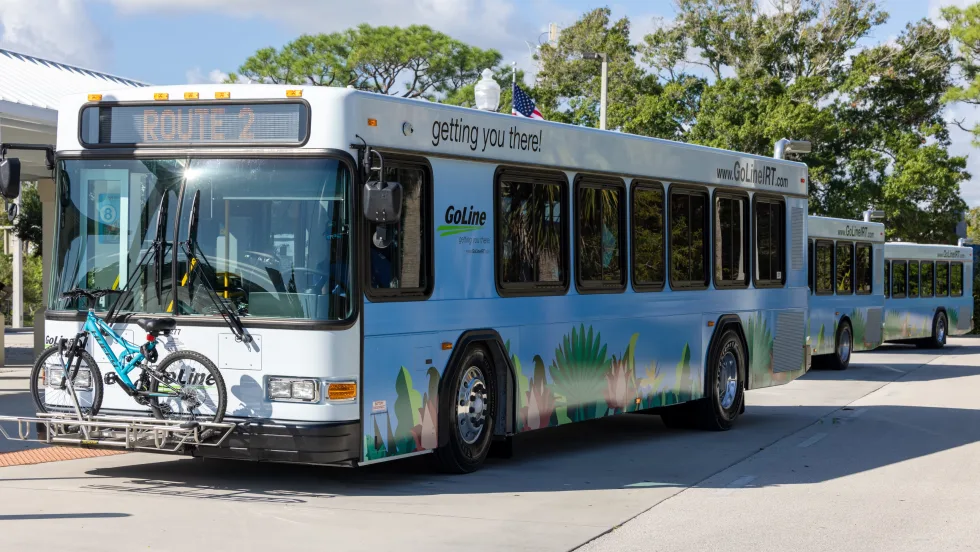
Indian River Transit’s Community-Focused Approach Earns National Recognition
Named APTA’s 2026 Outstanding Public Transportation System in its size category, Florida’s Indian River County transit system continues to grow ridership through fare-free service and a focus on evolving community needs.
Read More →
ENC Lands MATA Contract and More in Biz Briefs
In this edition of Biz Briefs, we spotlight the latest developments shaping the future of mobility.
Read More →From Surviving to Thriving: Building Stronger Transportation Organizations
Bus Business Consultants founder Brian Dickson shares lessons on leadership, organizational health, and creating options for long-term success in a changing transportation industry.
Read More →