




Catching Up: STV's Kelly Shares Ways to Improve Equity, Electric Bus Outlook
Consultant Q&A: STV's Kelly Discusses Funding, Challenges
Greg Kelly, president/CEO of STV, discussed funding for projects, project delivery, and more with METRO.
April 28, 2023
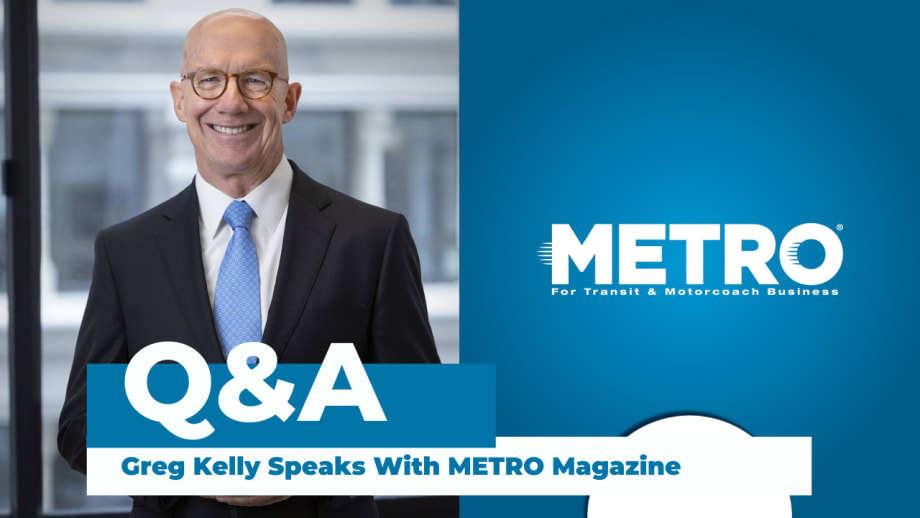
STV's Greg Kelly was among several industry professionals who discussed the latest transit topics with METRO.
Photo: STV
5 min to read
Greg Kelly, president/CEO of STV, discussed the keys to moving forward with projects, alternative forms of project delivery, and more.
Funding, Projects, and Consultant Help
Dig into this Q&A to learn more about how transit agencies are handling record funding, keys for successful project completions, and how to receive future federal funds.
METRO: With transit receiving record funding for projects, what are some keys for the industry to successfully move ahead with projects that are in the works or in the pipeline?
Kelly: With significant growth in the industry and generational investment in the transit sector, a major key to success is our industry’s ability to harness a robust and qualified workforce.
We will need to focus not just on hiring talent, but also on fostering workforce development and encouraging the next generation to enter our industry.
At STV, we are taking this comprehensive approach. We have hired new team members to bolster our ranks; upskilled and mentored our existing workforce; and promoted from within to ensure we are preparing the transit leaders of tomorrow.
Perhaps most importantly, we have engaged young people before they start their careers — from high schoolers in the ACE program to college students participating in our intern program — to ensure we are cultivating a pipeline of talent for the future.
METRO: Are there more agencies looking at alternative forms of project delivery? If so, why? If not, why not?
Kelly: The most significant shift in project delivery is a growing interest in progressive design build, and the Construction Manager/General Contractor (CM/GC) project delivery method.
Progressive design-build and CM/GC allow the owner to have a more upfront — and continued — say in the design and construction of a project. This method means the engineer, designer, and contractor are taking the project up to a higher level of completion — sometimes 60% to 80% — which provides a higher resolution on costs and risks, as it’s further along.
One of STV’s core values is Partnership, and this delivery method really speaks to that: it requires everyone to work as a team — the owner, the owner’s engineer, the contractor, and the contractor’s engineer all need to collaborate and talk about risks, means, and methods earlier on in the process. It’s a tighter approach that results in better pricing, better schedules, and a better risk allocation.
Additionally, we are continuing to see shifts in program development, particularly in public-private partnerships (P3s) and projects involving collaboration with the federal government.
There is a growing emphasis on environmental protection, climate change, equity, and community planning, which you can see in the increasing number of MOUs from the public sector as federal funds are injected into local communities. This marks a change from the past when we saw more funds coming from the state level.
As a response, we are partnering with more clients on programmatic approaches to address these needs both short- and long-term.
METRO: What (if any) are some new trends you are seeing that are helping projects reach completion sooner or at least in the client’s desired time frame?
Kelly: A vital part of construction management and preliminary design is planning for the unexpected. It’s important to bring a holistic approach to any project. Only with the big picture can we zoom out and pinpoint opportunities to consolidate schedules and address concerns before they become major challenges.
The most significant challenge impacting timelines right now are related to materials and inflation pressures. While clients are taking notes and planning accordingly, increased transparency on both sides of the relationship is more critical than ever to delivering projects successfully.
METRO: What are some key ways consultants can help transit agencies successfully receive federal grant funding for their projects/vehicles?
Kelly: The federal government has been very intentional about expanding the funding environment — with unprecedented opportunities for underrepresented communities — to support projects and make an impact. Nearly every dollar of federal funding is tied to a dual focus on climate change and equity.
Discretionary grants require significant management — even after they’re obtained — from tracking and reporting to compliance with ever-changing regulations. Consultants must be well-versed in these topics and remain acutely aware of the stakeholders involved in a project or program to ensure it adheres to federal guidelines and requirements.
There are several ways STV assists transit agencies pursue grant funding opportunities, from identifying new programs and helping track changes in legislation, to keeping the application schedule on-track and strategizing submissions based upon available resources.
METRO: What is your company’s biggest challenge and what is the firm doing to overcome that issue?
Kelly: Preparing the next generation of talent is a challenge for the industry, but also a responsibility for leaders like STV. We must ensure the future workforce is trained, inspired, and prepared to deliver the infrastructure projects of tomorrow.
To achieve that, we are upskilling, mentoring, and motivating our team to tackle challenges — from rapidly changing technologies and new emerging project delivery methods, to adapting to a changing work environment that focuses not just on where we work, but also how we work.
Change is already underway, especially when it comes to the digital transformation of delivering infrastructure projects. To be successful, we need to create an entrepreneurial environment with a willingness to incubate, pilot, and advance a range of new ideas.
At STV, we’ve established national Centers of Excellence to deliver innovative local solutions and future-focused strategies that add value for our clients and help make communities better.
As stewards of the industry, it’s important to inspire the next generation. STV’s purpose is to make communities better through innovative solutions that connect people, places, and the present to the future — we contextualize our daily work against the generational impact we make on communities. It’s a big responsibility, but also an honor, to wake up and do that every day.
Subscribe to Our Newsletter
More Management

METRO Opens Submissions for 2026 Motorcoach Awards
Nominations are now being accepted for METRO Magazine’s Operator of the Year and Innovative Operator of the Year awards.
Read More →
New York MTA Advances Final Contract for Second Avenue Subway Expansion
Contract Four is the largest in the Second Avenue Subway Phase 2 project and includes construction of station infrastructure, tracks, and signals for the subway expansion, MTA officials said. Work on Contract Four will begin in 2027.
Read More →
Transit Agencies Highlight Safety Gains at National Summit
Leaders from 15 major transit systems shared crime-reduction results and safety initiatives while discussing the role of continued federal support.
Read More →

NITA Names New Leadership, Expands Reduced-Fare Program at First Board Meeting
The new regional transit authority appointed its first board chair and interim executive director while extending reduced fares across CTA, Metra, and Pace for eligible riders.
Read More →
Beyond the Checklist: A Structured Approach to Transit Maintenance
Reliability-Centered Maintenance helps transit agencies move beyond routine checklists to focus limited resources on the assets and failures that have the greatest impact on safety, reliability, and service.
Read More →
APTA 2026 Nominating Committee Selects Leadership Slate, Names Chair and Vice Chair Nominees
Leadership changes will help shape the association’s priorities and its representation of the transportation industry during the 2026–2027 term.
Read More →
DART Launches Major Security, Fare Enforcement Initiative
The 90-day demonstration will deploy coordinated security teams at five light rail stations while testing controlled access and gathering data to guide future investments.
Read More →
Sponsored•September 9, 2026
Advancing Fare Collection Through Technology and Innovation
Learn about delivering 1300 gates at 91 stations while managing fare evasion. Explore the large scale deployment, solution customization and real-world results that affect the region. Prepare for deployment in your region now.
Read More →
Game Day in Motion: Moving Millions During the 2026 World Cup
Between packed transit stations and team motorcoaches, see how agencies and operators across North America tackled the transportation demands of the 2026 FIFA World Cup.
Read More →
Surface Transportation Extension Averts Shutdown, Leaves Transit Funding Gap
The stopgap keeps federal transportation programs moving, but missing advance funding could complicate the transit and rail projects agencies are planning next.
Read More →