



Does Your Transit, Motorcoach Battery Pack Enough Power?
Newer generation batteries are spill-proof, eliminating the added costs and risks of traditional flooded lead-acid batteries, while also providing high vibration resistance and flexible orientation.

Batteries optimized for the rail industry offer added convenience and efficiency.

Gone are the days when locomotives ran on steam and buses were drawn by horses. Yet, although the transportation industry continues to evolve, many engineers are still using the same flooded lead-acid battery technology their grandfathers used. However, there are various newer, more advanced types of battery technologies, including spill-proof Valve Regulated Lead Acid (VRLA) Gel Recombinant, Absorbed Glass Mat (AGM) and Thin Plate Pure Lead (TPPL) AGM. These technologies offer lower maintenance and improved performance for better bottom line efficiency.
Flooded Lead-Acid Batteries
Flooded lead-acid batteries are a familiar technology in the transportation industry. However, they require regular maintenance and safety precautions. Flooded lead-acid batteries are comprised of lead plates soaking in a water-based electrolyte solution of 35% sulfuric acid. These ingredients cause a chemical reaction that creates energy and consumes the solution. Using a hydrometer, the user must calculate the amount of water consumed and replace it without overfilling the battery and spilling the acid. This necessary maintenance adds to the total cost of ownership of flooded batteries, and exposes the user to the risks of handling caustic chemicals.
Modern consumer flooded lead-acid batteries are in a sealed maintenancefree container, yet still vented to the atmosphere. While the purpose simply is to make the battery less likely to spill, the electrolyte can still leak if the case is damaged, mounted sideways or inverted. Additionally, since these batteries are factory-sealed, access to use a hydrometer is not available. The result is a battery that will do the job but is so unserviceable that it likely will only last a few short years.
Non-Spillable Batteries
Newer generation batteries are spill-proof, eliminating the added costs and risks of traditional flooded leadacid batteries. VRLA batteries are truly sealed, with a pressure valve venting system that significantly reduces water loss through internal oxygen recombination. More often known as gel recombinant cells, these VRLA batteries feature an electrolyte with the consistency of petroleum jelly that is created by adding silica powder to sulfuric acid.
More recently, spill-proof sealed pressure valve AGM batteries have evolved, featuring spun glass microfibers that hold the electrolyte, dramatically reducing evaporation and completely eliminating the need to water the batteries and the risk of acid spills.
Benefits of today’s spill-proof batteries include:
• High vibration resistance: AGM batteries can be used in environments where other batteries may be damaged by extreme vibration, such as in buses and motorcoaches.
• No maintenance: Gel cell and AGM batteries require no maintenance once the charging system has been properly set up — no equalization charges (usually), no electrolyte to replenish, no specific gravity checks, no additional safety gear to carry on board.
• Flexible orientation: VRLA and AGM batteries can operate in any orientation, except inverted, increasing flexibility for the placement of auxiliary batteries; the container will not leak, even if broken, offering peace of mind if the vehicle or rail car should roll during an accident.
• Easy shipping: VRLA and AGM batteries are classified by the U.S. Department of Transportation as “non-spillable” batteries that can be shipped anywhere by air. Flooded cells, on the other hand, have to be bought locally or delivered by surface transport in special containers. They cannot be shipped via Express Courier or Parcel Post.
• Shelf life: Unlike VRLA or AGM batteries, flooded batteries may lose capacity and become permanently damaged if they are continually over-discharged due to active material shedding.
• Cost-efficiency: AGM and gel-cell batteries offer faster, more efficient bulk charging that leads to reduced wear-and-tear on the charge source (engine, gen-set, etc.)

Thin Plate Pure Lead
Some batteries provide enormous cranking power; others provide deep cycle reserve power. A revolutionary battery configuration is designed to do both. TPPL batteries are VRLA made with AGM construction and pure lead, rolled or chill-cast strip then perforated into thin plates. The combination of low-resistance pure lead and greater surface area via thin plates translates into charge acceptance rates that are very high. Although TPPL batteries are slightly more expensive than traditional batteries, the higher initial purchase price is offset by the numerous benefits, including:
• Power: TPPL batteries have up to 15% more plate surface area than traditional spiral wound batteries. This translates to twice the initial cranking power of conventional batteries.
• Greater “cyclability”: TPPL batteries provide up to 400 cycles at 80% depth of discharge. This means 70% longer cycle life — or three times the cycle life — than conventional batteries for vehicle applications
• Increased stability: TPPL batteries offer high stable voltage for long storage periods of time, extending shelf life. In fact, they can be stored on open circuit without recharging for up to two years or 12 volts, whichever occurs first.
• Faster recharge: TPPL batteries offer the highest recharge efficiency of any sealed lead battery on the market — capable of 100% recharge in four to six hours.
Transportation Applications
Today’s newer battery designs can have a significant impact on overall performance and efficiency. In the transportation industry, different applications also may require specific features and benefits for optimum performance.

Rail
The rail industry has the widest variety of battery uses in the transportation sector, from locomotive starting to signal, generator, switchgear, telecommunications and utility applications. Batteries optimized for the rail industry offer added convenience and efficiency.
Signaling: For signal applications, look for batteries that are optimized for extremely low maintenance, such as a VRLA recombinant technology cell for which no watering is required throughout the life of the product. Thicker positive plates also help ensure longer life.
For signal batteries that are subject to harsh environments, nickel-cadmium (Ni-Cd) batteries are specifically designed to provide exceptionally long life at extreme temperatures.
Starting: Locomotive/generator start batteries need dependable power to start the engine and to support auxiliary equipment when the engine is not running. VRLA AGM batteries provide great cranking ability and high-reserve capacity ideal for these applications. Other helpful features include rugged construction, extended warranty and nationwide service support to help reduce maintenance costs.
Switching: TPPL batteries are ideal for rail switching. Energy-dense and optimized for rugged environments, they can easily replace existing batteries in cabinets and can crank out enormous power when needed.
Bus
Municipalities are constantly under pressure to maintain costs in the face of shrinking budgets and unpredictable fuel prices. They often are required to choose between reducing the number of vehicles in the fleet (with potential safety and security risks) and trying to conserve fuel by instructing drivers to shut engines off and draw power for the critical auxiliary accessories from the battery. This is further reinforced by “no idling” laws.
However, turning off the engine and running the battery alone causes frequent deep discharges that shorten the life of conventional Starting, Lighting and Ignition (SLI) batteries. Any fuel savings are offset by the cost to replace them more frequently. The solution is a more resilient, high performance battery. TPPL batteries can provide engine-cranking pulses in excess of 2250 amps for fove seconds — double to triple that of equally-sized conventional batteries. Furthermore, they can handle 400 charge/discharge cycles to 80% depth of discharge. Unlike traditional 8D flooded batteries that can weigh 125 pounds each, the energy-dense TPPL batteries are easier to handle, allowing individual cells to be replaced as needed in blocks of 76 pounds.
Motorcoach
Like buses, motorcoaches need batteries not just for starting their engines, but also for providing energy to a long list of power-hungry accessories, including entertainment and navigation systems; power windows, locks, mirrors, seats and sunroofs; engine management computers, automatic shocks and more. Here again, TPPL batteries offer more options than standard SLI batteries, as they are uniquely optimized to deliver massive starting power, rapid recovery and deep cycling capability.
Summary
Today’s vehicles are more powerful and are designed with more auxiliary equipment than ever before. Yet, while vehicle designs have advanced, many vehicles are still being powered by flooded lead-acid batteries. Newer options, such as spill-proof VRLA, maintenance-free AGM and energy dense TPPL batteries offer features, a return on investment that make them a better choice in the long term.
Jennifer A. Eirich is marketing manager, ODYSSEY Battery, Specialty and Rail.
More Management
New Tricks for Old Bureaucracies: Joshua Schank on Making Transit Innovation Stick
Former LA Metro Chief Innovation Officer Joshua Schank discusses why good ideas aren't enough, how transit agencies can overcome resistance to change, and why today's challenges demand more innovation.
Read More →
Washington's Community Transit Sets Six-Year Roadmap for Growth, Expansion
Approved TDP targets more bus service, new mobility options, Swift BRT expansion, and a potential Everett Transit annexation.
Read More →
OKC Streetcar Makes Zero-Fare Service Permanent
Ridership increased an average of 71% compared with the same period a year earlier during the fare-free pilot.
Read More →
DART Customer Satisfaction Reaches Six-Year High
Overall satisfaction rose to 74.9%, while the agency’s Net Promoter Score reached a record 33.7.
Read More →
House Surface Transportation Bill Advances as Transit Funding Debate Intensifies
A bipartisan transportation package moving through Congress could redefine how the U.S. funds highways, transit, and motorcoach travel, while igniting new fights over electrification, regulation, and federal priorities.
Read More →
How Data, Strategy, and Community Engagement Are Reshaping Transit
In this edition of METROspectives, strada360 CEO Steve Lassey discusses how transit agencies can better align planning with operations, leverage data to improve decision-making, and build public trust as they prepare for the future of mobility.
Read More →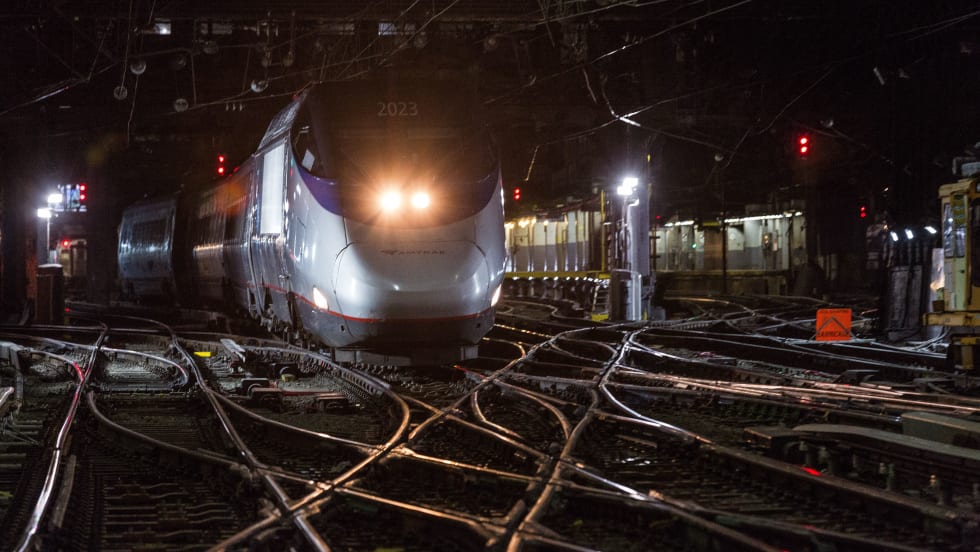
Amtrak Board Advances Plan to Restructure Organization, Seeks Public Input
The proposal, developed by Amtrak management and approved by the board for further consideration, is intended to modernize the organization's structure while improving accountability, operational efficiency, and customer service.
Read More →
Turn Transit Data Into Action
Discover how leading agencies are using connected technology to gain real-time visibility across operations, improve service reliability, and reduce disruptions.
Read More →
What Transit-Oriented Development Means for the Future of Public Transportation
Once viewed primarily as transit operators, agencies are now leveraging land, partnerships, and long-term planning to boost ridership, expand housing, and strengthen communities.
Read More →
USDOT Announces $22 Million for Transit Innovation, Updates High-Speed Rail Rules
New federal transit funding will support safety, accessibility, and technology projects as updated rail regulations establish new noise standards for high-speed trains.
Read More →