



Driverless pod vehicles debut in Welsh capital
A computer-controlled, driverless vehicle that blends science fiction and fact has begun a one-year demonstration project in Cardiff, the capital of Wales.
A computer-controlled, driverless vehicle that blends science fiction and fact has begun a one-year demonstration project in Cardiff, the capital of Wales, where it’s hoped that it will form the centerpiece of a transportation system that will help to reduce traffic congestion by providing an environmentally friendly alternative to the car. “This will have enormous benefits to the traveling public and give Cardiff something totally unique,” Cardiff Deputy Mayor Christine Priday announced during a public demonstration of the vehicle in January. “Successful cities innovate and position themselves at the forefront of developments in technology and knowledge.” City officials believe the system could help to boost the profile of Cardiff, which has been undergoing significant redevelopment in recent years. Home to Britain’s largest sports stadium, the Welsh capital has engineered a turnaround in recent years after a decline in coal production, formerly its economic mainstay. The battery-operated ULTra (Urban Light Transport) vehicle, which can carry up to four passengers, follows a series of magnets embedded in a dedicated guideway. At the January demonstration, the ULTra was shown to stop at precise locations and to ascend and descend a steep grade on a test track. Elevated guideways Under a long-term plan for commercial implementation, more than 90% of the guideway will be elevated. The track is approximately 60 inches wide with a metal grid down the center that gives passengers an emergency exit on foot if there is a malfunction of the vehicle on an elevated portion of the guideway. At-grade sections will not intersect with auto traffic. The ULTra is being tested on a half-mile guideway, both on the ground and elevated. The trials will last about a year, with examination of passenger comfort, mobility access and reliability. Cost of the one-year project is nearly $4 million, which was provided by various governmental sources in the U.K. Cardiff politicians are supporting the project in hopes that it can be developed into a three-mile loop supported by 30 vehicles and eight stations. The loop would connect the city’s central area, civic center and bay area. Target date for the commercial implementation of the ULTra is 2004. Two extensions to the loop are planned at a later date. If successful, another phase of implementation would boost the fleet to 160 vehicles. Total cost of the proposed development is estimated at $60 million. Backers claim that developing a transportation system based on the ULTra can save taxpayers from 30% to 50% of the cost of building an equivalent light rail system. Impressive credentials The futuristic transportation system is the brainchild of Martin Lowson, an aeronautical engineer who worked on the U.S. moon landing program. Lowson developed the system with a team of researchers at Bristol University. Advanced Transport Systems Ltd., a company spawned from the Bristol collaboration, is the developer. The vehicles, which will be monitored from a central control station, can travel at speeds up to 25 mph. Although the vehicles are not yet equipped with fare collection systems, it’s expected that passengers will use smart cards to pay their fare and instruct the ULTra to stop at any of the eight stations along the loop. Each station would be equipped with closed-circuit television cameras for passenger security and deterrence of vandalism.
More Rail
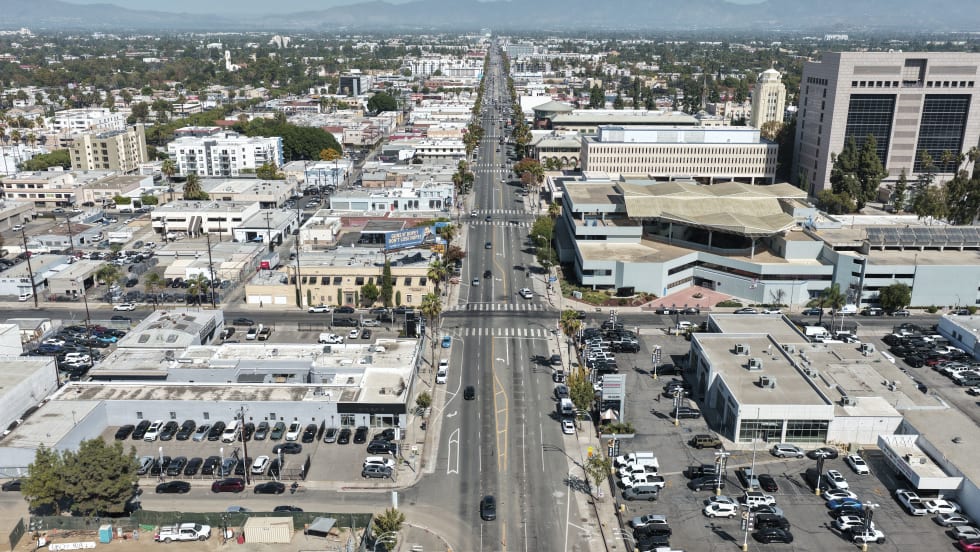
LA Metro Breaks Ground on East San Fernando Valley Light Rail Project
The 6.7-mile line will add 11 stations along Van Nuys Boulevard, expand access to jobs and regional transit connections, and support Metro’s broader efforts to improve mobility as rail ridership grows.
Read More →
CSA Group Releases Climate Resilience Standard for Transit, Passenger Rail
Developed with support from the Standards Council of Canada, CSA D700 guides assessing climate-related risks and planning adaptation measures for transit and passenger rail systems.
Read More →
LA Metro September Ridership Climbs 3.9%, Led by Rail Growth
The agency recorded more than 27.2 million boardings, with rail ridership increasing 12.4% year over year and the D Line posting the largest gains.
Read More →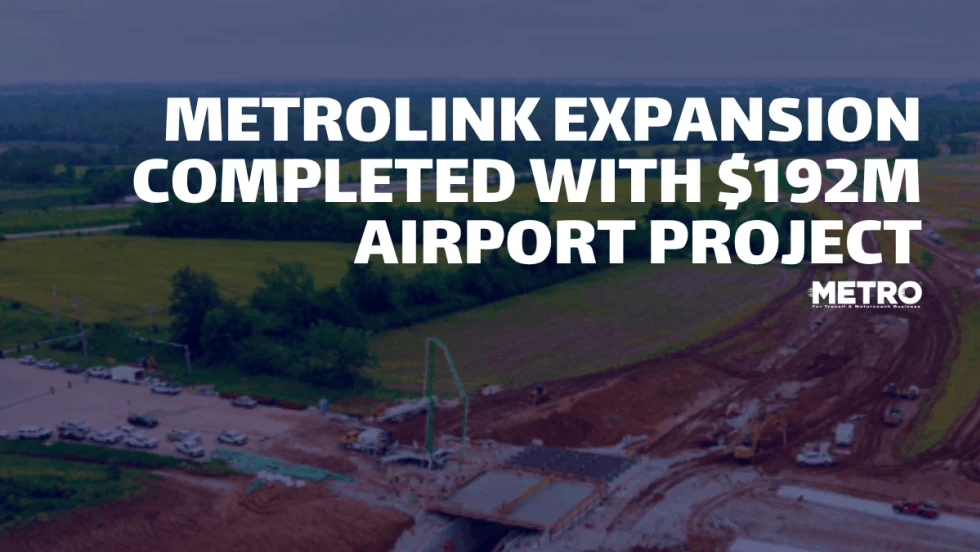
First Full MetroLink Rail Expansion Completed in 20 Years with $192M Airport Project
The project links two St. Louis-area airports by light rail while adding roadway and bike trail connections to improve regional access and mobility.
Read More →
Utilimarc Launches SmartReplace to Optimize Fleet Replacement Decisions
AI-powered SmartReplace helps fleets prioritize vehicle replacements, model budget scenarios, and build more defensible long-term strategies.
Read More →
Scenes from APTA TRANSform & EXPO 2026
Transit leaders, manufacturers, and industry professionals gathered in Chicago to explore new technologies, share ideas, and discuss the future of public transportation.
Read More →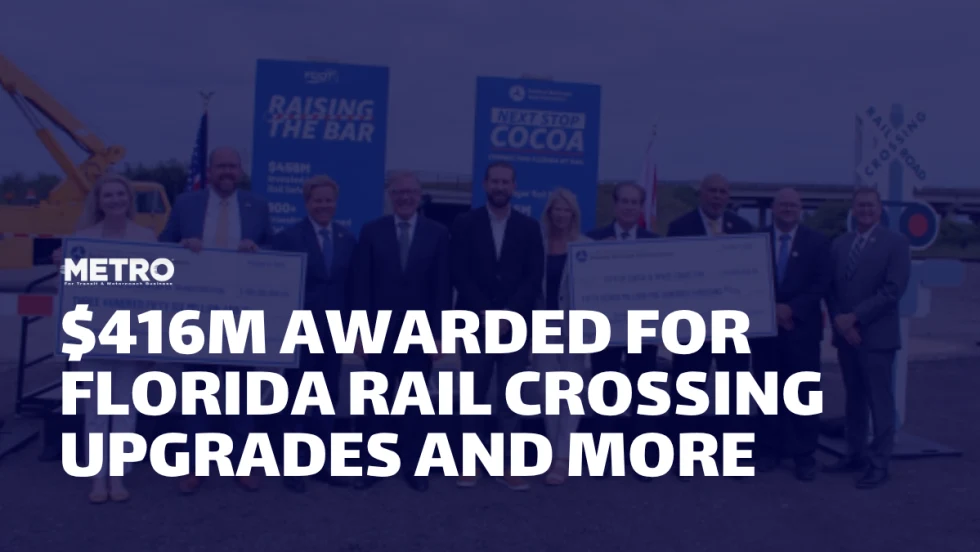
USDOT Awards $416 Million for Florida Rail Crossing Safety Upgrades, New Brightline Station
The projects aim to reduce risks for motorists and pedestrians at rail crossings while expanding passenger rail access along Florida’s Space Coast.
Read More →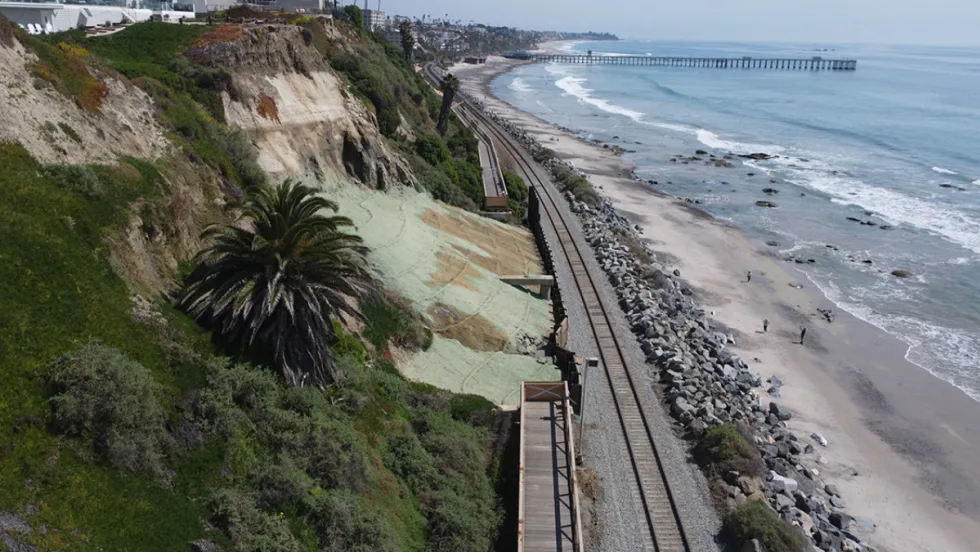
OCTA Declares Emergency to Protect Rail Corridor From Coastal Erosion
The California agency is accelerating shoreline protection and plans to place approximately 690,000 cubic yards of sand along the San Clemente coast to protect a key passenger and freight rail link.
Read More →
More Than a Summer Job: Building the Next Generation of Transit Talent
The Delaware River Port Authority and PATCO have transformed their internship program into a hands-on professional development experience that introduces students to the breadth of transportation careers — and creates a pipeline for future employees.
Read More →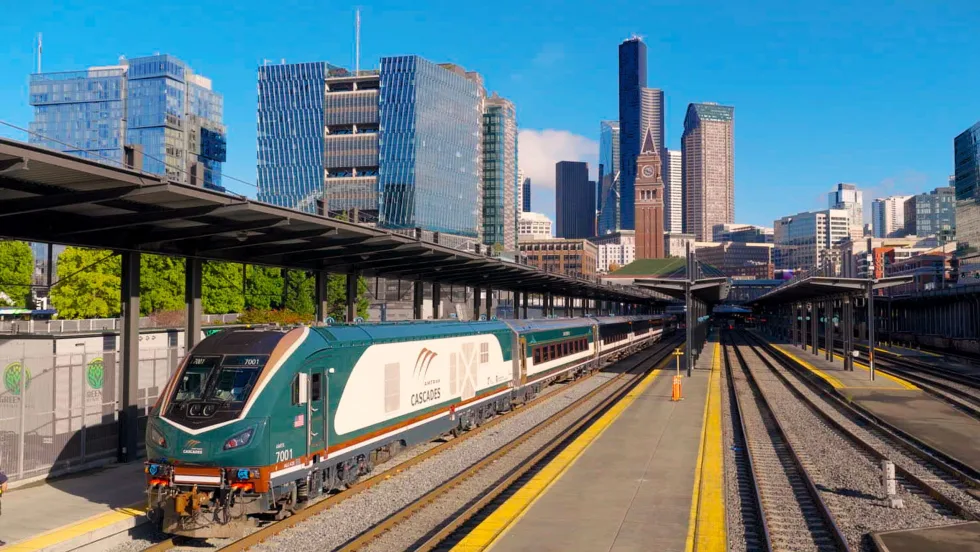
Airo Trains Make Their Amtrak Cascades Debut in the Pacific Northwest
Effective immediately, two cutting-edge Airo trainsets will join the Amtrak Cascades route, operating four daily trips between Vancouver, B.C., Seattle, Portland, and Eugene, Oregon, marking the first introduction of Airo trains into passenger service anywhere in the country.
Read More →