



Ergonomics, HOS, ADA legislation pending for tour, transit industries
The waning days of the Clinton Administration saw regulatory and legislative action that is likely to affect both the transit and motorcoach industries.

The waning days of the Clinton Administration saw regulatory and legislative action that is likely to affect both the transit and motorcoach industries. The new presidential administration put a hold on the passing of the following bills until the White House gives approval. Further developments should be expected in 2001. Dealing with old business, the Federal Motor Carrier Safety Administration’s (FMCSA) bid to update hours of service regulation ran into another snag with the intervention of the Small Business Administration (SBA). In a letter to former Transportation Secretary Rodney Slater, Jere W. Glover, the SBA’s chief counsel for advocacy, called for a reconsideration of the reforms. “Some industries are fundamentally different than the general trucking industry, yet, the proposed rule lumps them together with all of the other industries involving motor carriers,” Glover wrote. Regulatory action already taken includes the harmonization of ergonomics standards. Effective since January 16, the final rule from the Occupational Safety and Health Administration (OSHA) is intended to prevent musculoskeletal injuries caused by repetitive motion, awkward posture or vibration. Transit properties are largely excluded from that rule thanks to an exemption for states and their supporting agencies. However, the 23 states and two territories with OSHA approved ergonomics regulations must modify those standards to equal the level of protection set by the federal rule. Affected entities must complete the process by mid May. Ergonomics regulation applies to the motorcoach industry as well, primarily affecting baggage handling duties. The rule includes identification and minimization of all workplace hazards as well as changes in worker’s compensation structures. The United Motorcoach Association (UMA) took the position that ergonomics compliance is costlier than Americans with Disabilities Act (ADA) requirements. Ergonomics regulation is a greater issue for manufacturers than it is for motorcoach operators, said Peter Pantuso, president of the American Bus Association (ABA). He said that there are ergonomics situations where dealing with the problem is cheaper than paying for the injury. “Ergonomics is a lesser priority in terms of impact,” Pantuso said. The cost of ADA compliance, whether greater or less than that of OSHA requirements, is a matter of concern for transit and motorcoach properties. Don Cooper, senior transportation/ transit planner at the Bangor (Maine) Area Comprehensive Transportation System (BACTS), said that ADA is a burden on his small urban property. According to him, BACTS does not have paratransit funds sufficient to fulfill its legal obligations. “You can’t cut people off, but you shouldn’t have to carry everyone, for all purposes, at any time,” Cooper said. Both ABA’s and UMA’s legislative agendas for 2001 include federal assistance for the mandatory installation of lifts. ABA advocates tax credits or grants to help operators cope with the expense of making motorcoaches wheelchair accessible, Pantuso said. UMA is pursuing investment tax credits for new bus purchases to cover both ADA and Environmental Protection Agency (EPA) costs. Emissions standards, which have long preoccupied the transit sector, are now an inevitable interest to the motorcoach industry. Former President Bill Clinton announced a sulfur reduction program for the nation’s commercial diesel fleet. Sulfur content in diesel fuel will have to be reduced to 15 parts per million, or 3% of current levels, by 2004. Other year-end action included a revision of the Department of Transportation’s (DOT) drug and alcohol rule. The regulation applies to all members of the transportation sector with safety sensitive duties. The final rule includes provisions for greater emphasis on the qualifications of test administrators and facilities, as well as checks to protect workers and employers. Contracted testing facilities have greater freedom to share results with companies and employees have access to physician review of suspected adulterated or substituted samples. Following finalization of validity testing rules by the Department of Health and Human Services, such practices will also become mandatory. Validity testing is intended to increase uniformity among testing facilities. Safety is also the focus of a FMCSA action to shut down commercial vehicle operators who neglect to pay fines. The rule allows for a 45-day show cause proceeding during which the operator may produce documents to prove payment or Chapter 11 status. Barring a reversal of the judgement, operators would be banned from interstate commerce on the 91st day after payment was due. Operating in spite of the ban could lead to the revocation of registration. Pantuso said that he has no problem with the rule. “They should be shut down. The bigger issue is whether the fines are appropriate,” he said. The unusual circumstances prevailing in the 107th Congress may make for an interesting legislative season. Retirement or failed reelection campaigns brought new members to the attention of those in the rail, bus and motorcoach sectors. Business dealt with before the end of the last session included the approval of visa waivers for business and pleasure travelers. The measure allows citizens of certain foreign countries to enter the United States without a visa, provided their stay does not exceed 90 days. ABA sees the issue as a potential boon to the charter and tour industry. In the same vein, Pantuso said ABA would lobby to change legislation that prohibits foreign cruise ships to dock at more than one U.S. port. He cited the business opportunities available to motorcoach operators should Congress amend the law. Protecting existing motorcoach business opportunities is of paramount importance to both ABA and UMA. The organizations cited competition with transit agencies as one of their legislative priorities for the coming year. UMA said it hopes Congress will remove this area from Federal Transit Administration (FTA) control to the purview of DOT’s Inspector General. Congress will also be petitioned by the two motorcoach groups to refine size and weight restrictions. At present, 45-foot coaches are permitted on the nation’s highways, but buses with bumpers that exceed this dimension are prohibited. UMA and ABA said they will lobby for the introduction of language that exempts bumpers from length restrictions.
More Management

Bus Tech Talk: Keeping Transit Technicians Ahead of the Technology Curve
In this episode of Bus Tech Talk, Complete Coach Works’ Business Development Manager Mark Hollenbeck and METRO’s Executive Editor Alex Roman sit down with Obed Mejia, Senior Technical Trainer for Bus Maintenance, at LA Metro to discuss how rapidly evolving bus technology is changing the maintenance shop — and the skills technicians need to keep pace.
Read More →
Michael Schneider Joins Paslay Group to Expand Transportation Practice
The longtime transportation executive will help Paslay Group grow its advisory and program management work across transit, highway, and other infrastructure sectors.
Read More →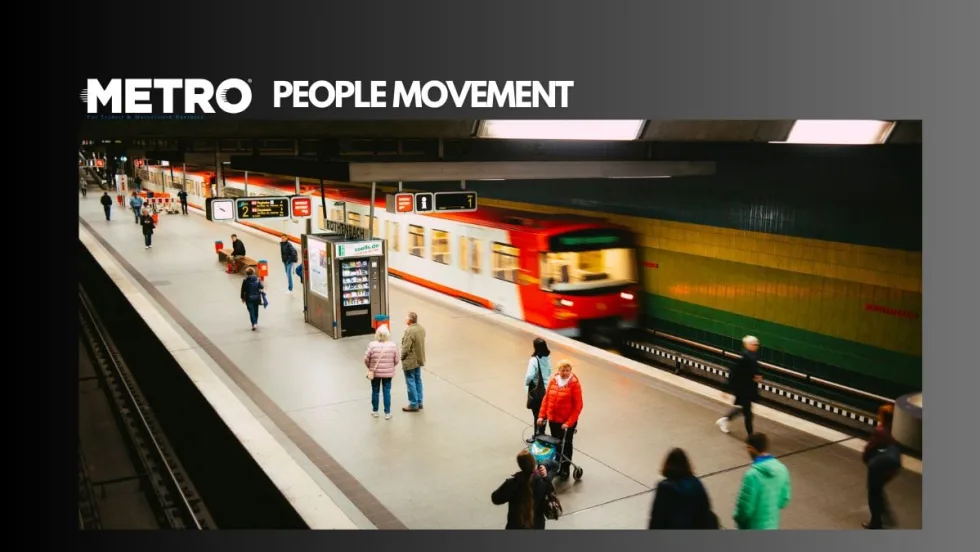
People Movement: Connectpoint Expands Leadership Team, Stadler Names New Group CEO, and More
In this edition, we also spotlight recent personnel moves at Burns, UZURV, and more, highlighting the people taking on new roles across the transportation industry.
Read More →
More Than a Summer Job: Building the Next Generation of Transit Talent
The Delaware River Port Authority and PATCO have transformed their internship program into a hands-on professional development experience that introduces students to the breadth of transportation careers — and creates a pipeline for future employees.
Read More →
LA Metro Board Awards 220 Battery-Electric Bus Contract to ENC
The contract, which is the largest base award of battery-electric buses by a U.S. transit agency, will be built in Southern California, sustaining good jobs as LA prepares to welcome the world in 2028
Read More →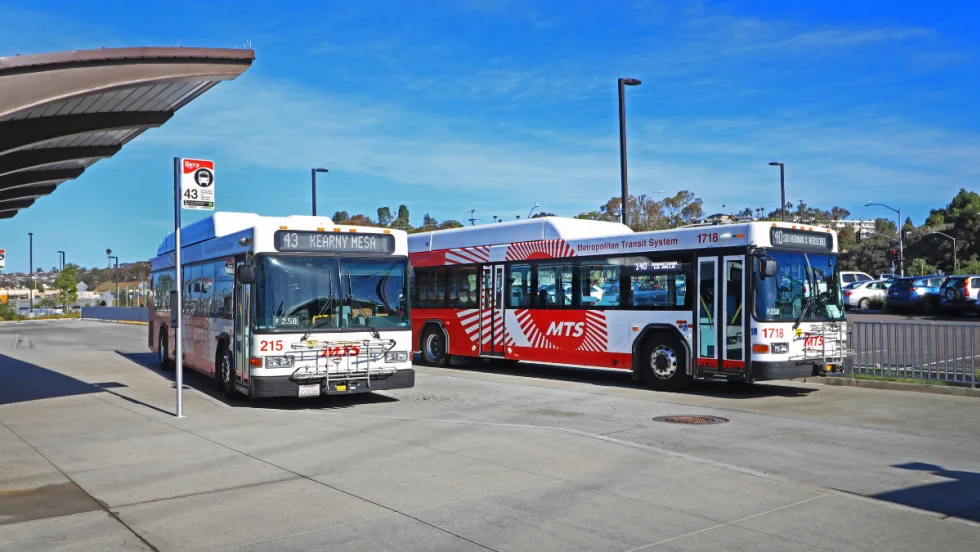
What’s Behind San Diego MTS’s Award-Winning Transit Strategy
Named one of APTA’s 2026 Outstanding Public Transportation Systems with 50 million or more annual passenger trips, California’s San Diego Metropolitan Transit System points to gains in ridership, safety, technology, and reliability as foundations of its success.
Read More →
Public Transit Conference Returning to GFX in 2027, Call for Papers Now Open
The Call for Papers is now open, allowing transit agency professionals and industry experts to help shape the PTC educational program by submitting session ideas for consideration.
Read More →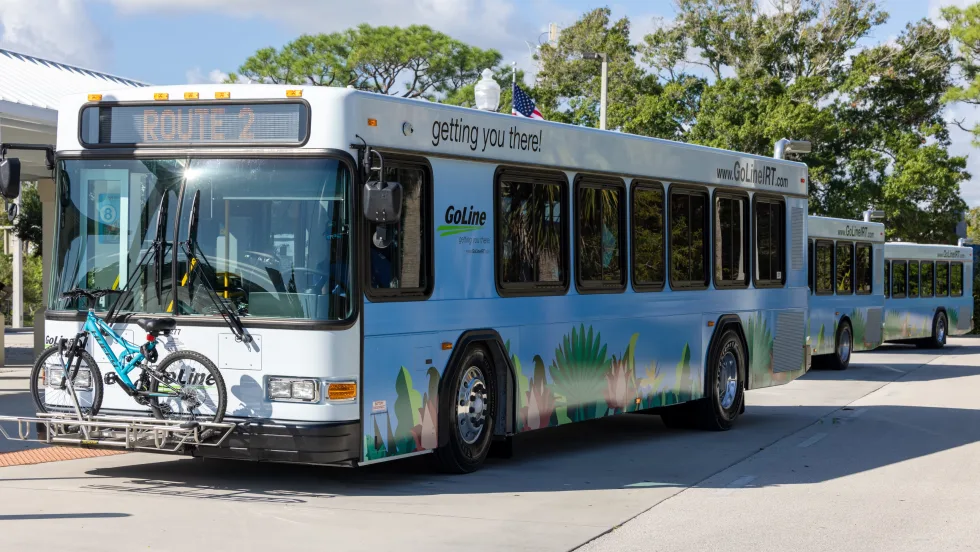
Indian River Transit’s Community-Focused Approach Earns National Recognition
Named APTA’s 2026 Outstanding Public Transportation System in its size category, Florida’s Indian River County transit system continues to grow ridership through fare-free service and a focus on evolving community needs.
Read More →
ENC Lands MATA Contract and More in Biz Briefs
In this edition of Biz Briefs, we spotlight the latest developments shaping the future of mobility.
Read More →From Surviving to Thriving: Building Stronger Transportation Organizations
Bus Business Consultants founder Brian Dickson shares lessons on leadership, organizational health, and creating options for long-term success in a changing transportation industry.
Read More →