



Miss This? RTD Begins Transition to Account-Based Fare, Ticketing System
Fare Capping Is Ushering in the Future of Commuting
When a transit agency offers fare capping and allows customers to pay as they go with their own contactless card or smart device — also called open loop payments — the benefits can multiply.
by Julie Scharff
August 15, 2022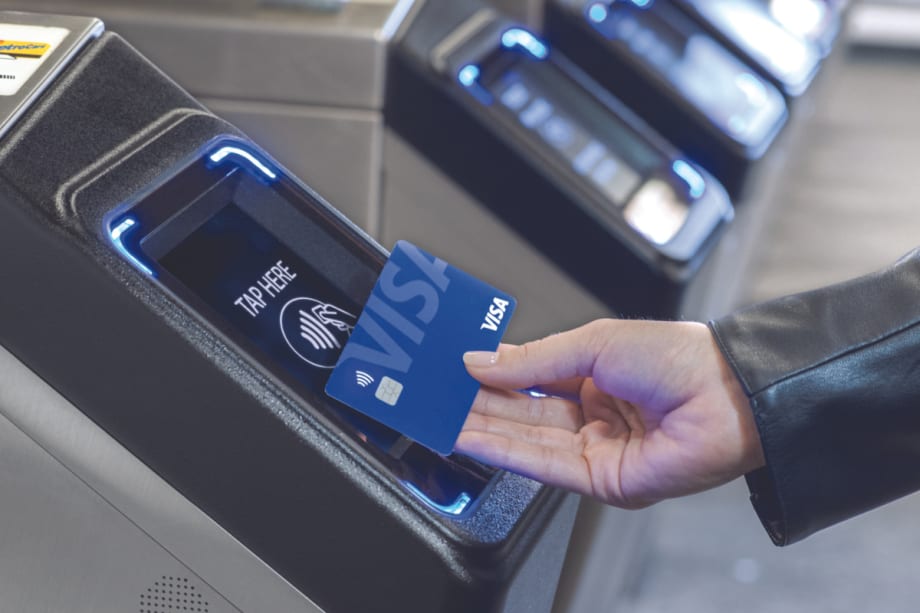
Riders don’t need to tie up funds on a transit card in anticipation of their commutes and they don’t need to consider how often they will be riding to get the most value from a pass.
Photo: Visa
6 min to read
Public transit is quickly becoming a preferred method for many riders across the globe. Visa’s second Future of Urban Mobility Survey found that more than 40% of respondents intend to increase their use of public transit over the next year.
One important feature of public transit is fare capping — a component of a transit agency’s fare policy that allows commuters free rides once they pay a set number of fares over a given amount of time — for example, New York’s Metropolitan Transportation Authority (MTA) stops charging riders once they hit 12 fares in any given week.
When a transit agency offers fare capping and allows customers to pay as they go with their own contactless card or smart device —also called open loop payments — the benefits can multiply. Riders don’t need to tie up funds on a transit card in anticipation of their commutes nor consider how often they will be riding to get the most value from a pass. Instead, they can use their existing contactless credit, debit or prepaid card, or payment-enabled device to pay for rides directly and be guaranteed the best price for those rides.
The frictionless payment method is not only gaining favor among transit operators, but Visa’s new research has shown fare capping would encourage more than three in five (61%) of surveyed public transit riders to get on board. And, another 30% of surveyed transit riders said that capped fare payments would be the most enticing feature to riding public transit.
Here are a few reasons:
It’s better suited for increasingly mixed workforce needs. Transit operators serve the needs of various types of commuters: Those who have shifted to hybrid working and have irregular commute schedules, those who are transitioning back to consistent commutes, and essential workers whose commutes never drastically changed.
Fare capping offers every customer the most flexibility and value. If a rider needs to commute daily one week, fare capping means they won’t spend more than they would have with a weekly pass. Conversely, there’s no missed value on lighter travel weeks.
It brings a more equitable riding experience. Fare capping in an open loop payment system can help get all riders to their destinations without undue financial stress and relieves customers from having to commit a substantial sum upfront for a transit-specific pass. When customers use an open loop payment option, it means their funds are available for other daily essentials in addition to transit.
We have already seen success stories as agencies nationwide offer contactless payments options with fare capping. As of 2021, agencies that have launched fare capping include Monterey-Salinas Transit, Portland’s TriMet, Miami-Dade Transit, Sacramento Regional Transit District, Dallas Area Rapid Transit and New York's MTA, whose popular weekly fare capping pilot saved commuters more than $1 million dollars in its first month.
Fare capping reduces complexity and helps keep transit on track. While rush hour may not look the same as it did in 2019, transit operators still need to minimize friction in their ticketing and payment systems. Beyond the passenger experience factor, agencies need to ensure they’re keeping buses and trains moving efficiently and on time. Research found that 43% of surveyed transit riders said faster rides were a top motivator in choosing to ride public transit — a desire that fare capping can offer.
Capping fares on open loop results in riders and transit operators no longer needing to worry about the what — what are they using to pay their fare? What balance do they have on their closed loop card? — nor the how —how often this week will they be riding? Further, transit operators can increase efficiencies of their overall sales and ticketing channels, including reduced cash handling, since riders can pay for fares with their own existing card or device.
A more flexible future for transit
As the demand for flexibility permeates every aspect of daily life, transit operators need to keep up. Open loop payments with fare capping fits right into the wave of flexible contactless technologies already emerging across public transportation. Making open loop with fare capping a key part of transit payment systems isn’t just a matter of efficiency, convenience, or savings, it’s also about supporting the passengers who need it the most. Fare capping gives the customer the power to choose how and when to pay for and access rides.
Julie Scharff, VP, U.S. Card Present & Strategic Initiatives, Visa
(This article is updated from an earlier blog on METRO)
Product Roundup
Cubic
Cubic is celebrating the one-year anniversary of Umo — the SaaS platform that simplifies transportation management from the smallest bus operator to the largest regional transport authority delivering a reliable public transit experience for all. Umo allows riders to choose their preferred payment method, including paper tokens, contactless cards, a mobile app, and more. Student or employee ID cards can also serve as travel passes, improving accessibility for all riders.
FAIRTIQ
FAIRTIQ is a ticketing application that charges the right fare without the need to load funds or decide what ticket to buy in advance. Riders just check in when boarding and can let FAIRTIQ detect the end of the trip. FAIRTIQ supports a variety of fares, like capping, and helps increase ridership and revenue with targeted messages and promotions. FAIRTIQ provides origin-destination data for each trip and requires neither validators nor beacons.
Genfare
Genfare Link®, Genfare’s cloud-hosted fare processing system, enables agencies to manage their fare structure, monitor fare devices, provide customer service, and generate reports. Genfare Link provides end-to-end tracking of all fare media, with time-stamped details of each transaction. Genfare Link allows agencies to look at data holistically to see how riders are using the system, enabling them to make smarter decisions to improve operations and rider satisfaction.
INIT USA
Contactless payments are becoming more common in public transit. The advantages are clear: increased safety of drivers and passengers, faster boarding times, and reduced cash handling costs. INIT has developed an external payment terminal, PROXusb for contactless payments. The compact device enables the entire range of contactless payment options — NFC smartcards, EMV compatible credit/debit cards, or NFC compatible smartphones via Apple Pay® or Google Pay™.
Littlepay
Littlepay is a payments infrastructure provider focused on the transit and mobility industries. Its API-based platform is integrated with a range of payment readers and acquiring banks, giving transit agencies a simple and cost-effective transition to contactless open loop ticketing. With a network of “Littlepay ready” providers, it’s fast and convenient for transit agencies to plug and play a solution. Littlepay manages the complexities and security demands of transit payments, including PCI-Level 1 compliance.
Masabi
Masabi’s Justride fare payments platform, used by over 150 transit agencies of all sizes, delivers mobile ticketing services, fare payments in popular Mobility-as-a-Service apps, Open Payments, and Account-Based Ticketing (ABT). With ABT, Justride enables transit agencies to improve convenience and fare equity, ensuring riders never have to pay more than the price of a daily or monthly pass, thanks to fare capping. Justride is inclusive of all passengers and forms of payment, including cash.
ZED Digital
ZIGPay™ is a mobile ticketing and touchless fare collection system that uses sensors driven by a mobile app for onboard fare validation. The over-the-air solution enables hands-free all-door boarding by collecting fares instantly as users board, without riders having to remove their smartphone from their bags, scan a QR code, or tap a card. The company recently built upon ZigPay by launching the ZIG MaaS app, which provides multimodal trip planning by combining public transit, rideshare, bikeshare, scooters, driving directions, live traffic, toll, and intercity trip planning all in one single interface.
Subscribe to Our Newsletter
More New Mobility

From Hardware to Digital Partner: Luminator Charts Its Next Chapter
CEO Magnus Friberg discusses Luminator’s shift toward becoming a digital partner, the growing importance of software and interoperability, and how AI can help agencies improve operations and passenger experience.
Read More →
Biz Briefs: Alstom Lands Canadian Contract, LYT to Supply California TSP, and More
In METRO's latest installment, we take a look at recent news from Complete Coach Works, Beep, FlixBus, and more partnerships making headlines across the transportation sector.
Read More →
CharterUP’s Armir Harris on Technology, AI, and the Future of Group Mobility
In a recent episode of METROspectives, CharterUP Founder/CEO Armir Harris discussed the company’s evolution from an online charter bus marketplace into a technology platform supporting public- and private-sector mobility and much more.
Read More →
Jacksonville’s NAVI Project Charts a New Course for Autonomous Public Transportation
Through its NAVI program, JTA is showing how autonomous vehicles, intelligent infrastructure, and coordinated operations can work together to deliver everyday public transportation.
Read More →
Biz Briefs: Luminator Marks Milestone and More
From manufacturers and suppliers to transit agencies and motorcoach operators, these updates offer a snapshot of the projects, partnerships and business moves driving the industry forward.
Read More →
New Tricks for Old Bureaucracies: Joshua Schank on Making Transit Innovation Stick
Former LA Metro Chief Innovation Officer Joshua Schank discusses why good ideas aren't enough, how transit agencies can overcome resistance to change, and why today's challenges demand more innovation.
Read More →
How DART's GoPass Is Redefining Regional Mobility
Serving 14 transit agencies, GoPass simplifies multimodal travel by allowing riders to plan, pay for, and manage an entire trip through one app.
Read More →
Biz Briefs: OCTA Taps Clean Energy for Hydrogen Station, Stadler to Supply Via Rail Vehicles, and More
From manufacturers and suppliers to transit agencies and motorcoach operators, these updates offer a snapshot of the projects, partnerships and business moves driving the industry forward.
Read More →CharterUP Expands Into New Mobility and Autonomous Transportation
Vice President of New Mobility Stephen Joos discusses how CharterUP is leveraging its nationwide transportation network, technology platform, and autonomous vehicle partnerships to expand into workforce mobility, campus shuttles, and transit solutions.
Read More →
METRO Magazine Announces 2026 Innovative Solutions Awards Winners
Projects Recognized for Advancing Mobility Through Technology, Accessibility, Workforce Innovation, and Operational Excellence
Read More →