



Fort Worth 'FLIRTs' with New Train Tech for Airport Link
The FLIRT 3 (Fast Light Innovative Regional Train) vehicles, built by Stadler Bussnang AG of Switzerland, are the first of this model type to operate in the U.S.

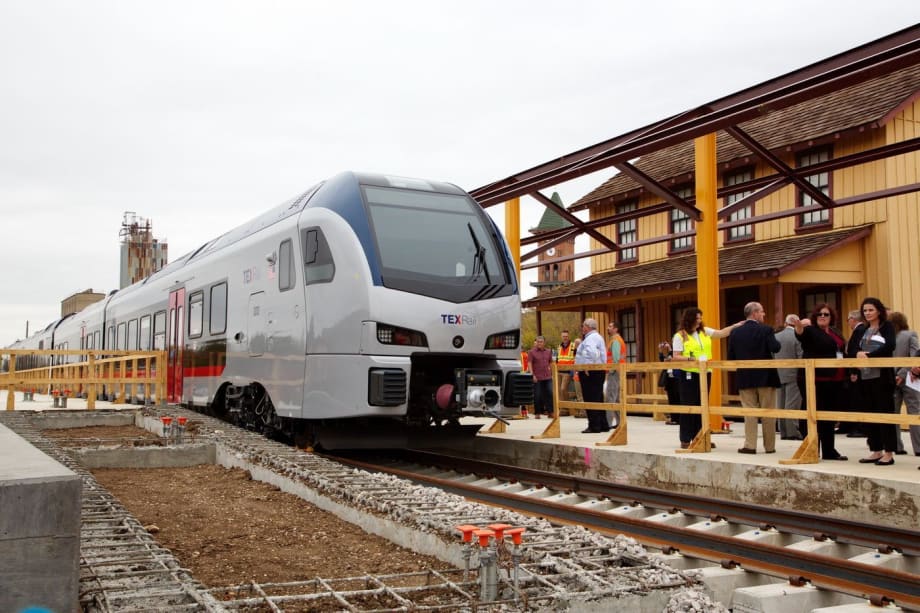
Once completed, Fort Worth Transportation Authority’s $1 billion TEXRail service will transport passengers to DFW Airport.
All photos courtesy FWTA
Once completed, Fort Worth Transportation Authority’s $1 billion TEXRail service will transport passengers to DFW Airport.
All photos courtesy FWTA
The Fort Worth Transportation Authority’s (FWTA) new 27-mile commuter rail line TEXRail will extend from downtown Fort Worth, across northeast Tarrant County, through North Richland Hills and Grapevine, and into Dallas Fort Worth International Airport’s Terminal B. This line, which will begin service in late 2018, is projected to serve more than 9,000 daily riders at nine stations by the end of the first year of operation. By 2035, nearly 14,000 daily riders are projected to ride the system.
The FLIRT 3 (Fast Light Innovative Regional Train) vehicles, built by Stadler Bussnang AG of Switzerland, are the first of this model type to operate in the U.S.
The diesel multiple unit (DMU) trains are configured with an operator cab at either end for bidirectional movement. At the center of the train is a power pack with two diesel engines. This style of train is much quieter than traditional commuter rail, according to Stadler officials. TEXRail vehicle amenities include work tables, lap trays, a quiet car, level boarding, and overhead storage for bags.
FWTA President/CEO Paul Ballard and Sr. VP Bob Baulsir spoke to us about the TEXRail project, the agency’s Master Plan for service improvements, and how it will change the region.
What are some highlights of The T Master Plan with regard to rail service improvements/projects?
Paul Ballard: Improving and enhancing rail service to help more people reach more places. In 2016, the Trinity Railway Express schedule was updated to provide great frequency and extended weekend hours. (FWTA and DART jointly own and operate the Trinity Railway Express.) Changes in the north quadrant of our service in 2017 were designed to tie in with future rail service. Routes are designed for connectivity to future TEXRail stations. TEXRail will provide an excellent opportunity to connect the workforce with better job opportunities along the line.
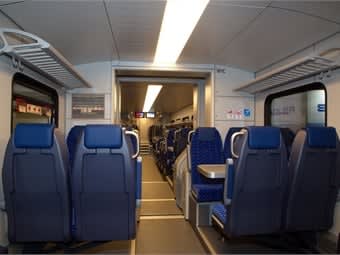
TEXRail vehicle amenities include work tables, lap trays, a quiet car, level boarding, and overhead storage for bags.
How will this plan be funded and what is currently being implemented?
PB: The Transit Master Plan is fully funded through the FFGA and local funds. Work continues across the 27-mile corridor with more than 1,000 workers in the field. Construction includes laying rail, installing new bridges and building new rail stations.
What is the status of the TexRail project?
PB: TEXRail is progressing extremely well. Construction all along the Cotton Belt corridor is on target for us to begin revenue service on schedule. We are planning a special service run on New Year’s Eve, with regular service beginning January 1, 2019.
Our equipment maintenance facility is nearly completed, and we will begin testing our trains in March. We have two trains in Texas, and the remaining six will be delivered in the coming months.
Discuss the initial development of the TexRail project.
PB: Much of the preliminary work occurred before I arrived in 2014, but we have hit significant milestones in the last few years. In 2015, five railroads signed an agreement for TEXRail operations on the Cotton Belt corridor. Late in 2016, we received one of the last Full Funding Grant Agreements (FFGA) from the Federal Transit Administration. The $499.39 million in federal funds completed the local and federal funding for our $1.034 billion commuter rail project. In December 2017, we signed a contract for Positive Train Control, which will enhance safety and improve communications among all trains on the corridor.
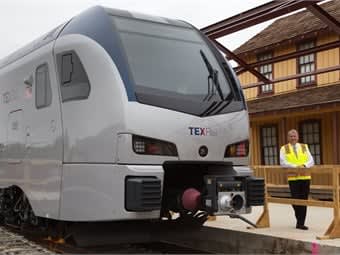
TEXRail will provide an excellent opportunity to connect the workforce with better job opportunities along the line, according to FWTA President/CEO Paul Ballard (pictured).
What key design/construction considerations were required for the railcars?
Bob Baulsir: We have nine stations along the route, and two of those are existing stations in Fort Worth. We currently utilize those stations for Trinity Railway Express service. Because of the unique design of the TEXRail’s Stadler FLIRT, we have been modifying those platforms for level boarding to provide easy access for riders with bikes, strollers or wheelchairs.
One of the most complicated components of the project is at what we call the “hole in the wall.” We have three levels of transportation options — a highway on top, freight trains on the middle layer and TEXRail and the Trinity Railway Express on the ground level. Part of the construction involves implementing a double shoo-fly to redirect train traffic while we work to prepare for TEXRail.
What are some key railcar features?
BB: One of the best features of our diesel multiple unit trains is that we will have a quiet car to give travelers the chance to relax, read or catch up on a project. The Swiss design is unlike the trains people are used to seeing on the tracks. TEXRail’s sleek and innovative design provides a roomy and comfortable ride. Most seats have a pull-down tray and other seats are arranged around a work table. Each seat is equipped with a USB port for charging electronic devices. We also have a roomy ADA-compliant restroom near the center of each train.
How will TexRail alleviate congestion and help bolster growth in the region?
BB: We anticipate having 8,000 passengers a day by the end of the first year of service, and our trains will run seven days a week. We won’t be able to alleviate all traffic congestion, but that level of ridership will certainly take a significant number of cars off the road. Riders will benefit by having a streamlined route to the airport and not having to be concerned about getting caught in rush hour traffic.
We are seeing significant growth in terms of transit-oriented development. Having TEXRail in place will also provide growth in terms of passenger mobility to get to better job opportunities.
Tourism will also benefit from our commuter rail line. For travelers with layovers, Grapevine is an easy eight-minute ride away. Visitors can choose from an array of shops and restaurants and get back in plenty of time to make their connections. Fort Worth will be a short train ride away for convention-goers and for travelers who want to visit the area without worrying about driving.
How will the introduction of the TexRail service improve transportation between Fort Worth and DFW Airport?
BB: Currently, riders can ride the Trinity Railway Express part of the way and then take two bus shuttles to get to the airport. TEXRail will streamline the process and deliver travelers to the airport in 52 minutes. The new commuter rail line is essential not only for people trying to catch a flight, but also for employees at the airport call centers and warehouse as well as at the airport itself.
More Rail

Scenes from APTA TRANSform & EXPO 2026
Transit leaders, manufacturers, and industry professionals gathered in Chicago to explore new technologies, share ideas, and discuss the future of public transportation.
Read More →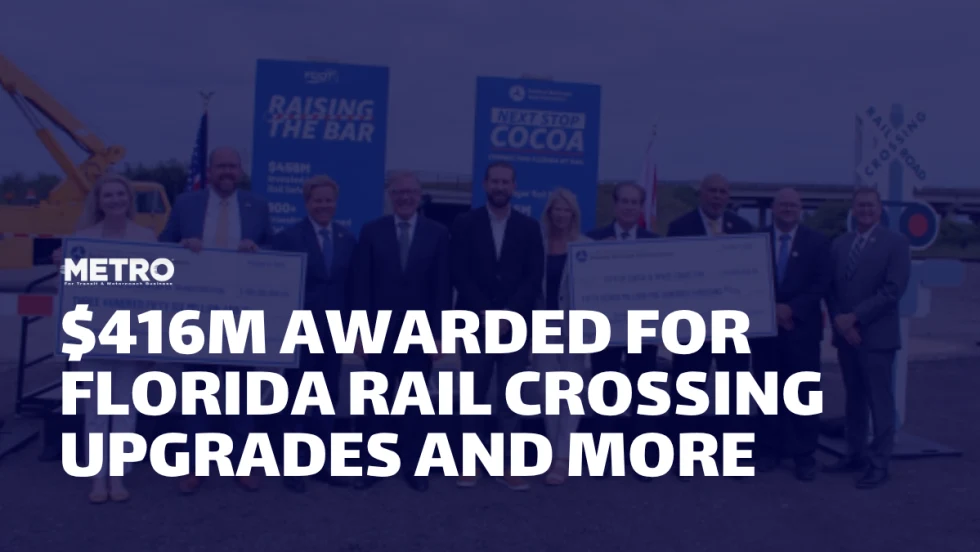
USDOT Awards $416 Million for Florida Rail Crossing Safety Upgrades, New Brightline Station
The projects aim to reduce risks for motorists and pedestrians at rail crossings while expanding passenger rail access along Florida’s Space Coast.
Read More →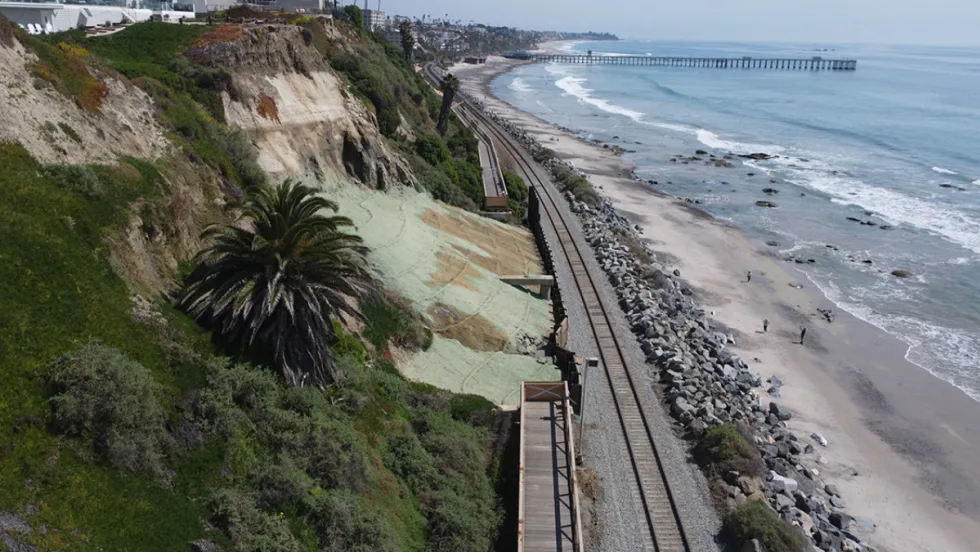
OCTA Declares Emergency to Protect Rail Corridor From Coastal Erosion
The California agency is accelerating shoreline protection and plans to place approximately 690,000 cubic yards of sand along the San Clemente coast to protect a key passenger and freight rail link.
Read More →
More Than a Summer Job: Building the Next Generation of Transit Talent
The Delaware River Port Authority and PATCO have transformed their internship program into a hands-on professional development experience that introduces students to the breadth of transportation careers — and creates a pipeline for future employees.
Read More →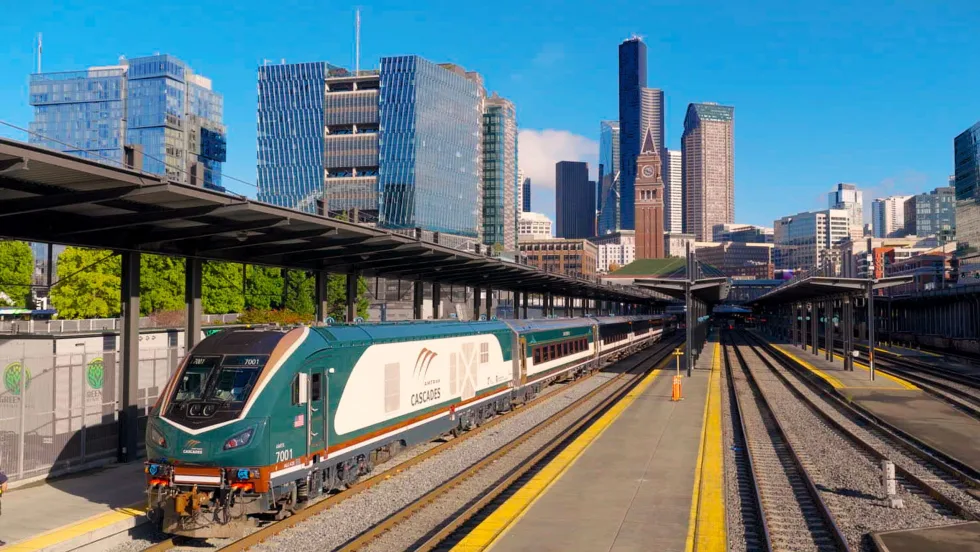
Airo Trains Make Their Amtrak Cascades Debut in the Pacific Northwest
Effective immediately, two cutting-edge Airo trainsets will join the Amtrak Cascades route, operating four daily trips between Vancouver, B.C., Seattle, Portland, and Eugene, Oregon, marking the first introduction of Airo trains into passenger service anywhere in the country.
Read More →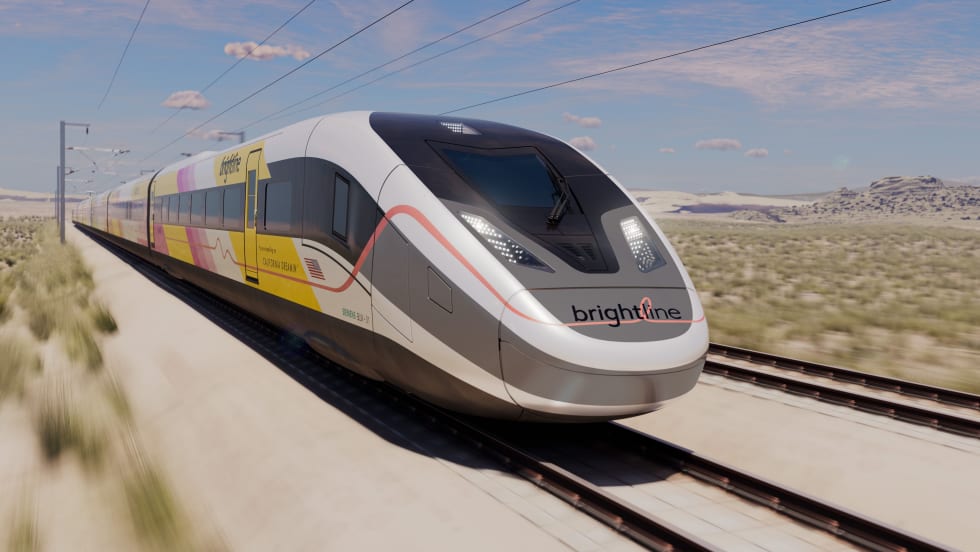
Florida's Brightline Announces Financial Restructuring
Brightline Florida says train operations will continue as normal as certain parent entities enter Chapter 11 and financial stakeholders provide $490 million in new long-term capital.
Read More →
ENC Lands MATA Contract and More in Biz Briefs
In this edition of Biz Briefs, we spotlight the latest developments shaping the future of mobility.
Read More →
Strada360’s Steve Lassey on Turning Transit Data Into Better Decisions
From breaking down data silos to preparing for AI, Strada360 CEO Steve Lassey discusses how transit agencies can use technology to improve operations, customer information, and long-term decision-making.
Read More →
SEPTA Details Accelerate Vision for Transit System
The plan outlines investments in trolley modernization, new Metro and Regional Rail vehicles, accessible stations, and more frequent bus and rail service.
Read More →
FTA Ends Direct Oversight of MBTA Safety Actions
The federal agency closed its remaining special directive to the Massachusetts Department of Public Utilities following a safety review that began in 2022.
Read More →