




Looking Back: Southern California's OCTA Authorizes Emergency Rail Stabilization Work
OCTA Declares Emergency to Protect Rail Corridor From Coastal Erosion
The California agency is accelerating shoreline protection and plans to place approximately 690,000 cubic yards of sand along the San Clemente coast to protect a key passenger and freight rail link.
October 1, 2026
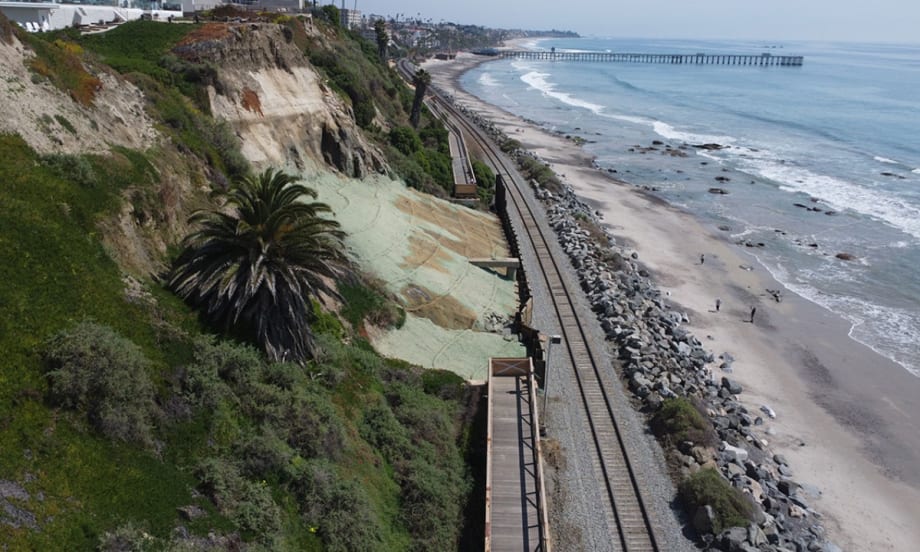
OCTA is advancing emergency shoreline protection measures along the coastal rail line in San Clemente, where erosion has repeatedly threatened passenger rail operations.
Credit:
Orange County Transportation Authority
3 min to read
- OCTA has declared an emergency to address coastal erosion threatening a crucial rail corridor in California.
- Plans are underway to expedite shoreline protection measures along the San Clemente coast.
- Approximately 690,000 cubic yards of sand will be placed to safeguard the passenger and freight rail link.
*Summarized by AI
The Orange County Transportation Authority (OCTA) Board of Directors declared an emergency along the coastal rail line in San Clemente, California, authorizing the agency to accelerate work intended to protect the railroad from erosion and potentially severe fall and winter conditions.
The action allows OCTA CEO Darrell E. Johnson to move “quickly” to secure specialized contractors, materials, marine dredging equipment, and sand sources as they become available.
The railroad is part of the 351-mile Los Angeles-San Diego-San Luis Obispo (LOSSAN) Rail Corridor. It carries Metrolink and Amtrak Pacific Surfliner passenger trains, along with freight and military traffic.
Recent Waves Prompt Emergency Action
OCTA's action follows powerful waves and high tides in early September that overtopped the tracks and caused additional erosion and deterioration of the coastal slope near the railroad. According to a release, passenger rail service was temporarily suspended while crews performed emergency stabilization work.
The agency now plans to construct an engineered shoreline protection structure and repair existing riprap along approximately three-quarters of a mile south of San Clemente State Beach, where portions of the railroad embankment have limited or no existing protection.
OCTA also plans to place approximately 690,000 cubic yards of sand along the coast. About 240,000 cubic yards is planned between North Beach and Mariposa Point, with another 450,000 cubic yards planned south of San Clemente State Beach.
The emergency declaration follows California Governor Gavin Newsom's September 21 state of emergency proclamation in preparation for developing 2026-27 El Niño conditions. The proclamation recognized potential threats to the state's coastline and critical infrastructure and directed state agencies to accelerate preparations for flooding and coastal erosion.
“For the past five years, OCTA has taken all possible steps to speed up work to protect this critical link in Southern California’s transportation system, and it’s important to acknowledge our Board’s leadership in this effort,” Johnson said.
Limited Equipment Adds Urgency
The emergency authority allows OCTA to accelerate contracting and procurement but does not eliminate environmental review or permitting requirements. The agency said it will continue working with the California Coastal Commission, U.S. Army Corps of Engineers, and other regulatory agencies to obtain the necessary approvals.
OCTA has identified Surfside-Sunset as a viable source of beach-compatible sand, but getting hundreds of thousands of cubic yards of material to the affected coastline presents another challenge.
Because the railroad is squeezed between the bluff and ocean with limited land access, large-scale sand placement requires specialized marine dredging equipment that can transport sand to the site and pump it ashore.
OCTA said the number of large, U.S.-qualified hopper dredges capable of performing the work is limited, with many committed to projects months in advance. The agency is therefore advancing design, permitting, and contracting simultaneously to secure equipment when a work window becomes available.
Protecting the physical railroad ensures reliable service. Since 2021, rail service through San Clemente has been interrupted multiple times by bluff failures, beach loss, erosion of the railroad embankment, and deteriorating shoreline protection. Those disruptions have affected a corridor used by both Metrolink commuter rail and Amtrak intercity passenger service.
More Than $300 Million Secured for Rail Stabilization
OCTA has secured more than $300 million in state and federal funding for coastal rail stabilization, including:
- $125 million through California's Transit and Intercity Rail Capital Program
- $80 million through the Trade Corridor Enhancement Program
- $100 million through the Federal Railroad Administration's Consolidated Rail Infrastructure and Safety Improvements Program
The latest emergency projects support efforts to maintain the existing coastal alignment while transportation officials consider its longer-term future.
OCTA has also completed its Coastal Rail Resiliency Study, which evaluates strategies to protect about seven miles of the coastal rail corridor through Dana Point and San Clemente for up to the next 30 years. A separate state-led effort is expected to examine longer-term solutions beyond that period.
OCTA staff will provide the Board with regular updates as contracting, permitting, and construction advance.
More Rail

More Than a Summer Job: Building the Next Generation of Transit Talent
The Delaware River Port Authority and PATCO have transformed their internship program into a hands-on professional development experience that introduces students to the breadth of transportation careers — and creates a pipeline for future employees.
Read More →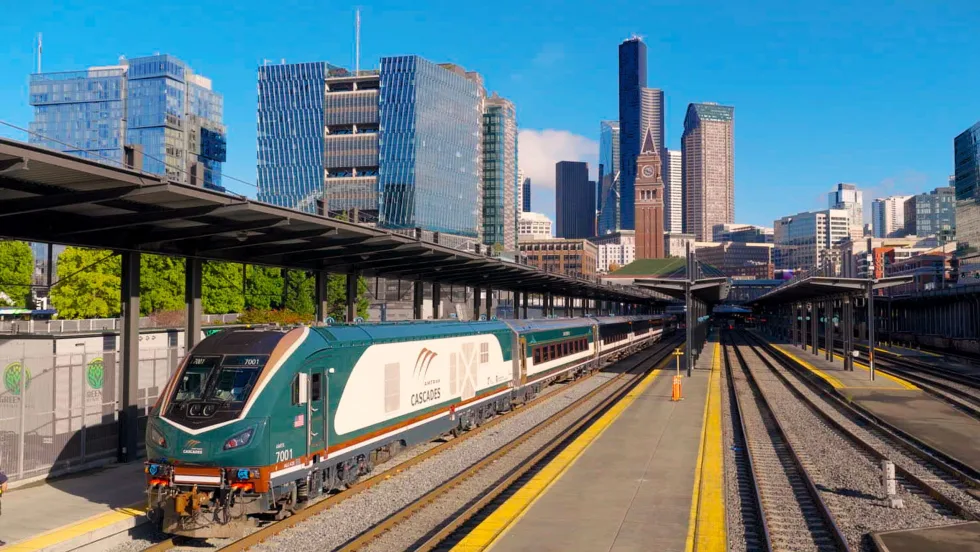
Airo Trains Make Their Amtrak Cascades Debut in the Pacific Northwest
Effective immediately, two cutting-edge Airo trainsets will join the Amtrak Cascades route, operating four daily trips between Vancouver, B.C., Seattle, Portland, and Eugene, Oregon, marking the first introduction of Airo trains into passenger service anywhere in the country.
Read More →
Florida's Brightline Announces Financial Restructuring
Brightline Florida says train operations will continue as normal as certain parent entities enter Chapter 11 and financial stakeholders provide $490 million in new long-term capital.
Read More →
ENC Lands MATA Contract and More in Biz Briefs
In this edition of Biz Briefs, we spotlight the latest developments shaping the future of mobility.
Read More →
Strada360’s Steve Lassey on Turning Transit Data Into Better Decisions
From breaking down data silos to preparing for AI, Strada360 CEO Steve Lassey discusses how transit agencies can use technology to improve operations, customer information, and long-term decision-making.
Read More →
SEPTA Details Accelerate Vision for Transit System
The plan outlines investments in trolley modernization, new Metro and Regional Rail vehicles, accessible stations, and more frequent bus and rail service.
Read More →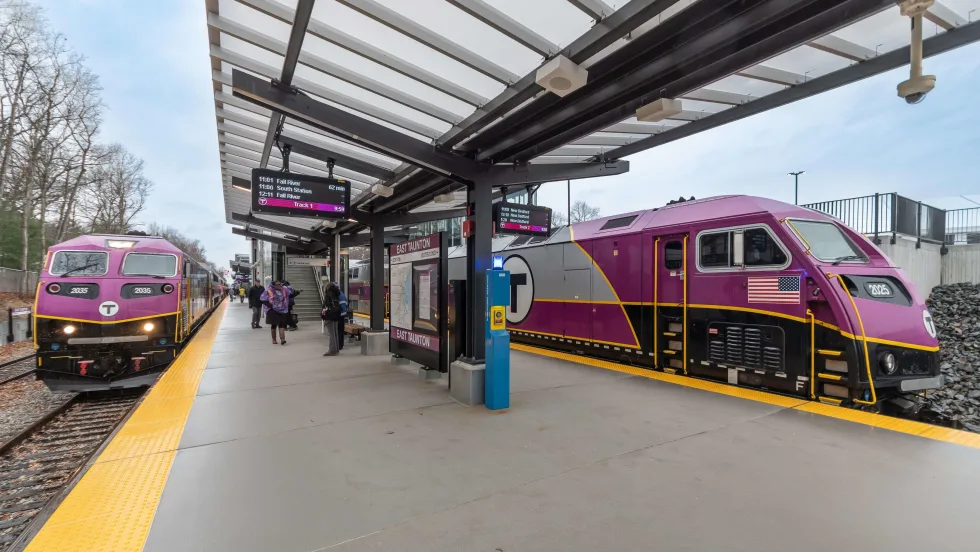
FTA Ends Direct Oversight of MBTA Safety Actions
The federal agency closed its remaining special directive to the Massachusetts Department of Public Utilities following a safety review that began in 2022.
Read More →
Amtrak, CN Reach Agreements to Strengthen Passenger Rail Service, Safety
The agreement resolves a more than decade-long proceeding before the Surface Transportation Board concerning the terms and conditions for Amtrak services, such as the City of New Orleans, Illini/Saluki, and Wolverine.
Read More →
New York MTA Advances Final Contract for Second Avenue Subway Expansion
Contract Four is the largest in the Second Avenue Subway Phase 2 project and includes construction of station infrastructure, tracks, and signals for the subway expansion, MTA officials said. Work on Contract Four will begin in 2027.
Read More →
San Diego MTS Breaks Monthly Trolley Ridership Record
Agency officials said July’s ridership indicates MTS’s continued recovery from the pandemic.
Read More →