FTA Takes Steps to Address Nationwide Transit Worker Assaults
The Administration is encouraging members of the public, transit agencies, and other interested parties to submit comments on the proposed General Directive, which will be open for 60 days until February 20.
According to the National Transit Database, from 2008 to 2021, there was an average of 241 reportable assault events on transit workers.
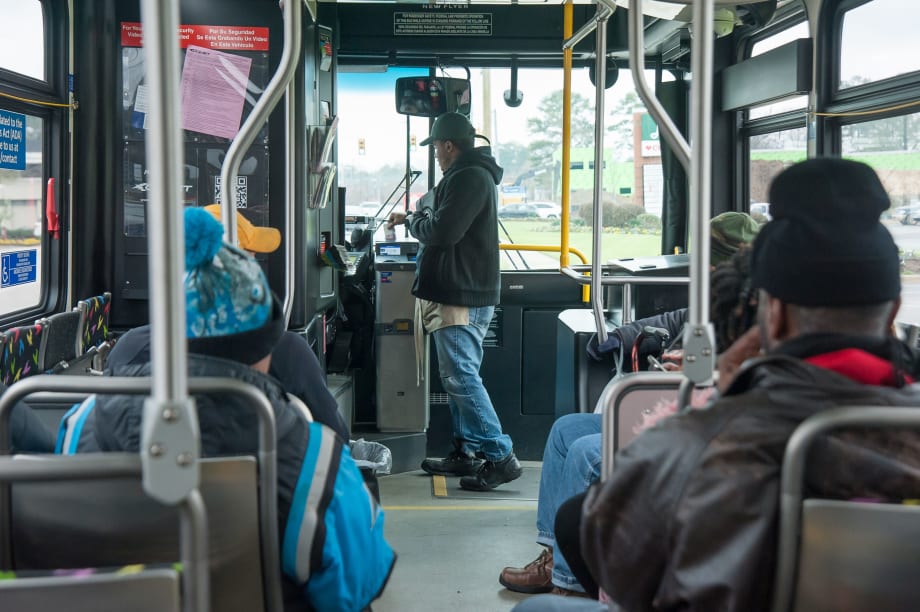
Photo: The COMET/Michael Dantzler
4 min to read
With assaults on transit workers at an unacceptable level, the Biden-Harris Administration is calling on transit agencies around the nation to take further actions to protect bus operators and other frontline workers.
To do so, the Federal Transit Administration (FTA) published a proposed General Directive on required actions regarding assaults on transit workers in the Federal Register, which will allow it to better assess and address the risk frontline transit workers face.
Ad Loading...
FTA encourages members of the public, transit agencies, and other interested parties to submit comments on the proposed General Directive, which will be open for 60 days until February 20.
“Everyone deserves a safe workplace, including and especially the frontline transit workers who keep our nation moving” said U.S. Transportation Secretary Pete Buttigieg. “Assaults on transit workers are unacceptable, and I look forward to working with leaders across the transit industry on ways to further enhance the safety of these essential workers.”
Assaults on Transit Workers Soaring
According to the National Transit Database, from 2008 to 2021, there was an average of 241 reportable assault events on transit workers. These include 192 assaults per year occurring in or on transit vehicles, 44 per year in transit facilities, and five per year in other non-public locations, such as maintenance shops and yards.
Meanwhile, “major” assaults on transit workers, which is defined by the FTA as an event resulting in a fatality or injury requiring medical transport, nearly tripled between 2008 and 2021, from 168 to 492 annual events nationwide.
Assaults include stabbing, verbal and persona assaults, and unwelcome sexual misconduct. Operators have also reported being robbed, having things thrown at them, being threatened at gunpoint, and more, according to the NTD’s reporting.
Ad Loading...
"Each day, transit workers nationwide are responsible for moving millions of Americans to their jobs, schools, and other daily activities, and we must ensure that their safety remains a top priority,” said FTA Administrator Nuria Fernandez. “This proposed General Directive is part of FTA’s ongoing comprehensive efforts to improve transit worker safety.”
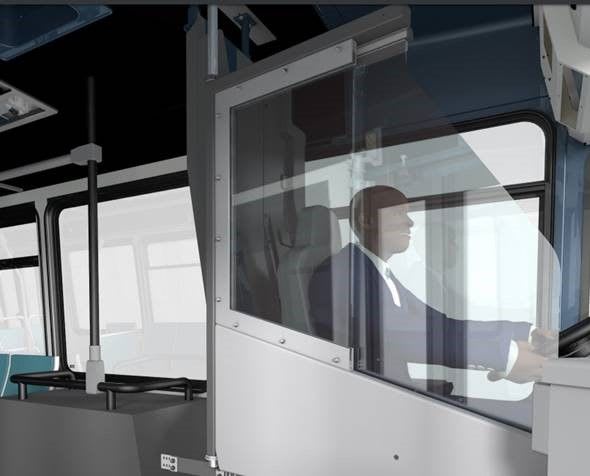
To help prevent operator assaults, the FTA and groups including APTA and labor unions are working to redesign the driver compartment on buses to separate operators from bus passengers.
Photo: PSTA
Further Safety Measures and Reporting
The General Directive proposes transit agencies subject to the Public Transportation Agency Safety Plans (PTASP) regulation be required to conduct a safety risk assessment related to assaults on transit workers on the public transportation system they operate using the Safety Management System (SMS) processes outlined in their agency safety plan.
The proposed directive also requires each transit agency to identify safety risk mitigations or strategies necessary to improve transit worker safety based on its safety risk assessment.
For transit agencies serving a large, urbanized area, a safety committee, made up of equal parts management and transit labor representatives, is responsible for ultimately identifying and recommending these safety risk mitigations.
Lastly, the directive requires each transit agency to provide information to FTA on how it is assessing, mitigating, and monitoring the safety risk associated with assaults on transit workers within 60 days of issuance of the final General Directive.
Ad Loading...
Building on Previous Steps to Prevent Assaults
The actions suggested in the General Directive build upon previous steps by the Biden-Harris Administration to address transit worker safety, including:
These steps are in addition to the steps taken at transit agencies around the nation at the urging of advocates and unions, which include:
Alleviating the chance for assaults – Steps taken by agencies include eliminating the need for operators to enforce fare collection policies by either going to mostly contactless fare payment, training the operator to avoid confrontations stemming from lack of fare payment, or switching to fare-free service. The FTA and groups including APTA and labor unions are also working to redesign the driver compartment on buses to separate operators from bus passengers, which would prevent access to the operator and thus eliminate most physical assaults.
Increasing penalties for operator assaults – More than 30 states have reclassified assaulting a transit worker as a special category misdemeanor with penalties that include jail time, fines, and permanently being banned from the transit system. Transit unions, including the Amalgamated Transit Union, have also called for legislation authorizing transit agencies to implement no fare policies for off-duty police officers and other law enforcement officials in an effort to encourage such individuals to ride transit, as well as legislation requiring every transit bus in the state to be equipped with a two-way communication device.
Increased compensation, or “hazard pay” – Partly in response to the operator shortage and partly in recognition of the risks operators face, including COVID and assaults, transit agencies around the nation have also increased the hourly wage for operators and changed the length of time before operators are given raises, escalating pay at a faster rate than ever before.
The proposed General Directive will be open for public comment in the Federal Register for a 60-day comment period, concluding on February 20.
The 90-day demonstration will deploy coordinated security teams at five light rail stations while testing controlled access and gathering data to guide future investments.
The app expands on RTD’s existing NextRide web application and allows customers to view real-time vehicle locations and service alerts, purchase and store digital fares, and access customer support.
The revamped program addresses 26 OSHA standards for maintenance facilities, with TAPTCO pointing to training, documentation, and everyday shop hazards as continuing challenges for transit operations.
Wabtec engineers explain how the system improves doorway detection, strengthens diagnostics and gives transit agencies and OEMs greater operating flexibility.
The award-winning partnership combines AI-powered detection with human oversight to improve bus reliability, accessibility, and enforcement efficiency.
The agency's latest homelessness count offers new data on how care-based services and cross-sector partnerships can complement traditional transit security strategies.
The online dashboard transforms National Transit Database information into a public-facing resource that allows users to compare transit agencies on key operational and safety metrics.