



Good news for ABA, UMA
Association unification reduces redundancy, enhances industry voice.
Welcome to our annual Top 50 Rail Projects issue, in which we present our exclusive survey of the largest rail projects in North America. The data in this Top 50 survey provides key insights into the development of passenger rail in the U.S. and Canada, which as you know has been robust over the past several years.
I would normally address a subject involving the passenger rail industry in this space. But a critical development in the motorcoach industry compels me to switch gears.
As you’re probably aware, members of the American Bus Association (ABA) and the United Motorcoach Association (UMA) voted overwhelmingly to approve unification of the two associations. The results were announced in early May (for details, see the news story on pg. 11).
Barriers finally overcome
This merger has been a long time coming. It’s been bandied about for years and has been seriously considered more than once. Part of the problem has been that each association has felt the need to protect its turf. This is understandable given that there is some overlap in the memberships and interests of the ABA and the UMA.
The other barrier has been a general reluctance to embrace change, which brings with it both risk and opportunity. We can all sympathize. It’s a rare organization that wants to tinker with a successful formula. But sometimes opportunity outweighs risk.
Although each organization has its own set of goals and objectives, they share enough common interests that it makes sense for them to get together and take advantage of the synergies
that exist.
For example, lobbying efforts can only benefit from combining the expertise and experience of both associations. Better representation in Washington, D.C., and around the country will be the result. A single voice, representing a large, unified membership, will help to carry forward the interests of the private bus industry.
Sum greater than parts
In this case, a merger, properly executed, will create from two groups a single organization that is greater than the sum of its parts. It will also eliminate some duplication of effort and allow for streamlining of operations.
The reason I used the phrase “properly executed” is because the unifying vote is only the beginning of the process. As the ABA and UMA mentioned in their joint statement about the successful vote, several key steps still need to be undertaken, including decisions about a new CEO, a new name and the possible combination of the annual trade events.
We all know that the devil is in the details. The next several months will be critical to the success of the unification, as principals from the two associations try to balance the interests of the collective membership. My sense is the consummate professionals involved in this undertaking will forge an organization that equitably represents each segment of the industry.
Yes, there’s still much work to be done, but the overwhelming membership approval of the unification is a great first step.
Congratulations, especially, to the ABA-UMA Unification Task Force, which worked arduously for more than a year to bring about the successful vote.
As I mentioned earlier, change brings both risk and opportunity. I see a huge amount of opportunity in this consolidation for all members of the industry, from the smallest mom-and-pop tour and charter operators to the largest line-haul carriers.
Everyone, even those who voted against the unification, needs to get behind this mandate and help to ensure its long-term success.
More Management

Everett Transit, Community Transit Outline Consolidation Agreement
The proposed agreement calls for a 50% increase in bus service in Everett, a new microtransit zone, continued paratransit service, and the transfer of Everett Transit operations to Community Transit.
Read More →
Strada360’s Steve Lassey on Turning Transit Data Into Better Decisions
From breaking down data silos to preparing for AI, Strada360 CEO Steve Lassey discusses how transit agencies can use technology to improve operations, customer information, and long-term decision-making.
Read More →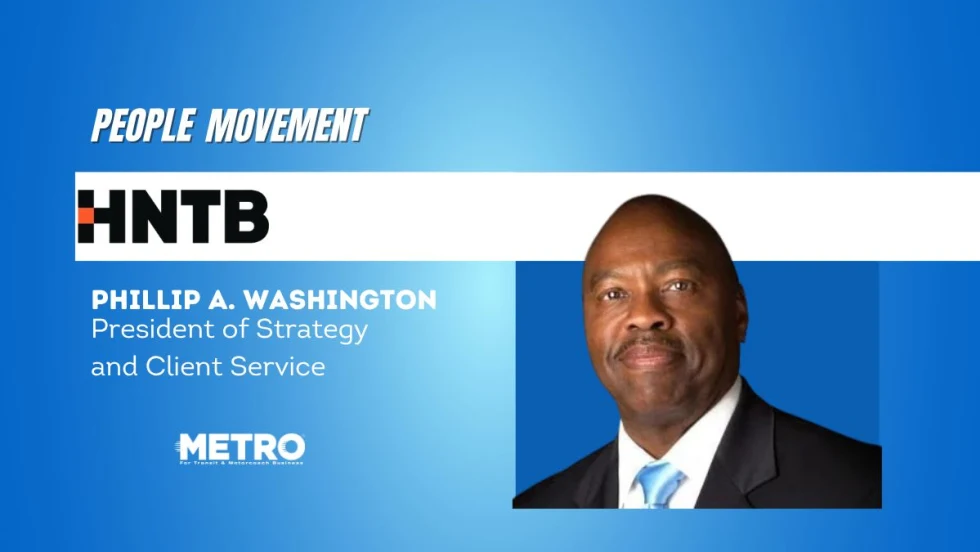
People Movement: Phil Washington Joins HNTB, Denver RTD Launches CEO Search, and More
In this edition, we also spotlight recent personnel moves at STV, the Eno Center for Transportation, and more, highlighting the people taking on new roles across the transportation industry.
Read More →

SEPTA Details Accelerate Vision for Transit System
The plan outlines investments in trolley modernization, new Metro and Regional Rail vehicles, accessible stations, and more frequent bus and rail service.
Read More →
FTA Ends Direct Oversight of MBTA Safety Actions
The federal agency closed its remaining special directive to the Massachusetts Department of Public Utilities following a safety review that began in 2022.
Read More →
Report: Transit Bus Manufacturing Supports 34,100 Jobs, $5.1B in GDP
The “Buses Mean Business” report examines the transit bus manufacturing industry’s economic footprint, supply chain, and rising demand for vehicle replacements.
Read More →
LIT Marks 10-Year Milestone at Annual Summit
Hosted by the COTA from September 10 to 13, the Summit carried the theme “Celebrating 10 Years of Excellence, Leadership, and Impact,” with every part of the program honoring the people, agencies, and partners who built LIT over its first decade.
Read More →
People Movement: Dan Dipert Coaches Adds Third-Generation Leader, Keolis Names New Valley Metro VP/GM, and More
In this edition, we also cover recent appointments and announcements at the Wabtec, SilverRide, HNTB, and more, showcasing the individuals helping to shape the future of transportation.
Read More →
METRO Opens Submissions for 2026 Motorcoach Awards
Nominations are now being accepted for METRO Magazine’s Operator of the Year and Innovative Operator of the Year awards.
Read More →
New York MTA Advances Final Contract for Second Avenue Subway Expansion
Contract Four is the largest in the Second Avenue Subway Phase 2 project and includes construction of station infrastructure, tracks, and signals for the subway expansion, MTA officials said. Work on Contract Four will begin in 2027.
Read More →