




Keep Reading: How Transit and Fleet Managers Can Maximize Auto Damage Recoveries
Proposed Auto Insurance Reform Would Save New York’s MTA Millions Annually
The governor’s proposed auto insurance reforms could save the agency $48 million annually by limiting payouts in crashes where buses are not primarily at fault.
March 16, 2026
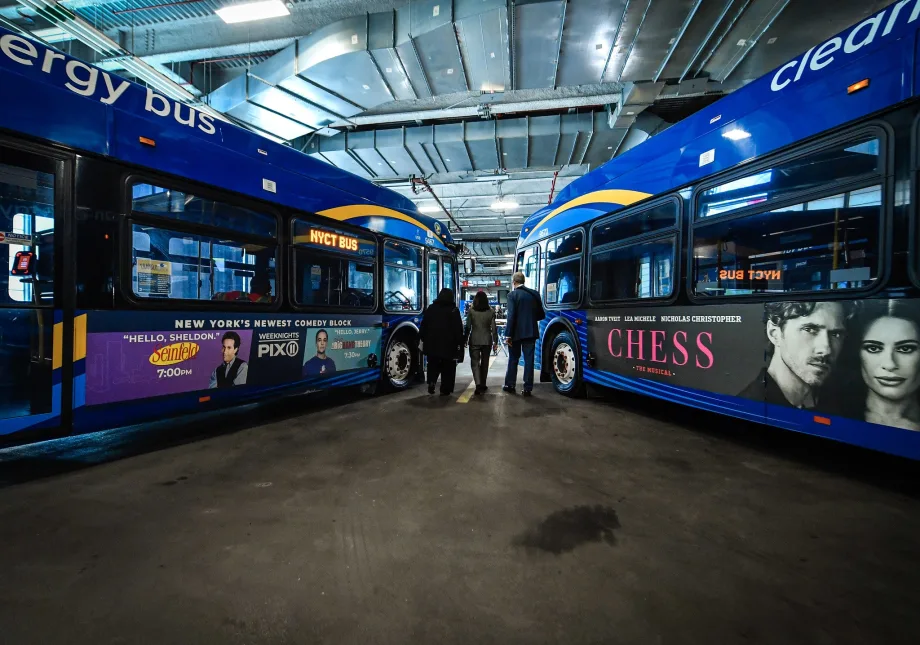
The MTA’s analysis also found that these reforms would generate additional annual savings of up to $25 million for the more than 130 transit agencies in New York that operate outside the MTA region.
Credit:
Marc A. Hermann/MTA
3 min to read
A recent analysis by the Metropolitan Transportation Authority (MTA) shows that New York Governor Kathy Hochul’s proposal to lower auto insurance costs would deliver $48 million in annual recurring savings for the agency.
Hochul’s plan will prevent the MTA from being forced to pay “jackpot” settlements for crashes in which its buses were not primarily at fault.
“For too long, our transit agencies have been used as a deep pocket for jackpot settlements, forced to make huge payouts even when their buses aren’t at fault for a collision,” Governor Hochul said. “If our common sense reforms get passed in this year’s budget, we will produce tens of millions of dollars in annual savings, all of which can go right back to running the better, more frequent transit service that every New Yorker deserves.”
MTA leadership also announced that all funds saved through these reforms, an estimated $48 million annually, over time will be available to invest in operating subways, buses, and railroads.
The MTA’s analysis also found that these reforms would generate additional annual savings of up to $25 million for the more than 130 transit agencies in New York that operate outside the MTA region. According to an MTA release, these agencies have a combined fleet of more than 3,000 buses and collectively carry hundreds of thousands of riders each day in urban, suburban, and rural communities across the state.
“The reform package modernizes New York’s approach to auto liability by limiting disproportionate responsibility for certain aspects of damage awards,” said MTA Chair and CEO Janno Lieber. “The MTA’s fleet of buses will no longer be an easy target for big payouts when another vehicle was the real cause of an accident.
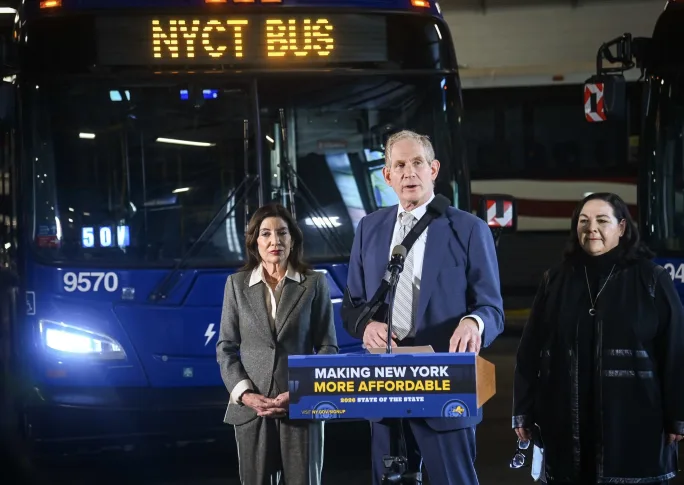
Governor Kathy Hochul (left), MTA Chair & CEO Janno Lieber (center), and NYS DOT Commissioner Marie Therese Dominguez (right) at the Mother Clara Hale Bus Depot on Friday, Mar 13, 2026, where they discuss reforms in auto insurance policies that would protect the MTA from “jackpot payouts” that divert funds from providing service.
Credit:
Marc A. Hermann/MTA
Supporting Transit Through Reduced Payouts
Governor Hochul’s insurance reform proposal includes the following key pieces:
- Taking on fraud in the system by creating new legal liability for criminals orchestrating staged accidents and supporting police and prosecutors in building cases.
- Preventing people from committing crimes or driving uninsured from landing jackpot payments beyond routine reimbursement for medical care or lost wages.
- Ensuring those found at fault for an accident can’t sue their victims for compensation.
- Better defining what actually constitutes a ‘serious injury’ so that damages for pain and suffering or emotional distress are reserved for those able to objectively demonstrate that they have suffered a serious injury.
- Ensuring those minimally responsible for an accident aren’t the ones left unfairly holding the entire bag if delinquent parties fail to pay up.
- Preventing insurance companies from pocketing savings achieved by reforms by requiring excess profits above a reasonable threshold to be sent back to policy-holders, and that insurers justify every rate increase directly to consumers and state regulators.
- Requiring insurers to offer mandatory technology discounts that incentivize safe driving.
Together, these changes aim to reduce windfall payouts that do not reflect actual responsibility, returning more resources to transit functions and to long-term system improvements.
“The reforms proposed by the governor make all the sense in the world and would allow our transit providers to focus more of their precious resources on serving riders instead of fighting lawsuits,” said New York State Department of Transportation Commissioner Marie Therese Dominguez.
The insurance reform proposals are included in the FY 2027 Executive Budget and will be considered by the Legislature as part of the budget process ahead of the April 1 deadline.
More Management

Bus Tech Talk: Keeping Transit Technicians Ahead of the Technology Curve
In this episode of Bus Tech Talk, Complete Coach Works’ Business Development Manager Mark Hollenbeck and METRO’s Executive Editor Alex Roman sit down with Obed Mejia, Senior Technical Trainer for Bus Maintenance, at LA Metro to discuss how rapidly evolving bus technology is changing the maintenance shop — and the skills technicians need to keep pace.
Read More →
Michael Schneider Joins Paslay Group to Expand Transportation Practice
The longtime transportation executive will help Paslay Group grow its advisory and program management work across transit, highway, and other infrastructure sectors.
Read More →
People Movement: Connectpoint Expands Leadership Team, Stadler Names New Group CEO, and More
In this edition, we also spotlight recent personnel moves at Burns, UZURV, and more, highlighting the people taking on new roles across the transportation industry.
Read More →
More Than a Summer Job: Building the Next Generation of Transit Talent
The Delaware River Port Authority and PATCO have transformed their internship program into a hands-on professional development experience that introduces students to the breadth of transportation careers — and creates a pipeline for future employees.
Read More →
LA Metro Board Awards 220 Battery-Electric Bus Contract to ENC
The contract, which is the largest base award of battery-electric buses by a U.S. transit agency, will be built in Southern California, sustaining good jobs as LA prepares to welcome the world in 2028
Read More →
What’s Behind San Diego MTS’s Award-Winning Transit Strategy
Named one of APTA’s 2026 Outstanding Public Transportation Systems with 50 million or more annual passenger trips, California’s San Diego Metropolitan Transit System points to gains in ridership, safety, technology, and reliability as foundations of its success.
Read More →
Public Transit Conference Returning to GFX in 2027, Call for Papers Now Open
The Call for Papers is now open, allowing transit agency professionals and industry experts to help shape the PTC educational program by submitting session ideas for consideration.
Read More →
Indian River Transit’s Community-Focused Approach Earns National Recognition
Named APTA’s 2026 Outstanding Public Transportation System in its size category, Florida’s Indian River County transit system continues to grow ridership through fare-free service and a focus on evolving community needs.
Read More →
ENC Lands MATA Contract and More in Biz Briefs
In this edition of Biz Briefs, we spotlight the latest developments shaping the future of mobility.
Read More →From Surviving to Thriving: Building Stronger Transportation Organizations
Bus Business Consultants founder Brian Dickson shares lessons on leadership, organizational health, and creating options for long-term success in a changing transportation industry.
Read More →